/pic4892981.jpg)

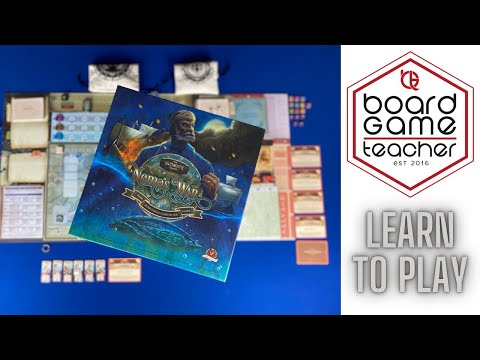


























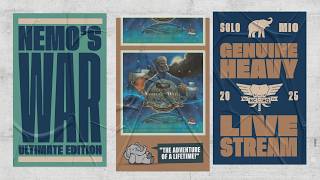


Nemo's War (Second Edition) Deep Dive
What the Community Thinks About Nemo's War (Second Edition)
Nemo's War (Second Edition) occupies a unique space in solo board gaming as a hybrid of optimization and storytelling that feels radically different depending on the motivation you choose at the start. 3 Minute Board Games call it a compelling solo experience, and Meeple University devote detailed coverage to its strategy, with developer Alan Emmerich sharing the secrets behind a high-scoring game. Designed by Chris Taylor and published by Victory Point Games, the second edition polishes both the ruleset and the thematic delivery, and reviewers consistently praise how it delivers tight mechanical decisions alongside genuine narrative engagement.
Core Mechanics That Define Nemo's War (Second Edition)
Area Movement and Compound Scoring
The Nautilus moves across mapped oceans in a deliberate action economy, where each turn cycles through an event, dice that determine action points, ship placement, and then action selection. Reviewers emphasize that the depth lies less in resolving any single action than in balancing movement, resource acquisition, and scoring across the game's tracks. The motive you choose, whether Science, Exploration, Anti-Imperialism, or War, acts as a multiplier on certain victory points, fundamentally altering which actions lead to victory. Sinking a warship might matter enormously under War yet barely register under Exploration, forcing completely different priorities from one game to the next.
Dice-Driven Tests and Storytelling Events
Each turn draws from an event deck that escalates across three acts, introducing challenges and opportunities tied to Jules Verne's universe. Tests require rolling dice against targets, with the option to exert ship resources for bonuses, though exerting and then failing costs you that resource. The risk-reward calculus, combined with events that force narrative decisions, makes every turn feel like a genuine moment in Captain Nemo's journey rather than a dry exercise. Reviewers note that the storytelling emerges organically from these systems; you are not reading a narrative so much as making one through choices made under pressure.
The Nemo's War (Second Edition) Experience
Escalating Threat Through Notoriety and Reinforcements
The game tightens dramatically as it progresses. Early acts feature sparse oceans and weaker ships, but by the final act the board fills with warships that punish poor positioning. A notoriety track measures your infamy, and crossing thresholds adds tougher ship types to the pool, so raw aggression backfires by inviting harder enemies. Reviewers highlight how this feedback loop forces players to treat each action as a long-term investment, and the game can end in catastrophic defeat if the oceans fill entirely with warships before the finale, a loss condition that feels thematic rather than arbitrary.
Motivational Asymmetry and Replayability
Each of the four motives creates a fundamentally different game within the same rules. These are not mere thematic skins; they change which actions score and which resources matter, and they shift how aggressively you can afford to play. 3 Minute Board Games stress that the game plays differently based on the motivation you pick, which gives it lasting replay value, since beating it under Science feels like a completely different puzzle than beating it under War. That structural variety is a major reason the game sustains so many plays.
What Makes Nemo's War (Second Edition) Stand Out
Farsighted Depth in Ship Placement
Developer Alan Emmerich emphasizes in Meeple University's coverage that the secret to a high score lies in painting the board, the deliberate placement of ships revealed during the escalation phase. When the protocols force you to place ships, expert players use the moment to control which oceans become dangerous and which stay clear, extending their hunting grounds and managing the threat landscape. As Emmerich warns, you must not let the board fill with ships, because if you need to place one and there is no space left, you lose to an imperialist victory. This transforms the game from luck-dependent into genuinely skill-rewarding.
Theme That Emerges From Mechanics
Rather than imposing story through flavor text, Nemo's War lets theme emerge from what players choose to do and what those choices cost. A search might trigger a test that drains Nemo's resolve on a failure, so you feel the captain's weariness through depleted resources rather than narration. Treasure ties to motive scoring, uprisings generate liberation points, and every mechanical element reinforces the story instead of distracting from it. Reviewers praise this tightness as the heart of the game's appeal.
Potential Drawbacks
Complexity and Rules Overhead
Nemo's War is a relatively heavy solo game with numerous subsystems: event resolution, ship-placement protocols, motive-specific scoring, resource loss, and multiple test types. The rulebook rewards careful reading, and even once learned, turns can slow as players track modifiers and exceptions. The depth is intentional and feeds the replayability, but reviewers note this is not a game for casual solo players, since you need to commit to understanding its systems to enjoy it fully.
Luck Can Overshadow Strategy
Dice determine action points, ship placement, and test outcomes, so while expert players mitigate luck through board control and resource management, an unlucky roll at a critical moment can end a winning run. The ability to sacrifice historical characters for one-time bonuses helps soften catastrophic rolls, but some players will find the outcome too dependent on variance, especially in the final acts where resources are scarce and the stakes are highest.
If You Enjoy Nemo's War (Second Edition)
You likely appreciate solo games that reward long-term planning and punish short-sighted greed. Robinson Crusoe: Adventures on the Cursed Island shares the resource scarcity and survival tension while adding cooperative play and brutal failure conditions. Spirit Island offers a similarly deep solo puzzle of escalating threats and careful sequencing. And Mage Knight matches Nemo's War's puzzle-like turn optimization, trading the Jules Verne storytelling for pure mechanical complexity. If you want to feel like you are commanding a legendary submarine and emerging with a story to tell, Nemo's War stands nearly alone.
What Reviewers Are Saying
"A compelling solo game where you play Captain Nemo sailing across all the oceans, exploring and blowing up things; a hybrid optimization and storytelling game that plays differently based on what motivation you pick."
— 3 Minute Board Games
"The secret is where you place your warships and the non-warships that are revealed as the board fills up. One word of advice: do not let the board fill up with ships, because if you need to place a warship and there is no space, everything is warship-occupied, you will lose the game; that's an imperialist victory."
— Meeple University
"It is step two, where you roll the dice to place ships, that a winning player makes farsighted, advantageous moves. The secret sauce toward optimizing your score is painting the board, how you put revealed ships on the map."
— Meeple University