/pic4782718.jpg)
As an apprentice Ninja, it’s time for you to show all your skills in challenging and exciting tricky trials. Will you be quicker, stronger, smarter…. or simply more concentrated than your opponents? Your training alternates collective trials and duels, in a series of varied tests drawn randomly. But whether you are challenging the whole group and head-to-head with another ninja, there will be only one rule: be the best at your trial! For example, try to be the first player to place a Ninja meeple on each of your fingertips! Try to guess how many ninjas your opponent put in the box just by shaking it! Be the quickest to assemble 5 wood logs vertically! Be strong enough to collect points depending on your score, but be also strategic enough when you bet on the winner of each duel! Ninja Academy is a hilarious, fast-paced and highly replayable new dexterity game!
—description from the publisher


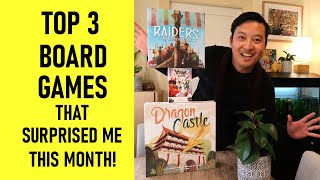
- Party style dexterity game
- Engages players quickly and efficiently
- Huge range of diverse challenges
- Fun for the whole family
- Low price point
- Small box size
- Box itself is used in some challenges
- Not about deep strategic choices
- Players compete to complete dexterity challenges and gain reputation in the form of ninja stars.
Mechanics (from transcript analysis)
- dexterity challenges — Players perform various physical challenges such as balancing, stacking, and flicking components.
- Set Collection — Players collect ninja stars as rewards for completing challenges.
- team play — Players can compete head-to-head or in teams.
- Variable Game Structure — The game structure, including rounds and types of challenges (all-in vs. head-to-head), changes based on player count.
Video topics + discussion points
Quotes (from this video)
- hey everybody it's danny from board game century and welcome to my hot three games for this month in this video series
- each month i'll be bringing you three games that i have discovered uncovered and also added to my collection not necessarily because they're new but because they have an engaging theme mechanic or something that really piques my interest
- wait a minute doesn't this silver come from the game raiders of the north sea uh you're welcome
- this is danny sanger can't wait to see you next month for another top 3 video catch you on the flip side bye
References (from this video)

- Physical, hands-on play with cute components
- Introduces hobby gaming without heavy thinking
- Ninja-themed dexterity challenge
- Ninja dojo
Mechanics (from transcript analysis)
- Balancing / dexterity tasks — Balancing ninja meeples on fingers or on wooden elements as a dexterity challenge.
- Stacking and Balancing — Balancing ninja meeples on fingers or on wooden elements as a dexterity challenge.
Video topics + discussion points
Quotes (from this video)
- it's a small tin game it's cute
- it's the most well known out of all the ones we're going to say here
- this is a new small box game from the cult express family
- it's a puzzle in a box
- it's just such a straightforward game
References (from this video)
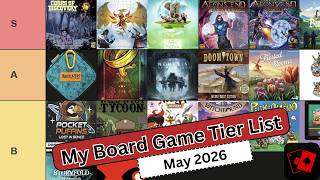
- Like dexterity games a lot
- Does a few cool things
- Lets you bet on opponents
- Has free-for-all rounds
- Has rounds where you have like a duel with like one other player
- Non-involved players can bet on who's going to win
- Like that a lot
- Think there are better dexterity games out there
Mechanics (from transcript analysis)
- dexterity — This is um a dexterity game.
Video topics + discussion points
Quotes (from this video)
- This is just my opinion, right? Yours may very well differ, so let me know in the comments what you think about the games that I will be talking about today.
- It's possible that I will rank a game differently next month.
- So usually my rankings seem to be a little bit more on the more positive side.
- It's not really a game. It's more like an activity, so I would give it a good C.
- This is an amazing small box cooperative game where you like play cooperative poker.
- I urge you if you play this, you should play real time.
- Um it works turn-based, but it's much better real time and it's even better when you speak with a few people with people somehow.
- It's like really great in person, right?
- Wingspan is a number one game.
- It's a good social deduction game that is a kind of um that is like paired with Who Am I?
- Similar to a fake artist goes to New York, just with words instead of drawing.
- It's a very solid game.
References (from this video)

Mechanics (from transcript analysis)
Video topics + discussion points
Quotes (from this video)
- it's very fun
- it's a family game
- this is intense everybody
- one versus three
References (from this video)
- Described as a family game, accessible and fun.
- Energetic and social play with laughter and banter.
- Can be intense and challenging at times; not light for all players.
- Some rounds may be difficult to balance or master.
Mechanics (from transcript analysis)
- Compound Scoring — Players select a favorite in some moments, awarding 1 point to the chooser.
- favorite_choice_scoring — Players select a favorite in some moments, awarding 1 point to the chooser.
- meatball_tokens_as_score — Meatballs act as the scoring currency; players accumulate meatballs to track points.
- point_scoring_for_winning_challenge — Winning a challenge yields 3 points.
- random_challenge_card_draw — A card is drawn to determine the next challenge and guide the round.
- round_based_competition — Rounds include configurations like one-versus-three and two-versus-three to determine matchups.
Video topics + discussion points
Quotes (from this video)
- it's very fun
- it's a family game
- this is intense everybody
- one versus three
References (from this video)

- easy to learn
- very interactive
- family-friendly
- cute graphics
- ninja dojo theme
- ninja-themed party game with duels and trials
- apprentice ninjas in a dojo
- duel-based challenges and collective tasks
Mechanics (from transcript analysis)
- collective_trials — group tasks played simultaneously by all players
- Combat: Deck/Hand — two-player confrontations where players compete to collect required meeple types
- dexterity_tasks — players toss meeple tokens in acrobatic cards to match required types
- Duels — two-player confrontations where players compete to collect required meeple types
- random_card_draw — activities are determined by drawing cards at random
- scoring_victory_points — points awarded to players by completing tasks; win by most victory points
- Set Collection — goal to collect all types of meeples for a win
- set_collection — goal to collect all types of meeples for a win
Video topics + discussion points
Quotes (from this video)
- Ninja Academy is a lovely party game for 3 to 5 players
- it's very interactive
- it's an easy game
- graphics yellow is known for to really enhance the game since it is a mini game
- not out yet it is actually coming out in August for Gen Con
- if people want to find out more about it will be on your website
References (from this video)

- Fast to learn and play with quick rounds
- Deep mind games and bluffing in a small package
- Travel-friendly two-player filler
- Retheme from Hanamikoji provides familiarity while remaining fresh
- High interaction and player read of the opponent
- Scoring can feel fiddly for new players
- Theme may not appeal to everyone
- Some players may prefer different artwork or flavor from the Hanamikoji base game
- Competitive social dynamic of mentoring and influence among scholars.
- A prestigious academy where scholars vie for favor through card play.
- Mind-game deduction with hidden information and scoring across rounds.
- Hanamikoji
Mechanics (from transcript analysis)
- Competition — Split four cards into two pairs; opponent chooses a pair to score, the other pair goes to you; you reveal secrets and compare.
- Discard — Discard two cards from hand out of the game.
- Gift — Reveal three cards; opponent chooses one to keep; you keep the other two.
- Secret reserve — Reserve a card face-down for scoring later.
Video topics + discussion points
Quotes (from this video)
- this is one of our all-time favorites
- a very quick and very simple to play game
- it's a very mind-crunching experience in such a small box
- it's the best
- i highly recommend you check it out
- it's very meta like you're very much so trying to get into the other person's head
References (from this video)
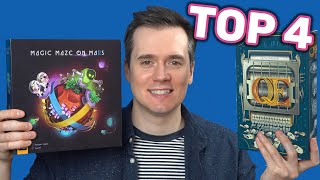
- Original take on dexterity games
- Mix of group challenges and duel challenges add variety
- Accessible for 3-5 players
- Limited to 3-5 players
- Potential for quick fatigue if played too often
- dexterity, fast-paced challenges, competitive play
- Ninja academy training ground
- trial-based with group challenges and head-to-head duels
- Dexterity party games
Mechanics (from transcript analysis)
- dexterity challenges — Physical or precision tasks using hands to move or flip pieces.
- head-to-head duels — Two players duel while others participate in group challenges.
- timed tasks and bluffing — Quick actions with bluffing to mislead opponents.
Video topics + discussion points
Quotes (from this video)
- it's a little easier to understand the board is clearer so when you don't spot something you have no one to blame but yourself
- the core reasons to love that magic maze experience are still there and as fun as ever
- Magic Maze two robots revenge is a polished sequel the production of the game is a lot slicker than the original
- deserves a seal of actual love
- it's got everything that's great about the original and makes for a smoother ride