/pic3118416.jpg)





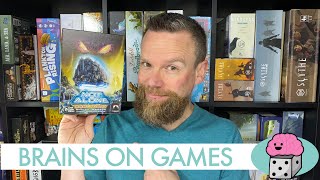




Not Alone Deep Dive
What the Community Thinks About Not Alone
Not Alone occupies a unique position in the deduction and hidden movement game space, praised by reviewers for its clever asymmetric design and the psychological depth it brings to player interaction. The game has developed a dedicated following among those who appreciate games where reading opponents and second-guessing become central to the experience. While it had a brief moment of intense popularity, many in the community consider it an underrated gem that deserves more table time than it currently receives.
Core Mechanics That Define Not Alone
Hidden Movement and Deduction
At its core, Not Alone is a hidden movement game where hunted players secretly choose locations they plan to visit while one player takes on the role of the creature trying to anticipate their movements. The hunted players can discuss strategy openly, but this communication is a double-edged sword: their creature opponent hears every word. Players quickly learn that bluffing and misdirection are essential survival tools, making each location choice a calculated risk. The creature's job is deceptively simple on the surface but extraordinarily difficult in practice: place a single token on a location and hope it matches where at least one hunted player goes.
Asymmetric Player Powers and Area Movement
The game employs region-based board movement where the planet Artemia is divided into ten distinct locations, each accessible through area connections. Hunted players begin with only five location cards but gradually unlock higher-numbered locations as the game progresses. The creature, meanwhile, has access to hunt cards that grant special powers: disrupting player strategies, placing additional tokens, or manipulating the board state. This fundamental asymmetry means the creature and hunted are playing almost entirely different games, each with their own strategic objectives and constraints.
The Not Alone Experience
Intense Psychological Gameplay
Reviewers consistently highlight the psychological tension that emerges from Not Alone's core loop. Players describe the human experience as one of constant anxiety, knowing the creature will eventually find them but uncertain when. The mind games escalate throughout the game as players track which locations have been revealed and make increasingly desperate guesses about where others will go. For the creature player, the experience is similarly intense but frustrating in a rewarding way; despite having theoretically perfect information and control, the creature must somehow divine where humans will go when those humans themselves are uncertain and deceptive.
Social and Tense Gameplay
The game thrives on the social aspect of watching players try to communicate strategy while avoiding telegraphing their true intentions. The hunted team must cooperate to survive, yet cooperation is difficult when discussing plans aloud gives information away. Reviewers note that the best games emerge when players feel genuinely stressed about their survival and when the creature experiences that specific frustration of being outwitted despite their superior board control. The emotional rollercoaster, from desperation to elation to crushing defeat, defines the Not Alone experience.
What Makes Not Alone Stand Out
One-vs-Many Asymmetry Done Right
Not Alone is one of the few games in the one-versus-many genre where both sides feel genuinely challenged and engaged. The hunted players genuinely fear the creature's arrival, and the creature genuinely struggles to land captures despite having the best theoretical position. Reviewers emphasize that this balance, where neither side ever feels like they're just going through the motions, makes the game special. The hunted have meaningful decisions about which locations to abandon and which to prioritize, while the creature must develop reading skills and pattern recognition to succeed.
Quick Play with Substantial Depth
Despite its conceptual depth, Not Alone plays in roughly 30-45 minutes, making it accessible for casual game nights while offering enough meat for experienced gamers. The streamlined rules belie the strategic complexity underneath, allowing new players to jump in quickly while providing veterans with plenty of subtle decision-making around card management and location selection. This accessibility combined with hidden information makes it an excellent introduction to deduction games for players new to the genre.
Potential Drawbacks
Limited Location Variety and Repetition
Some reviewers note that the relatively small location set means games can feel repetitive if played frequently. The ten locations stay the same across plays, and while the decisions players face around them vary, there's a ceiling to how much variety the game can offer in the long term. Players looking for infinite replayability through variable setup might find that Not Alone's static board limits its staying power in their collection.
Creature Balance Can Feel Unfair
Reviewers acknowledge that new creature players often feel helpless, placing tokens seemingly at random and watching hunted players escape. It takes several plays for the creature player to develop the pattern-reading and deduction skills necessary to be competitive. Some games can feel like the hunted win easily if they have even slightly better communication or intuition, making the experience less balanced for casual play where everyone lacks experience in their respective role.
If You Enjoy Not Alone
Players who love Not Alone typically gravitate toward other asymmetric social deduction games and hidden movement titles. Those drawn to reading opponents and psychological gameplay should explore games like Fury of Dracula for hidden movement at a larger scale, or Specter Ops for tactical one-versus-many stealth. Whitehall Mystery offers a streamlined hidden movement experience in a historical setting. For the social deduction angle, The Resistance and Secret Hitler capture similar dynamics of trust and betrayal. The key appeal across all these recommendations is the emphasis on player psychology and the tension created by incomplete information.
What Reviewers Are Saying
"The fun in this comes from reading the other people. You're playing the player and not playing the game. I know they're going to think that's the best place for me to go, but they know I know that, so maybe I'll go somewhere else."
— The Dice Tower
"It's hard when you only get to place one token and you guys can go to ten different locations. But when they get to these spaces, I get to place this token every turn for free. As the creature player, it's pretty hard to actually catch anyone."
— No Rolls Barred
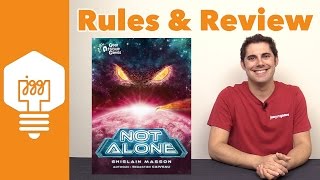
"This is one I think where minimalist is better. It's more imagining the bad guys than actually seeing them. They really feel like the stress of hunting them down, and it pulls you into that theming."
— watch it played