/pic7647168.jpg)


/pic7647168.jpg)






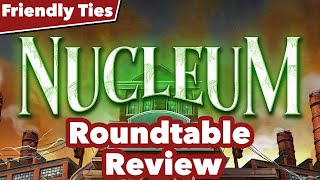














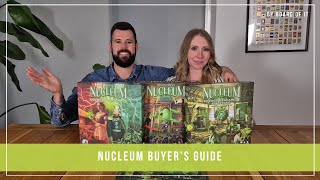





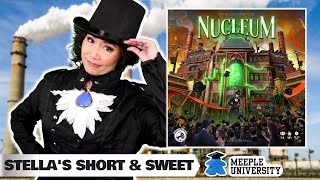

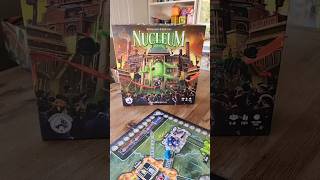








Nucleum Deep Dive
What the Community Thinks About Nucleum
Nucleum has landed as one of the most intriguing heavy euros of 2023. The game divides opinion along a predictable line: those who embrace complex systems and tight decision-making regard it as a masterpiece, while players seeking streamlined experiences find it a substantial hurdle. Reviewers consistently praise its core action tile mechanism and engine-building potential, yet acknowledge the steep learning curve that defines the first few plays. The consensus is that Nucleum rewards persistence and becomes more satisfying with each repeated play as the interconnected systems begin to click into place.
Core Mechanics That Define Nucleum
Dual-Use Action Tiles and Continuous Turns
At the heart of Nucleum sits a masterful resource management puzzle built around action tiles. Each turn, players select one of their available action tiles to play on their player board, taking both actions in any order. The brilliance emerges in the tile system itself: every action tile can be used for its depicted actions or permanently sacrificed as a railway link on the map. This creates constant tension between preserving powerful tile combinations for engine building and spending them to establish critical network connections. Unlike games with defined rounds, Nucleum uses continuous turns until enough endgame conditions trigger, making each decision feel immediate and consequential. The game demands players manage five action types: develop, contract, urbanize, industrialize, and energize, each distributed across tiles in different combinations.
Network Building and the Energize Payoff
Building networks in Nucleum means placing railway tiles that form connections between cities, creating eligible spaces for building placements. The urbanize action lets players place buildings onto the map, but only in cities within their established networks. Energize becomes the climactic action that flips buildings to their powered state, revealing benefits and creating the game's core puzzle. When energizing, players must route coal or uranium from mines through networks to power plants, then deliver that energy to their buildings. This logistics puzzle has multiple layers: uranium is more powerful than coal but requires turbines for transport, power plant connections do not need to be through your own rails, and opponent turbines can be leveraged for a fee. The satisfaction of successfully energizing a building, gaining achievement tokens and income bumps while locking in victory points, represents the game's true payoff.
The Nucleum Experience
Brain-Burning Decision Space with Asymmetric Tech Trees
Nucleum is described by reviewers as a serious brain-burner that demands full attention throughout play. Each player selects one of four asymmetric experiments during setup, which grants access to eight unique technologies unlocked through contracts and building achievements. These branching tech trees create meaningful replayability since the path forward differs dramatically based on which experiment you pursue. Technologies offer immediate bonuses, ongoing abilities, or ultimate end-game scoring goals tied to your chosen direction. The decision-making extends beyond mere efficiency optimization; players must balance pursuing contracts that unlock technologies, deciding when to energize buildings versus preserving action tiles for railway placement, and timing income refreshes to accumulate achievement tokens at just the right moment.
Engine Building That Escalates Dramatically
Nucleum delivers the satisfying engine-building experience where early investment in mines, turbines, and income tracks creates increasingly powerful turns. As players accumulate more action tiles through develop actions, they unlock more frequent turns with greater action flexibility. Completing contracts unlocks technologies that reduce costs or provide passive bonuses, making subsequent actions cheaper or more efficient. The income tracks reward discipline and timing, allowing players who recharge strategically to spiral their resources upward. By late game, well-developed engines can produce explosive turns where a single energize action sequences into massive point gains. This escalation makes the opening turns feel deliberately constrained while mid to late-game turns offer liberating options.
What Makes Nucleum Stand Out
Action Selection System That Demands Strategic Sacrifice
The action tile mechanic stands out as genuinely clever among even heavy euros. Because tiles serve dual purposes, players constantly agonize over which tiles to preserve and which to burn for railway construction. Choosing to establish a critical network connection means permanently losing access to that tile's actions, potentially blocking a strategy reliant on those abilities. This creates dramatic moments where players must reassess their plans mid-game and pivot to entirely different approaches. Some reviewers compared it favorably to Space Station Phoenix, where sacrificing components for essential progress generates similar tension. The system's elegance lies in how naturally it creates interaction without requiring direct confrontation; players compete for building spots and can deliberately block color matches to deny opponents bonus actions, but the game rarely feels antagonistic.
High Replayability Through Multiple Variable Systems
Nucleum packs substantial variability into each game through layered randomization. Four experiments push players toward different strategic paths with unique advantages. Contracts vary by game, affecting which building types and network geometries prove most valuable. Five endgame conditions create different pacing dynamics, with some games ending quickly if players rush toward technology completion while others extend longer as players build extensive networks. The milestone board rotates different scoring conditions each game, completely changing which accomplishments matter most. Even at the two-player count, the game adjusts the board side and includes pre-blocked spaces that shift starting positions entirely. Reviewers noted that subsequent games felt materially different from previous ones rather than following repetitive strategies, suggesting genuine depth beyond surface variety.
Potential Drawbacks
Steep Learning Curve and Complex Rule Interactions
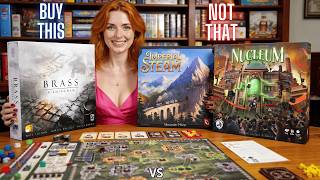
The primary criticism across all reviews centers on complexity relative to playtime and teachability. Nucleum has a substantial rulebook with multiple exceptions and edge cases that catch new players repeatedly. The energize action alone involves several conditional branches: coal pricing that escalates as tiles flip, uranium transport limited by turbine counts, power plant connections that can use opponent networks, and mandatory network connections for certain resources. Players report their second, third, and even fifth games involved frequent rulebook referrals. The game explicitly functions as a learning experience on the first play; competitive balance breaks down dramatically if players have different familiarity levels. Several reviewers directly compared it to Brass Birmingham, noting that while Brass achieves similar depth with cleaner rules, Nucleum adds complexity that creates a pure euro system at the cost of accessibility. The density of iconography and the multiple income tracks add cognitive load even for experienced gamers.
Lack of Catch-Up Mechanics and Punishing Early Mistakes
Nucleum offers no safety nets for players who start poorly. Unlike games with catch-up mechanics or rubber banding, falling behind in Nucleum often means staying behind. Poor tile selection early cascades through the entire game since action availability shapes future options. Overspending on network building leaves insufficient resources for developing powerful action tiles. Mismanaging the refresh timing means missing out on income boosts at critical moments. One reviewer described being stuck in a corner after an early mistake and requiring multiple turns just to claw back toward competitiveness. The game punishes miscalculation harshly and asks players to think three turns ahead, then abandon those plans when opponents block key spaces. While veteran players describe this as exciting tension, newer players frequently feel trapped by their own early decisions.
If You Enjoy Nucleum
Players who love Nucleum should explore Brass Birmingham and Barrage as spiritual cousins in the economic euro space. Brass Birmingham offers similar network-building satisfaction with cleaner rules and more forgiving pacing, making it ideal for groups struggling with Nucleum's complexity. Barrage provides another resource-conversion puzzle with network elements and technologies, sharing Nucleum's commitment to meaty decisions. Praga Caput Regni delivers comparable action selection tension through its worker placement system. Space Station Phoenix offers a lighter but thematically different take on meaningful sacrifice mechanics. For pure logistics puzzle fans, Power Grid provides economic depth without Nucleum's asymmetry. Imperial Steam serves a similar industrial-era theme and offers competitive routing interaction. Nucleum sits comfortably as one of the heavier options in this space, best suited for groups already comfortable with four-plus weight euros who value mechanical depth over accessibility.
What Reviewers Are Saying
"The fact you have to spend action tiles to build rail links means you have very tense decisions about what actions to keep and what to give away. The unique technologies also elevate the game skill ceiling and it really is tailor made for heavy euro fans. The best thing about this game is the action selection system, it's very clever."
— 3 Minute Board Games
"This is a very heavy game. I think it took me three plays before I really had a strong grasp on what I was supposed to be doing. But by like the fourth or fifth play it's like I barely even see the comparison to Brass anymore. It's obvious when you first read that rule book but it's boy is it ever different."
— Allies or Enemies
"Nucleum is the crunchy tiled driven nuclear age puzzle with continuous turns and experiments. Nucleum is its own thing and it's really about these action tiles you get and how to use them. The interactions from shared resources, the timing of loans and develop, the decision of when to scout for wilds, all add up to a ridiculous amount of strategic texture without a corresponding explosion in rules."
— Board Game Critique