/pic4382323.jpg)















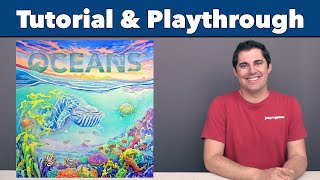






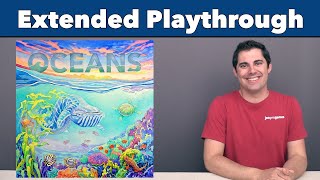








Oceans Deep Dive
What the Community Thinks About Oceans
Reviewers agree Oceans, the 2020 standalone entry in North Star Games' Evolution series, keeps the bones of its predecessor while reworking almost everything about how a turn plays out. Board Game Sanctuary described it as "a far more ferocious beast" than the original Evolution and praised the creativity of building species from trait cards. 3 Minute Board Games agreed the lineage is the whole point, noting that Oceans "is exactly what the game is about, Evolution," and singled out the Deep deck as the best thing about the design.
Getting Games, which received a press copy of the game from North Star Games, came at it from the opposite direction. Having grown frustrated with the original Evolution over time, the channel was initially wary of Oceans but found it kept "the bones of evolution" while feeling noticeably less punishing to play.
Not every channel lands in the same place. All You Can Board, longtime fans of the sister title Evolution Climate, found Oceans friendlier and easier to defend but ultimately preferred Evolution Climate's simultaneous, higher-stakes turns, calling Oceans a game they would play again without being the one to suggest it. Adam in Wales approached the game from a design perspective while learning its rulebook, focusing less on story than on whether reef, ocean, and population terminology gets in a new player's way.
Core Mechanics That Define Oceans
Building Species From Trait Cards
On a turn, a player plays a trait card either to start a brand-new species or to add a trait onto one already on the table, building up to three traits per creature, as Board Game Sanctuary walked through in detail. Positioning those species around the table matters, since some traits key off adjacency, letting a card react to whatever species sits beside it rather than to the game as a whole. Instead of playing a card, a player can discard one to migrate fish tokens between the reef and the ocean zones. Feeding a species means either foraging from the reef for its green value or attacking another species with its red value against that species's yellow defense. Overfeeding forces a population cut, and any species that ages down to zero population goes extinct and is discarded.
The Cambrian Explosion and the Deep Deck
Once the first ocean zone empties, the Cambrian explosion changes the game's pace: players can play two cards a turn instead of one, score two population behind their screen when aging, and start drawing from the Deep deck. Board Game Sanctuary described the Deep deck as a "thick pile of cards" of unique, powerful abilities that let a species stand out from the shared, duplicate-heavy base deck. All You Can Board saw the same shift define the whole game, treating the phase before the explosion as a setup act for the more distinctive back half. Getting Games, comparing the moment directly to the original Evolution, said the deep cards let them build one species into a far bigger engine, more than doubling how much food it could bring in each round.
The Oceans Experience
Constant Pressure From Every Direction
Where the original Evolution mostly reserved attacking for carnivore traits, Getting Games noted every species in Oceans starts with a base attack value, so any creature can threaten a neighbor at any time. That change keeps the table interactive throughout a turn: what an opponent plays into an adjacent slot can trigger a card in another player's tableau even when it isn't that player's turn, an effect 3 Minute Board Games credited for making the game's competitive-evolution theme feel mechanically real rather than decorative. All You Can Board experienced the same interactivity but drew a different conclusion, finding that resolving a full turn's worth of steps individually, rather than simultaneously as in Evolution Climate, slows the overall pace of play.
A Game That Splits in Two
All You Can Board described Oceans as feeling like two different games stitched together: an opening phase built around a shared deck of a dozen repeating trait cards, followed by a faster, more inventive back half once Deep cards start entering play. The channel enjoyed the second half enough to compare waiting for it to watching a slow-starting television season, but found the first phase, which can run through much of a two-player game's runtime, noticeably less compelling on repeat plays. Getting Games, playing a four-player game, had a smoother experience with pacing, focused instead on the small combos triggered off other players' turns.
What Makes Oceans Stand Out
Freedom to Design Your Own Creature
Board Game Sanctuary highlighted the sheer range of species a player can build, from "a parasitic, filter-feeding, tentacled creature" to a "symbiotic, shark-cleaning bottom feeder," and pointed to the included chart that lets players generate a scientific-sounding name for whatever combination of traits they land on. The channel called the card synergy between species "really, really good," citing symbiotic and parasitic traits that piggyback off a neighboring humpback whale's actions. Getting Games made a similar point about the deep cards, describing a species with tentacles that could attack or feed two different times in a single turn.
Theme That Holds Up Under Its Own Terminology
Adam in Wales used Oceans as a case study in rulebook design, arguing it "walks a very fine line between getting its theme across and using unfamiliar terminology," since the reef, the ocean, and population tokens all need explaining to a new player before the cards make sense, but concluded the game "just about gets it right." Board Game Coffee was won over by the same fish-token presentation despite going in skeptical of games this ornate, ultimately calling Oceans "a great freaking game" worth recommending. Both channels credited the art and components with keeping an otherwise dense rulebook approachable.
Potential Drawbacks
Downtime That Grows With the Player Count
Board Game Sanctuary flagged "a considerable amount of downtime" as the table fills up, made worse by the fact that, unlike the simultaneous turns of the original Evolution, players resolve their turns one at a time. All You Can Board reached a similar conclusion from direct experience, saying they would hesitate to play Oceans with four people because tracking every opponent's tableau between turns forces a player to restart their own planning by the time play comes back around. Neither channel that raised the issue had tested Oceans beyond three players.
A Slow, Repetitive Opening
All You Can Board's biggest complaint was the base deck's dozen repeating trait cards, which the channel felt turn the phase before the Cambrian explosion into a predictable warm-up once a player has seen it a few times, especially compared to the unique effects that follow. 3 Minute Board Games raised a different set of frictions: managing fish tokens across the reef and ocean boards, which the channel called "finger traps," and a level of aggression that can make Oceans "brutal" enough that it recommended the game for mature gamers over a casual family game night.
If You Enjoy Oceans
Reviewers who enjoy Oceans mostly point back to where it came from, or sideways to other games built around the same competitive-evolution idea.
- Evolution: Board Game Sanctuary calls Oceans a standalone sequel to Evolution, and both Getting Games and Adam in Wales learned Oceans by measuring it against their time with the earlier game.
- Darwin's Choice: 3 Minute Board Games recommends it as a different take on the same evolutionary competition.
- Origin of Species: 3 Minute Board Games also points here for more of the same Darwin-inspired design space.
What Reviewers Are Saying
"There is a huge element of creativity when it comes to allowing players to establish and create a brand new species in Oceans. The variability comes from the multitude of combination of surface and deep trait cards that players draw into their hand. The beauty here is that you could create whatever ocean creature you like using the traits provided."
— Board Game Sanctuary
"What makes Oceans tick is how your species will evolve traits based on what your opponents are up to. If the fish next door is a giant predator, defensive measures will pop up. And if neighbors are gigantic filter feeders, well, it's just a bit easier for all involved to get free food by becoming whale feeders."
— 3 Minute Board Games
"I really enjoyed the changes that Oceans brought to the Evolution set. I really liked the different combos of things we were doing. It seemed like we were doing a lot more stuff when it was our turn, and also it seemed less punitive overall, even though there was more attacking going on in Evolution."
— Getting Games