/pic6683325.png)
The Oranienburg canal, which gave this game its name, was built between 1832 and 1837 in Brandenburg. The Havel River was difficult to navigate near the Oranienburg mills, so a canal was built from the Havel that crossed the older Ruppin canal, thereby forming the Oranienburg canal cross. During the industrialization in the 19th century, lots of companies and businesses were formed at this important waterway. Moreover, additional streets and railways were built.
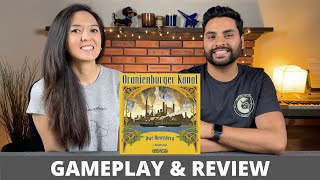
In Oranienburger Kanal, you erect new industries and shape the infrastructure by building pathways, streets, railways, and canals. Most important of all are bridges that connect buildings. To do all of this, you have access to various actions that you select in the right moments.
At the end of the game, the player with the best industrial area and the best infrastructure wins.
Oranienburger Kanal also includes a solo game!
—description from the publisher



- intriguing two-player puzzle with high interaction
- interesting dual-trigger mechanism (surrounding and bridging)
- very little public information available yet
- one or two players max; tiles trigger effects up to twice
- tile-laying/area-control with a canal/connection theme
- Fields of ARL
Mechanics (from transcript analysis)
- tile-laying with four-sided surrounding/bridging — Place tiles to surround others; link with bridges to trigger effects again
- two-player focus — Designed to be played with 1-2 players
Video topics + discussion points
Quotes (from this video)
- I can't wait to get my hands on this
- it's one of the most exciting things I've seen
- this looks stunning on the table
References (from this video)

- Intricate and high quality Euro game
- Master designer of economic systems
- Makes sense as a design publisher pairing
- Constructing industries to shape infrastructure and bring business to Brandenburg by building canals and bridges.
- Brandenburg, 1832-1837
- Fields of Arle
Mechanics (from transcript analysis)
- Engine Building — Construct new industries to shape the infrastructure.
- network building — Build bridges that connect buildings across the canal.
- Route Building — Construct new pathways, streets, railways and canals.
Video topics + discussion points
Quotes (from this video)
- Which isn't a positive mindset batman come on leave some cynicism for the rest of us
- I always assumed it would be the internal collapse of the substitute butter industry but I am really correct about these things
- This is possibly the best cover to any board game ever
- Which got my noggin jogging because Iranian Burger Canal is a Spielworks game so this was a design publisher pairing that I wasn't expecting to see but one that makes total sense like maple and bacon cheese and pickles
- Brad Garrett I mean Merlin
- All of which sounds to me like a D&D session bound for a total party knockout
- Enticed me to this was the noble mighty and underappreciated yak that adorns the box Also, it's cute. Look at that face. I'd kiss it.
References (from this video)

Mechanics (from transcript analysis)
Video topics + discussion points
Quotes (from this video)
- this sounds really boring but essentially i built a database of all of the content that i've made over the last eight years
- it's an incredible number i was shocked to see that
- it's now publicly available to everybody you can go to johngetsgames.com/games and that'll take you right to a read-only version of it
- these are essentially passion projects that i'm working in amongst the paying work that I do
- this is essentially a 1.0 version of the junkets games database
- it's possible at some point i will upgrade this into an actual website
References (from this video)

- deep thinky puzzle with multiple strategic paths
- card-driven building system with evolving goals
- expansion decks increase replay value
- complex scoring can be hard to grok; requires time to learn
- not as engaging as other Rosenberg titles in some respects
- price and reprint changes (Canal) create confusion
- artwork and components feel subpar compared to other Rosenberg games
- resource wheels; canals/railways/roads; buildings/cards
- Glass Road
- Ora et Labora
- Black Forest
- Nusfjord
- Fields of Arle
- Through the Desert
- Kingdom Builder
- Atiwa
Mechanics (from transcript analysis)
- building cards and route tiles placed between buildings — Acquire building cards, place route tiles (canals, roads, railways) between buildings; some rules constrain canal/railway counts.
- detailed scoring conditions on cards — Each card has a scoring condition that triggers under certain surrounding conditions (e.g., canals/roads) and some cards offer trade-offs for resources.
- Network/Route Building — Acquire building cards, place route tiles (canals, roads, railways) between buildings; some rules constrain canal/railway counts.
- resource wheels and multiple anytime actions — There is a resource wheel that can be spun via anytime actions; spinning the wheel can be triggered by actions.
- Simultaneous Actions — There is a resource wheel that can be spun via anytime actions; spinning the wheel can be triggered by actions.
- Worker Placement — Each player has a large personal board; seven actions per round, each action can be used once per round; seven rounds total.
- worker placement with a 4x4 grid — Each player has a large personal board; seven actions per round, each action can be used once per round; seven rounds total.
Video topics + discussion points
Quotes (from this video)
- This is a play it for me.
- the main enjoyment I get out of this game is that dice splitting decision
- Fromage is a simultaneous worker placement game.
- this is one of the better Rosenberg games I've played in the last 5-10 years
References (from this video)
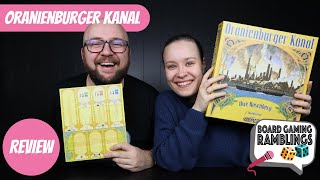
- Very tight, minimalistic design with surprising depth.
- Excellent two-player crunch; meaningful decisions without overwhelming complexity.
- Rulebook clarity with bilingual components (English/German) enhances accessibility.
- Iconography can feel non-intuitive at first glance.
- Resource-to-points conversions add a layer of bookkeeping that may slow early play for new players.
- Infrastructure development, resource-driven route construction, and competitive optimization.
- Grid-based infrastructure-building with a historical-feel flavor centered on canals, roads, bridges, and rail connections near Iran.
- Abstracted historical theme with explicit infrastructure focus; less emphasis on flavor text, more on puzzle.
- Activa
Mechanics (from transcript analysis)
- card_driven_actions — Cards provide actions and synergy; players use and combine them to advance routes and build structures.
- grid_and_route_building — Players build routes (roads, canals, rail) on a grid and around activated features to trigger effects.
- Neighbor Interaction — Spaces can be blocked by opponents, creating strategic tension and plan adjustment mid-game.
- Network/Route Building — Players build routes (roads, canals, rail) on a grid and around activated features to trigger effects.
- opponent_interaction — Spaces can be blocked by opponents, creating strategic tension and plan adjustment mid-game.
- Resource Management — Resources (money/coins and other tokens) are converted into actions, cards, or points; management is central.
- resource_management — Resources (money/coins and other tokens) are converted into actions, cards, or points; management is central.
- wheel_mechanic — A resource wheel tracks spending and replenishment; end-of-round decisions can alter resource availability.
- Worker Placement — Seven available worker placement spots drive action selection; placement order and availability shape strategy.
- worker_placement — Seven available worker placement spots drive action selection; placement order and availability shape strategy.
Video topics + discussion points
Quotes (from this video)
- I really love that it's so simplistic but it has surprisingly a lot of depth
- one of those games where I felt like after you played I just want to play it again
- it's very simple to sit down and play, easy to set up, easy to take down
- I think this is a great two-player game
- this is a dry and boring or simplistic but it's really the combination of building these routes and triggering these buildings and also doing this in the order that is the most logical
References (from this video)
- Engaging spatial puzzle with multiple activation pathways
- blends engine-building with routing strategy
- Solo playthrough includes live rule teaching and in-game explanations
- Clear path to victory with visible early and late-game planning
- Setup is fairly involved and components require careful ordering
- Rule interpretation relies on a reference book and token icons, which can be dense
- The complexity may be intimidating for casual players
- Infrastructure expansion, resource management, and engine-building through routing choices
- Industrial era city with canals, railways, and urban infrastructure development
- Live instructional commentary with rule-teaching on the fly
Mechanics (from transcript analysis)
- Action Drafting — Actions are taken by placing a stack on an action spot; a red marker blocks the leftmost option, limiting available actions each round
- Action selection using a stacked action disc system — Actions are taken by placing a stack on an action spot; a red marker blocks the leftmost option, limiting available actions each round
- Bridges as a secondary activation mechanism — A building gains an activation when it has two Bridges connected; affects timing and reactivation opportunities
- Canals, roads, and rails interplay with placement rules — Canals must connect from existing canals; roads can be placed flexibly; rails require iron and wood; players may overbuild on existing paths but not on other types
- Endgame scoring with multi-faceted victory conditions — Scoring includes buildings, prestige, routes, canals, rails, and money, with penalties for unfilled roots and other nuanced rules
- Network/Route Building — Canals must connect from existing canals; roads can be placed flexibly; rails require iron and wood; players may overbuild on existing paths but not on other types
- Resource Management — Resources (wood, coal, clay, iron, brick) are produced and consumed to construct buildings; a production wheel and various tokens regulate gains
- Resource wheel and production loop — Resources (wood, coal, clay, iron, brick) are produced and consumed to construct buildings; a production wheel and various tokens regulate gains
- Routing puzzle around buildings — A building activates once it is fully surrounded by the correct types of routes (paths, roads, canals, rails). Different buildings require different surrounding patterns
Video topics + discussion points
Quotes (from this video)
- The key puzzle of this game is that as we build these structures we do not get to activate their special abilities
- surround the building with these different routes and there’s four different types of roots we have paths, roads, canals and rail track
- every building that we build has a chance of activating twice for the whole game
- two Bridges attached to it you also get to activate its special ability
- this wholesale trade… it’s going to be worth 12 points at the end of the game
- final score of 123 points
- Between 120 and 129 Prestige is you are victorious
References (from this video)
- Subtle strategies
- Tight decision space
- Solid solo mode
- Urban planning with routes, canals, roads, and rails
- Four action spots per round on a 4x3 grid tableau
- Abstract yet strategic
Mechanics (from transcript analysis)
- Area/placement around a card — Surround cards to activate bonuses
- grid-based tableau — Build a 4x3 grid with root tiles and cards
- Resource Management — Activate bonuses based on surrounding roots and routes
Video topics + discussion points
Quotes (from this video)
- Trailblazers is a small and quick playing tile laying and card drafting game
- it's an extremely simple game but man do I find this one difficult
- Cascadia is a drafting and tile-laying game that celebrates the environment and wildlife of the Pacific Northwest region
- one of the most welcoming games on this list
- Cartographers Heroes is a flip and right game
- Dorf Romantic is a cozy tile-lane game
- Naturop is a standalone light 18-card micro game
- Ark Nova has a wonderful action river system
- Ginopolis is an abstract looking tile laying and citybuilding game
- Feast for Odin is the classic tile-laying game
References (from this video)
- engaging round-by-round playthrough
- strong synergy with expansions and dockside bar mechanic
- variable setup increases replayability
- rule complexity can be intimidating
- mid-game resource crunch can hinder plans
- pathway optimization may be punishing if mismanaged
- industrial expansion, trade, urban development
- A canal-building frontier city with interconnected canals and railways, inspired by 19th-century European industrial expansion.
- solo, round-by-round playthrough with reflective narration
Mechanics (from transcript analysis)
- construction and route-building — build roads, canals, and rail to unlock points and upgrades.
- Network/Route Building — build roads, canals, and rail to unlock points and upgrades.
- Point Salad — points granted for proximity, upgrades, and completed networks.
- Resource Management — manage wood, brick, iron, clay to finance building and expansion.
- round-by-round action selection — plan actions across rounds and respond to emergent board state.
- scoring via surrounding, upgrading and pathway completion — points granted for proximity, upgrades, and completed networks.
- wheel movement / tempo control — use a wheel mechanism to reposition resources or actions between rounds.
Video topics + discussion points
Quotes (from this video)
- I love this game. I think it's a challenge every time.
- I'm really excited for the release of the new version later this year.
- This is Oranienburger Kanal. Really excited for the release of the new version later this year.
- I really enjoyed this round by round structure.
References (from this video)

- brain-burning puzzle
- variety via modular decks
- limited release and smaller print run
- Route-building and canal construction
- Puzzly Rosenberg-style game for 1-2 players
- Abstract, puzzle-driven
Mechanics (from transcript analysis)
- Grid-based resource engine — 4x3 grid with action spots and routing
- Surround-and-activate — surround cards to activate bonuses via routing decisions
Video topics + discussion points
Quotes (from this video)
- My number one solo board game for 2023 is Void Fall.
- This game has dominated the last 3 weeks of my life.
- The learning curve here is one of the most painful that I've ever experienced.
- This is a massive complex puzzle and there's just no getting around it.
- Please let me know what games I missed in the comments.
References (from this video)
Mechanics (from transcript analysis)
Video topics + discussion points
Quotes (from this video)
- Bridges cost one wood to build
- this is a two-player only game or solo game
- Bridges are good Bridges bad when activating two at the same time