



Order Overload: Cafe Deep Dive
What the Community Thinks About Order Overload: Cafe
Reviewers describe Order Overload: Cafe as a memory game that wins over players who expected to dislike it. The premise asks the whole table to hold a long list of drink and food orders in mind, and the reviews agree that the appeal comes from the group rather than from any one player's recall. Actualol calls the game an experience game that delivers the same camaraderie as The Mind or Hanabi, and points out that players usually do better than they expect once they start guessing together.
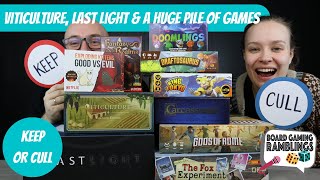
Opinion on the broader lineup is more mixed. Board Gaming Ramblings called Order Overload its best experience of a long keep-or-cull session, praising how fun it was to play, while Board Gaming Ramblings in a separate episode noted that the cafe-themed version is harder than the original and recommended a promotional Oink Games release. kovray describes the game as a surprise, admitting a weak memory but still enjoying each round. The consistent thread across these reviews is that the game is more fun than its premise suggests.
Core Mechanics That Define Order Overload: Cafe
Order Calling and Elimination
Each round begins with one player reading out the full list of orders, after which the cards are shuffled and dealt face down among the players. On a turn, a player names an order they believe is held by another player. The named order is discarded if it is correct, and the goal is to clear out the hands of two players so that nobody needs to remember everything. Actualol explains that if a player calls out an order that does not exist, that player can no longer guess that round, and if every player is eliminated the table loses. Because one remaining player can keep guessing and win the round for everyone, the design lets the group's best memory carry the weaker members. Actualol summarizes this as the table being only as bad as its best player.
Level Progression
The game is organized into levels, and each new level asks the table to track a bigger list of items. Actualol notes that the lists introduce confusing near-duplicates, such as banana milk, banana muffin, and strawberry milk, and that a single order can appear two or three times, which makes each level harder than the last. Reviewers describe the moment of finishing a level as the high point of the design, because the group has to reach deep into memory for the final item. Going Analog places the game in the same conversation as Nana and The Mind when discussing how quickly spoken information is lost.
The Order Overload: Cafe Experience
Shared Tension and Group Cheers
Reviewers describe the table as a tense but supportive place. Every call is a small risk, and a wrong guess can feel embarrassing, yet a correct call from a quiet player produces a cheer that the whole group shares. Actualol highlights those group reactions as a defining feature, comparing them to the cheers found in The Mind. Board Gaming Ramblings describes a similar pattern of enjoying the game most when its own failed attempts become the joke.
Humor From Forgetting
A large part of the amusement comes from how confidently players misremember. Reviewers describe calling out an item they were sure had been dealt, only to be corrected by a teammate, and the moment of hearing an unfamiliar item such as pancakes can be distracting in the middle of a round. Going Analog points out that people tend to underestimate how quickly they forget something they heard only moments earlier, which is exactly what the game exploits. The result is a light, laughter-driven experience rather than a serious test of memory.
What Makes Order Overload: Cafe Stand Out
A Design That Hides Its Difficulty
Reviewers consistently praise how the game turns forgetting into entertainment. Actualol notes that players who expect to struggle often find they are better than they thought, because the game is built around near-misses and shared responsibility rather than around a single person's score. The rules are light enough that a group can start a game quickly, and the discovery that the table remembers more than it believed is one of the title's most cited strengths.
Accessible Social Play
Because one remaining player can keep guessing, the game stays engaging even when some participants struggle. Actualol notes that the table's collective memory matters more than any single player's, so a group with mixed memory habits can still contribute to every round.
Potential Drawbacks
Difficulty Can Overwhelm New Groups
The cafe-themed version is described as harder than the original Order Overload, with menu items like near-duplicate orders pushing the difficulty up a notch. Board Gaming Ramblings says that between the two small promotional releases, the original Order Overload is the one they generally recommend. Groups that do not enjoy memory games may find the early levels frustrating before the cooperative rhythm settles in.
Confusion From Similar Items
The game deliberately uses similar item names, which reviewers find clever but also draining. Actualol describes how easily a player can become convinced that one item was dealt when another was, and how repeated duplicates make each round harder. Some players may find the constant second-guessing tiring over a long session, particularly when the level list grows and new items are introduced mid-round.
If You Enjoy Order Overload: Cafe
Players who enjoy Order Overload: Cafe's shared memory challenge and group cheers will find similar satisfaction in The Mind, which reviewers name as the closest comparison for the camaraderie of the format. Players who appreciate the way the table pools its knowledge to win a round may also enjoy Hanabi, which Actualol cites alongside the cafe game. Fans of memory-driven escalation, where each level adds more information to track, will recognize the tension that Going Analog connects to Nana. For players who want to compare the original design, the original Order Overload remains the natural next step, as Board Gaming Ramblings suggests.
What Reviewers Are Saying
"You have to be good at this game. Bring me in. So, I just have a blast, but then don't expect me to contribute to your team."
— kovray
"Finishing a level feels like such an achievement, scraping the bottom of your brain to find that final matcha latte. It has those big group cheers that you get in The Mind when someone remembers a chocolate shake that you're convinced has never passed your ears."
— Actualol
"I like this game so much it's hilarious, I didn't, it came out of nothing for me, it came out of nothing, it was so unexpected is what I meant to say."
— Board Gaming Ramblings