
From the heart of Prague’s Old Town, the ancient Astronomical Clock, known as the Orloj, marks the passage of time with its intricate mechanism and enigmatic figures. A marvel of medieval technology that has endured to this day.
In this game, you take on the role of a master builder competing to leave your mark on history by adding the legendary and majestic calendar to the ancient Orloj. Precision, balance, and knowledge of the cosmos will be the keys to completing this complex task.
With every gear, sphere, and zodiac sign you assemble, you will be one step closer to finishing this masterpiece that will mark time in the city for generations.
Each turn, players will place workers on the clock's dial to gain resources and perform actions with the goal of building the Orloj calendar. In addition to hiring assistants, during the game, players will construct the apostles' carillon and develop their knowledge across three tracks where experience will enhance their abilities.
The game will end when the calendar is completed. The player with the most harmony points will win the game.
—description from the publisher


Images


- Entwined worker placement with constantly changing actions.
- Beautiful production that moves with clockwork precision.
- Dynamic and evolving worker placement options.
- Refurbishing an astronomical clock
- Prague
Mechanics (from transcript analysis)
- action selection — Actions are determined by the position of independently moving discs at the center of the clock face.
- Area Control — Implied by competing to be the best at refurbishing the clock and building statues/frescos.
- Resource Management — Players compete to refurbish the clock, likely involving collecting and spending resources.
- Worker Placement — Players place workers on action spaces, which are determined by rotating discs on a central clock face.
Video topics + discussion points
Quotes (from this video)
- This is a worker placement game about the famous Orloj astronomical clock in Prague.
- It is a deck building game from CGE all about we are running sci-fi jalopy broken down um mining equipment trying to build the best deck to go deeper and deeper into the mine to find the minerals and bring them back all the way up so we can sell them so we can buy more cards deck builder style to upgrade our operation as we race to be the first to make the most progress and clear out the most corridors and whatnot to trigger the end of the game.
- Your draw pile in this deck builder, you always see the next card that is coming. It is always face up.
- This was the best game of last year.
- I don't like train games. I am so sick and tired of train games.
- it totally lives up to the hype.
- this game is absurdly expensive.
- And um it is also its box is absurdly huge.
- The real secret sauce here is the dual use components.
References (from this video)

- Absolutely love this game
- So many moving parts that come together so succinct and concisely
- Gorgeous presentation
- Fits together very smoothly
- Fairly easy teach and play
- A lot of complexity in the decisions
- Push your luck element
- Variable timing influencing game length based on player choice
- Standout game
- May cost you in the long run if you're not able to repair deviations
- Building the face of a clock
Mechanics (from transcript analysis)
- action selection — gathering resources with your workers and using them to select different actions
- contract fulfillment
- Engine Building — You'll also be building out your own enchelons on your tableau board by filling in apostles or assistants for end game scoring.
- Set Collection — You'll also be building out your own enchelons on your tableau board by filling in apostles or assistants for end game scoring.
- Worker Placement — Essentially, you are gathering resources with your workers and using them to select different actions that will let you build out the main face of the clock relative to other players vying for positions.
Video topics + discussion points
Quotes (from this video)
- Hopefully these first impressions will clue you in to some games you might enjoy as well as saving you some money and time researching games that you may want to pass on.
- But without further ado, let's get started.
- Overall, not only does this game have gorgeous presentation, but it has a lot of elements of chunkier Euro style games that fit together very smoothly and I found that it is a fairly easy teach and play with a lot of complexity in the decisions that you make from turn to turn.
- Really, really love this one.
- If you have a chance to check out Orléans you're a fan of Eurogames, definitely don't sleep on this one.
- I'll definitely want to play it with more than two players before I give more thoughts on it, but I have to say that I'm very tempted, and this is rare for me, but I'm very tempted to just pay MSRP for this one so I can get it as soon as possible and try it with three, four, five because the two-player game was very interactive, very puzzly, and also didn't outstay its welcome as I found some trick-taking games with multiple rounds tend to do.
- So, although I'm very glad that I got to try it, this isn't necessarily one that I'm looking to add to my collection personally.
- So, there you have it. That is seven mini reviews of some new games that I got to try last month.
- Hopefully, these first looks can give you some ideas about whether or not these games are for you.
References (from this video)
- Unique title.
- Looks pretty snazzy.
- Intrigued.
- Striking cover art.
- Mechanical operation looks interesting.
- Looks gorgeous.
- Has a certain style.
- Artwork style is not a massive fan.
- Components look basic.
- Surprised it's getting so many thumbs.
- Building the legendary and majestic calendar to the ancient clock.
- Prague
- Zulcan
Mechanics (from transcript analysis)
- action selection — The game features a sliding tile system that guides players in managing time for card usability and controlling activation rhythm.
- Set Collection — Assembling gears, spheres, and zodiac signs.
- Worker Placement — Players take on the role of master builders, hiring assistants and performing actions.
Video topics + discussion points
Quotes (from this video)
- Devir Games really need to make less games in less games in a year because then they might actually put out some belters rather than just a bunch of meh games.
- It's using the conveyor belt mechanism that I adore from uh art from AR Nova and Civilization: The New Dawn, but there's only four slots.
- All right, so this is giving me a very um pursuit to happiness vibe here, but with a slightly different take on it.
- It's a very dry mechanical game.
- This artwork looks nice. Oh, wow. Oh god. Yeah, that is pretty.
- I like Underwater Cities. It's on my shelf. Um I like this game a lot.
- Cascadia, which is already probably one of the best gateway games in existence.
- So you've got new artwork, new graphic design, updated mechanics, wooden meeples, uh same quick play time that gives a 4x feel in under 90 minutes.
- This is an expansion that's not going to really add that much to the game?
- It's basically the snorefest of themes, but this is a new version of it.
References (from this video)

- super solid
- super fun Euro game
- liked the mechanism of turning the clock
- never having enough things to move to where I wanted to go
- interesting with three or four players
- moving of those things is very unique and very, very cool
- need to play more times
- don't need to play it more with two players
Mechanics (from transcript analysis)
- action selection — The mechanism involves turning the clock to choose actions.
- Resource Management — Players manage a resource called 'deviation' which can limit their options if not managed properly.
Video topics + discussion points
Quotes (from this video)
- It's been super duper quick and I have to say before the next two like the next two months are going to be so fast.
- So like September and October is going to be so quick. Yes. I'm kind of I cannot wait for November because it's going to be quieter for work. Like the next two months is basically going to be work and board games.
- I had the most fun with Age of Galaxy.
- My biggest surprise was money.
- Biggest letdown for me it was Pulitzer.
- My number three is IR.
- My number three is Orlo the Prague Astronomical Clock because it's a super solid, super fun Euro game.
- my number two is going to be Fortunes of Scoundrel Bay, a new uh pirate game from Shadow Parks, also coming out at Spiel.
- My number one is Recall.
- Yes, my number one is also going to be recall.
- It's a very good game. If you want to see more about the reasons and also hear English words, I would re I would I would recommend going and look at the recall video.
- We hope you enjoyed it. It was a great fun and it had words in it.
References (from this video)
- Plays 1-4 players
- Plays in 1-2 hours
- Amazing artwork
- Intriguing theme related to astronomical clocks
- May not be available in North America until 2026
- Astronomical clock
- Prague
Mechanics (from transcript analysis)
- Set Collection — Tracking seasons and years
- Worker Placement — Looking at the board and and the different things going on
Video topics + discussion points
Quotes (from this video)
- My number three is the Royal Society of Archaeology from Hutch Games.
- Mine is Bohemians. This is from Portal Games.
- Countryside is the one I picked for this one.
- My number two also involves animals sort of. It is Aquaria.
- My most anticipated Essen 2025 game is Kingdom Crossing from Sorry We Are French.
- Well, my number one is Wispwood from CGE.
- We've enjoyed Castle Combo a lot with our group.
- Lord of the Rings Duel, which has been very popular, is getting an allies expansion.
- And then Windmill Valley Oh, yep. Really enjoy Windmill Valley. It's I don't know if you can see it. See it. Windmill Valley, that's getting the Blooming Sails expansion.
- And then one other honorable mention is called Twisted Trumpets from Play to Z.
- What is it? We would love for you to tell us in the comment section after you like this video, what your most anticipated Spiel game is going to be.
References (from this video)

- Visually amazing with a nice color palette.
- Rulebook is generally clear apart from front-loading of information.
- People played with generally enjoyed it.
- Rulebook has a lot of front-loading of information.
- Potentially too much going on for some players.
- Fiddly player boards made of multiple cardboard pieces.
- Missing first player marker in the reviewer's copy.
- The Prague Astronomical Clock
- Prague
Mechanics (from transcript analysis)
- action selection — Players choose actions to perform.
- Clock Building — Involves building parts of the clock.
Video topics + discussion points
Quotes (from this video)
- It looks visually amazing. I personally like the color palette of the game, and I think it does look really good.
- The game is a heavy game. It's a Some people will call it a medium game, right? It's a 45-minute teach.
- Agemonia, still fantastic, still really good.
- It's all three of our number one games of all time.
- Does it fit with the Marvel theme? Absolutely. It it really does.
- I
- Magnate: The First City designed by James Naylor and I'm going to be doing a giveaway for it.
- So, good luck for that and I'll announce the winner next month.
- all of my advertising revenue from all of my videos every month goes to charity.
- So yeah, Solar Titans is going to get three play throughs on the channel in December.
- It's going to be January and February. In fact, February's looking like a good month for me at the moment.
- Talisman Nemesis is the latest expansion for fifth edition that turns the game into a one versus many game.
- And me and Rick on a Tuesday night we're starting playing the Arnak cooperative campaign. So that is another series of play throughs, Lost Ruins of Arnak the cooperative campaign.
References (from this video)

- Lovely four-player game
- Easy entry
- Fascinating mechanics
- Great theme
- Great table presence
- Prague Astronomical Clock
Mechanics (from transcript analysis)
- Rondelle — Mentioned as a "fascinating rondelle" mechanic.
- Tableau Building — Described as having "personal tableau" mechanics.
- Worker Placement — Listed as a "fascinating rondelle worker placement" mechanic.
Video topics + discussion points
Quotes (from this video)
- Mustache is a game where you are every round playing on a different team trying to earn the most tricks.
- The game ends at exactly the right amount of time
- It was a true delight.
- So, I am pre-ordering. I am on the tempo train. and I really really was impressed.
- I was like, how did this little Martin Wallace gem slip by?
- Um, but it's a really good challenging game.
- Puzzle hunt is um just the the best. It's a treat.
- Puzzle Hunt, 10 out of 10.
- Puzzle Hunt is by far the best part of BGG for me, the most memorable part, and the most fun.
References (from this video)
- Fun
- Prague Astronomical Clock
Mechanics (from transcript analysis)
Video topics + discussion points
Quotes (from this video)
- Mustache is a game where you are every round playing on a different team trying to earn the most tricks.
- The game ends at exactly the right amount of time
- It was a true delight.
- So, I am pre-ordering. I am on the tempo train. and I really really was impressed.
- I was like, how did this little Martin Wallace gem slip by?
- Um, but it's a really good challenging game.
- Puzzle hunt is um just the the best. It's a treat.
- Puzzle Hunt, 10 out of 10.
- Puzzle Hunt is by far the best part of BGG for me, the most memorable part, and the most fun.
References (from this video)

- Good table presence
- Variability
- Historical theme
- A lot of setup
- Heavy weight
- Master builder competing to finish an astronomical clock
- Prague
Mechanics (from transcript analysis)
- action selection — the rotating faces on the board that will help determine your action selection for the round.
- Resource Management — gain resources
- Set Collection
- Variable player powers — upgrade your abilities
- Worker Placement — you're also going to be placing workers out on the clock's dial to gain resources, perform actions, all that sort of stuff
Video topics + discussion points
Quotes (from this video)
- This is a deck-building game.
- one of the interesting aspects of this is there's 13 ways to win the game.
- Essentially, 13 dark pacts in the game and each of those dark pacts is a unique win condition that feels, you know, it feels like crazy to get.
- You can also play two times and three times multipliers on those cards to double every aspect of the card.
- that just feels like a very satisfying aspect of the game.
- the main mechanism of the game is I split, you choose and that's always one of my favorite mechanisms because it's it's not a difficult game to teach, but it's a difficult game to make decisions.
- So, what do you sacrifice and what do you keep is also an interesting aspect of that one.
- This is a great family game if you want to.
- And so, there's a lot of lying and promising of other people where you're like, "Do you want to go there with me? Nobody else go there.
- I swear to god, don't go there."
- And so, there's a lot of sort of lying and intrigue and where you're going and promises that you're making and stuff like that.
- please, you know, check out my new series. It's all funny and games when it drops in May.
References (from this video)

- improving precision, balance, and beauty of an ancient astronomical clock
- Old Town of Prague
Mechanics (from transcript analysis)
- Calendar Building — Goal of building the Orloj calendar.
- Rondel — A rondel-powered set collection game.
- Set Collection — A rondel-powered set collection game.
- Worker Placement — Players place workers on the clock's dial to gain resources and then perform actions.
Video topics + discussion points
Quotes (from this video)
- the biggest board game in the world
- the ultimate Civ building game
- the game that logged the most plays this month, SETI, Search for Extraterrestrial Intelligence.
- the game that is currently still going strong.
- Brass: Pittsburgh the game, takes the Brass system into America's first Gilded Age, deep within the Steel Belt region during the late 1800s.
- My personal top pick of the month is a deck-building game by the same designer behind the much-beloved card comboer Ascension, but this one being the Shards of Infinity Saga Collection
- And this episode's hottest game of the month is the puzzly two-player maze deduction game Layers.
References (from this video)

- Beautiful production
- Getting a wider retail release
- Complex and engaging for experienced players
- Expensive
- Heavy complexity
- Astronomical clock
- Prague
- Lassera
Mechanics (from transcript analysis)
- area influence — Likely involved in managing influence on a board.
- Worker Placement — Implied by the comparison to 'Lassera style' games, suggesting worker placement or similar action selection.
Video topics + discussion points
Quotes (from this video)
- So, we just want to tell you which one they are and why.
- So, let's start off this list at number 10 with the smallest game you can buy.
- The the ones before they were little they were like competitive.
- Exactly that.
- So there's some great play that can be had with here with deliberately placing your dice on places where your opponents are just to remove everybody's dice.
- So, you're trying to get your piece to the dungeon door with the most treasure underneath it.
- And 10B is a lovely town building card game.
- So there's some really interesting again emerging gameplay from that system which is really really fantastic.
- Yeah. So, this is from the guys at Inside Up Games and they it was a Kickstarter probably a couple of years ago and now it's going like full full retail and it's what they call the Twisted Realms trilogy.
- But this game seems to be um sitting in somewhere between um in that space where where you got hit, you got thunder of vendetta, you got joy ride
- This basically seems like a rea battler with with cards with cars.
- But this is a wide modern Euro game.
- The production looks beautiful with this like rotating boards and stuff.
- And Container is a fabulous economic old school, old-fashioned style Euro game.
- cowboy fighting the spawns of hell. That is so metal.
- So for example, a double pair will do x amount of damage. If you got a full house, you're going to do a lot of damage. If you got a poker, you're going to do like the mega crit crit one.
- world order is a game of geopolitical stability and the slow balance and careful balance of power between major global players
- It's u it's again it's uh that this social like political games each player is going to play um uh one of the the four superpowers in the game is going to be the US, Russia, Europe or or China
- So, Matt, that takes us to the end of this video where some of the most exciting new games that you can buy at UK GE 2026.
- In order to enter our giveaway totally free, but we got a couple of different ways.
- Hit the subscribe button now. Do it now.
References (from this video)

- Medium to heavyweight Eurogame.
- Intriguing action selection mechanism.
- Production looks like one of the best of the year.
- Construction of a medieval clock
- Prague
Mechanics (from transcript analysis)
- action selection — An intriguing action selection mechanism that forces difficult decisions.
- Eurogame — A medium to heavyweight Eurogame.
- Rondel — The clock works as a rondel of sorts that players can manipulate and place workers around.
- Worker Placement — Players primarily use worker placement to upgrade the clock.
Video topics + discussion points
Quotes (from this video)
- The push and pull really works well.
- I should warn you that I've heard the rules have changed slightly in the final version.
- The Lord of the Rings: The Two Towers trick-taking game is the standalone sequel to The Fellowship of the Ring trick-taking game
- The twist is there's a third opponent faction controlled by the game itself that is also competing for area and scoring points.
- A solo mini Cyclades sounds really interesting to me, so I'm very excited for this one.
- It's a little difficult to tell these tile placement games apart. A lot of them are starting to look quite similar.
- The production looks like one of the best of the year.
- I know the card play of Revive is not in Recall, so that alone seems like enough of a difference despite some of the surface level similarities.
- Given the mixed reviews this game has received on BGG, I'm concerned.
- I also think it just looks amazing on the table.
- This sounds like it might improve the solo game as long as controlling the bot doesn't become too complex.
References (from this video)
Mechanics (from transcript analysis)
Video topics + discussion points
Quotes (from this video)
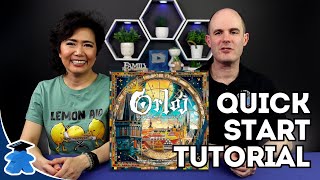
- In Oloy, players compete to contribute to the famous astronomical clock on the old town hall in Prague.
- On your turn, you either activate the clock or pass.
References (from this video)
- Satisfying combo turns
- High replayability due to variability
- Elegant complexity despite a busy appearance
- Excellent production quality and art
- Innovative take on worker placement with entwined drafting and worker bumping
- Makes worker placement feel fresh and exciting
- Good balance of strategic depth and accessibility
- Upgrading the Prague Astronomical Clock
- Mid 1800s Prague
- Phoenix New Horizon
- Cascadia
- Euphoria
Mechanics (from transcript analysis)
- action selection — The movement of the clock's hands dictates available actions, and players can 'break the clock' to manipulate movement and access desired actions, though this incurs negative points (deviations).
- Objective Fulfillment — Players race to complete various communal objectives for points and bonuses.
- Push Your Luck — The 'deviation' mechanic allows players to move the clock hand beyond its normal limit at the risk of negative points if not repaired.
- Resource Management — Players gather and spend resources like lumber, iron, paint, and gold to build upgrades and complete objectives.
- Set Collection — Players collect stained glass pieces, and potentially assistants, which provide end-game scoring or bonuses.
- Track Advancement — Players advance on mastery tracks (Precision, Innovation, Observation) which provide various benefits and unlock new abilities.
- Variable player powers — Players can upgrade their building abilities and utilize special workers like the sculptor, which have different levels and capabilities.
- Worker Placement — Players deploy workers to take actions on the main astronomical clock or recall workers for bonuses. The host describes it as 'a worker placement game. We've got a bunch of workers here ready to go. And on my turn, I'm either going to deploy one of my workers... or if I want to, I can spend my turn recalling workers.'
Video topics + discussion points
Quotes (from this video)
- This is the best game of 2025 I have played so far. Flat out, this is my number one game of the year.
- The game looks pretty. The silk green meeples are great, the art is great, and while it looks very, very busy, all the information here makes it very easy to play.
- The brilliance of this and Phoenix New Horizon before it is it has the feel of a big crunchy meaty overwhelming euro... but it doesn't play like that it's fast it's elegant.
- It is a master class of how to do a modern feeling euro... that pushes things to the limit without overwhelming players.
References (from this video)

- Visually appealing
Mechanics (from transcript analysis)
Video topics + discussion points
Quotes (from this video)
- what is your game of 2025 that got away?
- I really want to play it.
- I don't know if we even have access to it.
- I've been hunting for it.
References (from this video)
- Beautiful looking game
- Unique clock worker placement mechanic
- Player controlled game end
- Mastery tracks are vital and offer strategic depth
- High variability appeals to complex game players
- Tight competition at higher player counts
- Breaking gears is an intended and strategic part of the game
- The pass action can feel stunted if player hasn't advanced on the track
- Balance issue for two players making it feel less tight
- Two-player game offers a very different experience than three or four players
- Can feel inefficient if gears are not managed correctly
- Refacing or resurfacing the Prague Astronomical Clock
- Prague
- Terracotta Army
Mechanics (from transcript analysis)
- Engine Building — Players build up their efficiency through track advancements, cards, and other bonuses, leading to more powerful turns.
- Gear Manipulation — Gears can be broken to allow for greater manipulation of the clock hand or fixed to reset them. There's a limit to how many can be broken.
- Hand Movement — Players must move a hand on the clock at least one space when placing a worker, with options to move it further or backward by breaking gears.
- passing — Players can choose to pass instead of placing a worker, with the benefit of the pass action determined by their position on a specific track.
- Round end trigger — A 'rooster call phase' acts as a round end when triggered by certain actions or when the rooster marker reaches the end of its track.
- Set Collection — Collecting apostles and workshop cards provides bonuses and scoring opportunities.
- Track progression — Mastery tracks influence various aspects of gameplay, such as moving the clock hand further, improving pass actions, and influencing bonuses from moon or painter movements.
- variable setup — Scoring tiles, goal tiles, card availability, and starting clock positions vary each game, requiring strategic adaptation.
- Worker Placement — A unique clock worker placement system where a hand on the clock dictates available actions and must be moved each turn.
Video topics + discussion points
Quotes (from this video)
- This is a pretty meaty Euro. I would say it's medium to heavy weight Euro.
- This is one of those games I wanted to make sure and play before we organize our top 10 list because it seems like the likely candidate for our top 10 list.
- Number one, I think it's a great game, spoiler alert, but number two, it is a beautiful looking game.
- The name of the game is fighting those combos.
- Going up those tracks early is huge.
- This game, um, and I entirely mean this pun, has a lot of moving parts, right?
- There's a lot of breaking the game, like this whole deviation thing with breaking the gears. You're meant to do that. You do not want to end this game going, I did it and I never broke a gear. You just lost probably if you did that.
References (from this video)

- Strong thematic integration with the Prague clock motif
- Satisfying track/gear manipulation and clear euro-gaming appeal
- Not as accessible as lighter euros; some players may find rule learning dense
- Rulebook clarity could be a barrier for new players
- clockwork/gears, tracking through time
- Prague; historical-inspired city/clockwork theming
- thematic euro with a strong historical flavor
Mechanics (from transcript analysis)
- set collection and route optimization — Collect thematic assets and optimize routes/tracks to maximize scoring opportunities.
- track/gear manipulation — Gears and clock faces are manipulated to unlock actions and improve efficiency.
- Worker Placement — Classic worker placement with a clock/gear twist that advances tracks as you upgrade on the clock face.
Video topics + discussion points
Quotes (from this video)
- The heaviest on this list physically just massive, huge, untenable how big and heavy it is, but it's such a cool adventure game as you're going through using your dice, a very interesting, clever mitigation and dice resource management systems in order to go out and adventure and fight and go through these stories.
- I love a good track.
- Galactic Cruise. This is such a phenomenal game. It is a Vital Lacerda-esque game, but it also smoothens so much of that onboarding and learning process, but also gives you so much crunch as you're trying to build up your cruise ships.
References (from this video)
- Strong thematic integration with a clockwork mechanism
- High interaction without mean play
- Cascading actions create deep decision space
- Good variability due to setup and clock arrangement
- Heavy setup and learning curve
- Board can be busy and iconography may be hard to parse
- Endgame scoring and some actions are placed in less intuitive locations
- Blockers on the clock spaces can limit planning in higher player counts
- clockwork timekeeping with zodiac/astronomical theme
- Prague, Czech Republic; historic astronomical clock
- educational, theme-forward
Mechanics (from transcript analysis)
- action selection — outer and inner actions linked to rotating clock faces guiding player choices
- building clock faces / tokens — placing and upgrading clock-face and zodiac tokens for points
- card market / objectives — gaining cards and fulfilling first-come objectives for bonuses
- endgame trigger — rooster track and round-end mechanics determine when the game ends
- gear deviation / tokens — flipping gear tokens to trigger penalties or rotate the clock
- Track Advancement — advancing blue/pink/yellow tracks to gain actions and bonuses
- tracking / track advancement — advancing blue/pink/yellow tracks to gain actions and bonuses
- Worker Placement — placing workers on action spaces with bump mechanics and recoveries
Video topics + discussion points
Quotes (from this video)
- Go research the clock, it's super amazing.
- This is a clockwork type game.
- There are so many thematic touches that it feels thematic in the right way.
- It's a lot of game in a little box.
References (from this video)

- stunning production and visuals
- intriguing action-selection through a clock mechanic
- reminds of Zulkan in spirit with a distinct twist
- clock mechanic may be less accessible at first
- master builders improving a historic clock
- medieval Prague clock and timekeeping as a centerpiece
- engineering focus with strategic depth
- Zulkan
- Recall
Mechanics (from transcript analysis)
- area engine strengthening tracks — advancing on three tracks to improve future actions
- clock rondelle — the clock acts as a rondelle to manipulate actions
- Rondel — the clock acts as a rondelle to manipulate actions
- Worker Placement — placing workers to gain resources and actions
Video topics + discussion points
Quotes (from this video)
- I love the theme.
- it looks beautiful on the table
- interrelationships within a complex ecosystem
- You're going to be doing exactly what you expect. You're going to be traveling around on a grid of cards.
- Become the most seasoned wanderer with sleeves full of the best stories, the star of every campfire gathering.
- Deckers is a re-implementation of Renegade.
References (from this video)

- Unique central clock mechanism with deviations
- Striking, thematic visual design
- Encourages careful planning and optimization
- Rule complexity may be daunting for new players
- Can feel fiddly to teach and learn in a casual session
- Clockwork, time-keeping, city-building through a decorative astronomical clock
- Historical Prague and a clock-assembly motif
- Abstracted thematic veneer framed by a central clock mechanic
- Ticket to Ride (in the sense of route-building and scheduling), other worker-placement euros with a central action clock
Mechanics (from transcript analysis)
- action track progression — Advancement along tracks yields upgraded actions and scoring opportunities
- clock/deviation mechanic — A bespoke deviation system used to extend actions and bend the usual rules
- Track Advancement — Advancement along tracks yields upgraded actions and scoring opportunities
- Worker Placement — Standard worker placement on a central clock track to gain actions/resources
Video topics + discussion points
Quotes (from this video)
- This is pure euro goodness.
- The clock mechanism in the middle just looks so different from the other worker placement games.
- It's relaxing and nice.
- Day One crossover, I like it because yes, it is like a ticket to ride, but with a twist.
- It's a very simple trick taking game, but it's a lot of fun.
- The timing is very interesting; you want to do everything before you do anything.
- You get to try to set yourself up to get more and more things as you go.
References (from this video)
- Aesthetic and thematic cohesion around the clock motif
- Appealing to fans of calendar/time-based mechanics
- Could be similar to other heavy euro in terms of decision depth
- Some players may prefer a more direct action economy
- Artful clockwork and astronomical display integrated into scoring
- Prague landmark-themed machine clock simulation
- Grand, ceremonial showcase of Prague’s clock lore
- Orlo (earlier entry) and other clockwork Eurogames
Mechanics (from transcript analysis)
- clock-face placement — Placement decisions influence both immediate actions and long-term scoring
- dice/placers on a clock-like mechanism — Deden the clock to unlock actions and score
Video topics + discussion points
Quotes (from this video)
- This is pure euro goodness.
- The clock mechanism in the middle just looks so different from the other worker placement games.
- It's relaxing and nice.
- Day One crossover, I like it because yes, it is like a ticket to ride, but with a twist.
- It's a very simple trick taking game, but it's a lot of fun.
- The timing is very interesting; you want to do everything before you do anything.
- You get to try to set yourself up to get more and more things as you go.
References (from this video)
- Engaging clock/deviation mechanic that creates meaningful tension and decision space
- Rich Euro-game feel with multiple tracks and viable routes to victory
- Clear iconography that reduces ambiguity during play
- High variability due to setup and the scoring objectives
- Satisfying combo-building and resource cycling.
- Some turns can be long and feel tedious for other players
- Endgame can feel abrupt in certain configurations or player counts
- New players may struggle with determining optimal action order
- Complexity may deter newcomers.
- timekeeping, astronomy, clock-building, guild-like workshop
- Prague, historical/mythic setting around the Prague Astronomical Clock
- historical-mechanical puzzle with Euro-game flavor
- South Fjord
Mechanics (from transcript analysis)
- building/purchase grid — Pay resources to build buildings on a grid; prices rise with purchases and affect scoring opportunities.
- clock/deviation mechanism — Move a central clock pointer; deviation choices allow more/alternative actions and can force other pieces to move.
- discs/helpers and scoring — Disciples and helper cards grant bonuses and contribute to end-game scoring through various tracks.
- endgame conditions — End triggers either when the entire clock is built or after a fixed number of rounds, depending on player count.
- resource tracks and production — Upgrade resource tracks to increase production and unlock bonuses.
- rondelle/track movement — Circular/rondelle tracks that grant bonuses and influence action availability.
- Worker Placement — Send workers to perform actions and gain resources or bonuses.
Video topics + discussion points
Quotes (from this video)
- I love it's kind of rondelle. Rondell is a track that moves on forever. I love that.
- One thing I really enjoy about this game is the changing prices of the buildings.
- It's a Euro game, so there's tracks, but also tracks, tracks here, tracks there, tracks there, tracks everywhere.
- This is a combo game
- I think this is a great game.
References (from this video)
- rich, deeply interwoven engine and gear system
- exceptional presentation and teachability for a complex Euro
- rulebook is unwieldy with multiple pages and modules
- the two-rulebook presentation complicates setup and accessibility
- astronomical clock construction with gears and interlocking mechanics
- historic/industrial era clock construction
- layered gears and multi-use actions driving player strategy
- Ark Nova
- Power Grid
Mechanics (from transcript analysis)
- engine-building with shared and individual objectives — each player builds an evolving engine while supporting others’ goals.
- gear upgrades via pathways and clock manipulation — manipulating the clock yields bonuses and combo opportunities.
- interlocking gears with multi-use actions — players manage gears that unlock combos and scoring; rotating clock dictates actions.
Video topics + discussion points
Quotes (from this video)
- Damn, this game is mean.
- This is the best trick-taking game we've ever played.
- Entwined drafting is excellent; the arithmetic can be heavy but rewarding.
- Peak Team is the best cooperative game of 2025 so far, by far.
References (from this video)

- absolutely gorgeous euro aesthetic
- innovative use of two rondells
- strong thematic integration with calendar/clockwork
- potentially complex to learn
- heavy feel may deter casual players
- calendar synchronization and clockwork mechanism
- Medieval Prague, astronomical clock construction
- engine-building and calendar optimization
Mechanics (from transcript analysis)
- calendar construction / timekeeping — players work to assemble and align elements to keep the clock running properly
- rondel action selection (two sets) — two rondell-style action wheels gate the available actions and sequencing
Video topics + discussion points
Quotes (from this video)
- This is an absolutely gorgeous euro instead of you know one of those really like dry beige looking ones that I also very much love.
- I love eyes. I think that they're absolutely beautiful.
- Two sets of rondells.
- Engine building, right? Engine building. It's awesome.
- The horses are really the core of it all.
- It's basically playing a card into your tableau. And as you do so, it's like kicking off a different card.