/pic6417261.jpg)
Game Info
Year
2022
Collection
Ratings
Creator Score
Mechanic profile
Percentile rank vs. all games
Vibe profile
Not enough video data yet
Description
Ostia is a strategy game for 1-4 players. Players lead a large fleet to explore the ocean, trade and develop the port.
Make good use of the Mancala system to strengthen your personal board and aim for the highest honor!
The player chooses one of the six spaces on his board.
Corresponding resources will be produced for the number of ships in that space.
After that, take all the ships in that space and place them one by one clockwise.
Take action corresponding to where the last one ship was placed.
By repeating this, you can build a new ship on your personal board, strengthen your ship to a larger one, or build a building in the harbor.
—description from the publisher
Featured Videos

Ask a Rules Question
All mentions
Browse transcript mentions, sentiments, pros/cons, mechanics, topics, quotes, and references.
Total mentions: 20
This page: 20
Sentiment:
pos 17 ·
mix 1 ·
neu 1 ·
neg 0
Showing 1–20 of 20
Video LBABJdmDBpE
Chairman of the Board Review at 0:22 sentiment: positive
video_pk 151277 · mention_pk 424856
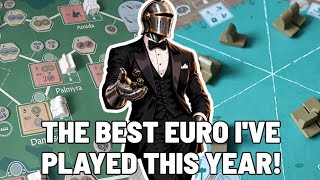
Click to watch at 0:22 · YouTube ↗
Overall sentiment (raw)
positive
Pros
- Best Euro game played this year.
- Impressive playtime (70 minutes for a 3-player game vs. 100-120 minutes on box).
- True old-school Euro feel.
- Refined and enhanced experience.
- Mancala system is a great cerebral puzzle.
- Mancala system determines actions and resource generation.
- Meticulous planning is possible with the Mancala.
- Layered resource gathering amplifies brain space.
- Must set up moves in advance.
- Intuitive rules, easy to grasp.
- No rules exceptions or fiddliness.
- Rules make sense and resonate.
- Multiplier track provides a good pressure point.
- Need to engage with all moving parts of the game.
- Reminds of other favorite games like Concordia, Newton, Scythe, Navegador, Trajan.
- Blends together very well.
- Polished and well-executed.
- Lovely production (Mariner edition) with great components.
- Minimalist design works well.
- Domino mechanism where everything knocks onto the next moving part.
- Timeless and well-designed.
- Has the pedigree to hold up against older great games.
- Smooth engine.
- Purest example of OG style Euros.
Cons
- May feel like too much can be accomplished if players adopt a chilled strategy.
- Scoring is blocky, with points coming in large chunks rather than a trickle, which is a personal preference.
Thematic elements
- Resource management and optimization puzzle where players sail ships to unlock end-game scoring and bonuses.
Comparison games
- Concordia
- Trajan
- Newton
- Scythe
- Navegador
- Stefan Feld design
Mechanics (from transcript analysis)
- Engine Building — Players build ships and buildings that provide ongoing benefits or increased yields.
- Mancala — A central mechanic where picking up and distributing 'ships' determines actions and resource generation. It features a layer where the action segment also determines resource spawn quantity.
- optimization puzzle — The core gameplay involves optimizing actions and resource gathering.
- Resource Management — Players are managing resources like wood, stone, and wheat to perform actions.
- Set Collection — Collecting amphoras is one of the end-game scoring mechanisms.
- track climbing — Players move ships up tracks to pass buildings, unlock bonuses, and achieve multipliers.
- Worker placement (implied) — Placing ships and buildings on the board to activate abilities suggests a form of worker placement.
Video topics + discussion points
No key topics recorded for this video.
Quotes (from this video)
- definitely, uh by quite some distance, the best Euro game that I have played so far this year
- Ostia for me is a true old-school throwback uh feeling Euro.
- the Mancala system, which is a mechanism I tend to normally enjoy. A great kind of um cerebral puzzle
- everything in this game kind of a blends together perfectly. Like everything just harmonizes.
- You know, the rules just completely resonated with me and just pretty much fixed into place from the get-go
- if you want a kind of a timeless, well-designed, well-executed, thinky, you know, familiar but with some original concepts style euro, then Austria is pretty much as polished as you are going to find.
- There is no fussiness. There is no fiddliness and it all was just very smooth engine.
References (from this video)
No references stored for this video.
Video o5kAq2_PVHM
Getting Games Discussion at 0:49 sentiment: positive
video_pk 88654 · mention_pk 234209
Click to watch at 0:49 · YouTube ↗
Overall sentiment (raw)
positive
Pros
none
Cons
none
Thematic elements
Comparison games
none
Mechanics (from transcript analysis)
Mechanics unknown.
Video topics + discussion points
No key topics recorded for this video.
Quotes (from this video)
- the solo rules for Darwin's Journey were a mountain among themselves
- my wallet thanks you for Darwin's Journey and Ostia
- Nana toridori
- Hachi Train is a game that came out last year that I really liked
- Tigers and Euphrates is very dry except the river part of the title
- Newton has no theme
- Aura at Labora you are just going through the motions
References (from this video)
No references stored for this video.
Video 15LLUjqJhFE
Watch It Played Top 10 List at 9:15 sentiment: positive
video_pk 85290 · mention_pk 218292

Click to watch at 9:15 · YouTube ↗
Overall sentiment (raw)
positive
Pros
- interesting lineage from Trajan
- desire to hunt down a wider print run
Cons
none
Thematic elements
- training fleets, trading posts, and contracts
- historical/made-up Imperial trade setting inspired by Trajan
- mechanism-driven design with historical flavor
Comparison games
- Trajan
Mechanics (from transcript analysis)
- Trajan-inspired mechanism — uses a mechanism influenced by Trajan to drive actions and scoring
Video topics + discussion points
No key topics recorded for this video.
Quotes (from this video)
- Ah, it's fantastic.
- It's Showstopping on the table.
- I'd recommend Medina second edition to everyone.
References (from this video)
No references stored for this video.
Video CKp1fiv4N0o
Hungry Gamer Top 5 List at 4:57 sentiment: positive
video_pk 84494 · mention_pk 214745

Click to watch at 4:57 · YouTube ↗
Overall sentiment (raw)
positive
Pros
- light, quick
- clever story-building and map interaction
Cons
none
Thematic elements
- story-building and map interaction
- world of Pathfinder; fantasy dungeon crawler
- story-driven progression
Comparison games
none
Mechanics (from transcript analysis)
- Dice-based resolution — light dice chucking with strategic map interactions
- story-building mechanics — story beats integrated into map progression
- Storytelling — story beats integrated into map progression
Video topics + discussion points
No key topics recorded for this video.
Quotes (from this video)
- Y'all, we played the entire Legacy campaign in two and a half days.
- I actually completed the campaign. I have an entire video up about my thoughts after finishing the campaign and it was included in my top 10 dungeon crawl/adventure game/boss battler list that I just recently put out.
- This is a pretty neat little game. And I'm kind of sad I sat on it for so long. It is a pretty quick simple but satisfying leveling up. And overall, I actually quite enjoyed it.
- It's fast, it's light, it's very pretty, and it's quite enjoyable. The gimmick is great.
- This is a very light dice chucking dungeon crawlish style game, and I really enjoyed playing it through.
References (from this video)
No references stored for this video.
Video bG5Vt8VHvMc
Rahdo Runs Through Top List at 1:23:46 sentiment: positive
video_pk 84001 · mention_pk 212804
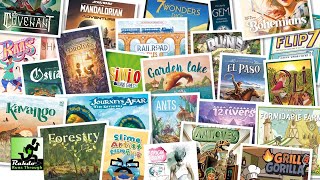
Click to watch at 1:23:46 · YouTube ↗
Overall sentiment (raw)
Very Positive
Pros
- Very cool Mancala implementation
- Goes above and beyond standard Mancala mechanics
- Impressed both players
- Very, very good
Cons
- A bit dry (base game)
Thematic elements
- Merchants
- Port of Ostia in antiquity
Comparison games
- Trajan
Mechanics (from transcript analysis)
- action programming — Dropping pieces off in Mancala activates actions and creates new puzzles for subsequent moves. (5070.24)
- Engine Building — Building more buildings at ports provides more income of resources. (5172.40)
- Mancala — A core mechanic where players grab pieces from a depot and distribute them, activating actions based on where the last piece lands. (5053.04)
- Resource Management — Harvesting goods like stone and lumber are necessary for building actions. (5110.48)
- Route Building — Building ships and moving them to open up trade routes. (5168.00)
Video topics + discussion points
No key topics recorded for this video.
Quotes (from this video)
- Ants. And I loved this game. Um it is a phenomenal worker placement game where we are controlling a colony of ants trying to, you know, spread out into the uh the countryside, um you know, set up pheromone trails of scavenging ants, exploring, dealing with big scary bigger bugs than us, like centipedes and millipedes and whatnot, getting to the far reaches where there are huge benefits if we're the first player to occupy, and, you know, basically expand our little ant kingdom.
- And unlike most other ant colony civilization games, there is no player versus player in this game. No direct attacking. We just have to fight, you know, the the other big bugs that are out there.
- this is a conveyor belt game, folks, and I love conveyor belts. The conveyor belt here is the life cycle of our ants.
- Everything about this game is fantastic.
- It's the second best game we played this month. It's Ants.
- The Last Droids.
- This game is phenomenal.
- It's an I split, I choose game, which is a fun little thing.
- That decision, which do I keep for myself, which two do I give to the other players, is phenomenal.
- The rules actually suggest that once the cards are revealed before the lead player hands them out and keeps one for themselves that players could say, "Hey, I really want that one."
- The art in this game is stunning.
- It is the best game I played this month as a three-player game.
- As a two-player game, I don't know. So, I'm going to have to do a follow-up in a future roundup, I assume.
References (from this video)
No references stored for this video.
Video ivNeF9YDM8A
Board Game Sanctuary Top List at 3:50 sentiment: positive
video_pk 83583 · mention_pk 210846
Click to watch at 3:50 · YouTube ↗
Overall sentiment (raw)
positive
Pros
- Cool rondelle system
- Fascinating player board
- Great progressive feeling
- Easy to pick up
- Many layers of strategy
Cons
none
Thematic elements
Comparison games
- Yoga Hama
Mechanics (from transcript analysis)
- Action Point Allowance — The magnitude of actions is determined by where ships are dropped off and the number of ships present.
- Rondel — Utilizes a rondelle system for action selection, involving picking up and dropping off boats.
- Worker Placement — Players place buildings and establish strategies by navigating ships across the board.
Video topics + discussion points
No key topics recorded for this video.
Quotes (from this video)
- So, before we embark on this top 10 list that I'm sure you're really waiting to hear about, I just want to give a little bit of preface to how I've I guess I've selected these games.
- It's really hard to play every game that's released in 2025.
- This is Danny Sun, and I'll see you again soon in 2026. Or if you're in 2026 watching this video or in the future, hello.
- Wondrous Creatures, is really good, and it's all about the eggs, and the eggs really make the difference.
- The centerpiece of this game are the cards.
- Incredibly satisfying.
- Way more way more enjoyable than I thought it was going to be.
- Men Nefer is a point salad dream.
- I know they've literally put everything on the plate and called it a board game.
- But in Men Nefer it definitely feels smooth and elegant.
- super silky smooth. Absolutely love it.
References (from this video)
No references stored for this video.
Video VidDkpBgcWI
Board Games UnLocked Top List at 2:07:46 sentiment: positive
video_pk 83481 · mention_pk 210437

Click to watch at 2:07:46 · YouTube ↗
Overall sentiment (raw)
overwhelmingly positive, pending full completion
Pros
- masterpiece of design
- exciting and quick exploration
- deep role-playing elements
- intuitive and easy-to-learn mechanics
- clever puzzles
- high replayability
- amazing visual components (prepainted minis)
Cons
- not yet finished, so endgame impact is unknown
- relies on specific character/class availability for some content
Thematic elements
- exploration, RPG, campaign
- narrative, quest-driven
Comparison games
- Tom Bassel's number 10
Mechanics (from transcript analysis)
- Campaign progression — players level up frequently and can upgrade stats rapidly.
- character grid building — armor pieces are placed on a grid, and damage rolls are directed to specific grid areas, allowing for blocking and strategic defense.
- directional combat — weapons have attack patterns, and players target specific enemy spots for critical hits.
- exploration — zipping from area to area is quick and exciting, with a focus on discovery.
- narrative role-playing — NPCs have described demeanors and quirks, and keywords in the text prompt actions, enhancing role-playing.
- Puzzle Elements — incorporates amazing puzzles within the gameplay.
- replayability — requires specific characters or classes for certain quests, adding to replayability.
Video topics + discussion points
No key topics recorded for this video.
Quotes (from this video)
- Grim Coven is an absolute amazing boss battler.
- This is a genre that I just absolutely love. It is so good.
- the stories that they tell are like nothing that we've seen, you know, and just just knowing that
- that's Bonkers the for foresight and thought that had to go into designing this.
- This just brings it into the into the Elder Scrolls universe.
- it makes it a much more in my mind deeper experience than like a Too Many Bones cuz it's got a it's like a campaign game.
- This game is a masterpiece in its design.
- This is the epitome of where exploration RPG and campaign games really need to be.
- It was a no-brainer at this case. I knew what my number one and number two were, you know, pretty pretty easily.
References (from this video)
No references stored for this video.
Video Tt2o9VpFXhQ
Board Gaming Ramblings Top 3 List at 3:18 sentiment: positive
video_pk 81884 · mention_pk 204846

Click to watch at 3:18 · YouTube ↗
Overall sentiment (raw)
positive
Pros
none
Cons
none
Thematic elements
Comparison games
none
Mechanics (from transcript analysis)
Mechanics unknown.
Video topics + discussion points
No key topics recorded for this video.
Quotes (from this video)
- I love Klask.
- it's all about luck in Flip Seven.
- It's a two-player game.
- Goa and it's my number three.
- We got to play Goa. It's not on my list, but no, it is because it's really fun.
- Fields of Arle is a game we played many years ago.
- You're trying to get the peat away.
- My number one is Keyflower.
- Probably it is one of my favorite cooperative games.
References (from this video)
No references stored for this video.
Video XNp6_Syfjwc
The Dice Tower Top List at 29:52 sentiment: positive
video_pk 81632 · mention_pk 354037
Click to watch at 29:52 · YouTube ↗
Overall sentiment (raw)
Very Positive
Pros
- Fantastic game
- Cool Mancala mechanism
- Neat leveling up system
- Satisfying progression and player power development
- Beloved by many
Cons
- One speaker felt the theme wasn't well integrated despite liking the cover.
Thematic elements
Comparison games
none
Mechanics (from transcript analysis)
- action selection — Actions are activated based on the Mancala placement and strength.
- Mancala — Uses a Mancala-like system for picking up and placing cubes to activate actions.
- Player Progression/Upgrades — Building buildings gives upgrades that make actions stronger.
Video topics + discussion points
No key topics recorded for this video.
Quotes (from this video)
- Um I like this one a lot. It's a very It's It's It's a relaxing game. You You got a few minutes, you don't know what to do while you're waiting for such and such thing to come around, shuffle up the deck and start playing.
- I will say I absolutely hate the cover. That is one of my least favorite covers from last year, period.
- This game manages to feel cozy to me because of the theme, but very not cozy in the gameplay. It's very thinky.
- And no matter who I play it with, we always find ourselves getting into the theme and talking about the family like, 'Oh, my mom's going to go play play um Whist over here with my, you know, sister.' Or whatever.
- I think if either side holds back, especially the heroes because you're you're you've been kind of conditioned to do that um by playing other games. If you hold back, you get steamrolled and I think this game got a lot of pushback for that.
- I just the Mancala thing, I wish more games did it. And this one does it in such a very satisfying way.
References (from this video)
No references stored for this video.
Video XNp6_Syfjwc
The Dice Tower Top List at 56:04 sentiment: positive
video_pk 81632 · mention_pk 354050
Click to watch at 56:04 · YouTube ↗
Overall sentiment (raw)
Highly Positive
Pros
- Satisfying use of Mancala mechanic
- Engaging gameplay loop
- Efficient playtime
Cons
- One speaker finds it just 'okay'.
Thematic elements
Comparison games
none
Mechanics (from transcript analysis)
- action selection — I'm always getting stuff and I can immediately use that stuff to move on tracks
- Mancala — I just the Mancala thing, I wish more games did it.
- Resource Management — I'm always getting stuff and I can immediately use that stuff
Video topics + discussion points
No key topics recorded for this video.
Quotes (from this video)
- Um I like this one a lot. It's a very It's It's It's a relaxing game. You You got a few minutes, you don't know what to do while you're waiting for such and such thing to come around, shuffle up the deck and start playing.
- I will say I absolutely hate the cover. That is one of my least favorite covers from last year, period.
- This game manages to feel cozy to me because of the theme, but very not cozy in the gameplay. It's very thinky.
- And no matter who I play it with, we always find ourselves getting into the theme and talking about the family like, 'Oh, my mom's going to go play play um Whist over here with my, you know, sister.' Or whatever.
- I think if either side holds back, especially the heroes because you're you're you've been kind of conditioned to do that um by playing other games. If you hold back, you get steamrolled and I think this game got a lot of pushback for that.
- I just the Mancala thing, I wish more games did it. And this one does it in such a very satisfying way.
References (from this video)
No references stored for this video.
Video Smkz5egRNR8
Board Gaming Ramblings Review at 0:06 sentiment: positive
video_pk 81143 · mention_pk 200056
Click to watch at 0:06 · YouTube ↗
Overall sentiment (raw)
positive
Pros
- Engaging puzzle that works well mentally
- More engaging and interconnected actions compared to Trajan
- Crucial timing makes for tense decisions
- Supports many different strategies
- Nice level of subtle player interaction
- Smooth gameplay flow once rules are understood
- Offers a similar planning vibe to Trajan and Concordia
- Pirates expansion adds essential crunch and thinking
- Base game is fun, but expansion is highly recommended
Cons
- Can be challenging for players who aren't strong planners
- Pirates expansion can limit options by introducing obstacles
- Base game might be less enjoyable without expansions
- Availability issues for the game
Thematic elements
- Traveling out in the world to see the world and trade things and get resources
- Ostia
Comparison games
- Trajan
- Concordia
Mechanics (from transcript analysis)
- action selection — Players choose which actions to perform from available options, with the administration action allowing for two actions at once.
- Area Majority — Placing buildings on the map where your ship has gone past, with bonuses for being the first player to build in certain areas.
- Engine Building — Constructing buildings provides bonuses, either instantly or at the end of the game, improving capabilities.
- Mancala — Players choose a spot, move pieces one at a time, producing resources of that spot before landing and performing an action. The location of pieces gathered in a spot influences resource production.
- Resource Management — Players gather resources (cubes) and use them to build boats, buy cards, or construct buildings.
- Set Collection — Collecting symbols on cards or points from treasure chests contribute to scoring.
- Variable player powers — The Pirates expansion adds special powers that influence how players approach the game.
- Worker Placement — Actions are performed by placing pieces on specific spots on the board.
Video topics + discussion points
No key topics recorded for this video.
Quotes (from this video)
- This is a game that worked very well in my brain.
- I feel like everything I do here is more fun.
- There is so many more things to think about here. So many small choices and the timing is super super crucial.
- I feel like half of the game is in the in the Pirates expansion.
- Ostia is a pure fun. I think that when you get into it, it's very smooth.
- I would choose to play this every time over Trajan.
References (from this video)
No references stored for this video.
Video XYGG3yk3c1A
BoardGameGeek Discussion at 2:36:46
video_pk 80559 · mention_pk 196400
Click to watch at 2:36:46 · YouTube ↗
Pros
none
Cons
none
Thematic elements
Comparison games
none
Mechanics (from transcript analysis)
Mechanics unknown.
Video topics + discussion points
No key topics recorded for this video.
Quotes (from this video)
- We actually really enjoyed the turtle decks.
- Too many tabs. Close some of these things.
- Wow, that is not really helping.
- I I kind of need to hear what's going on.
- Um, I guess I could have him run it. It'd be kind of dull.
- I did work on the uh collar. I kind of feel like I need to do a little bit more dark uh up into the V's of the fur.
- It's pretty cool. I'm really excited for Deborah on that.
- So, we mostly buy the games that we do on the show.
- Well, we did the first level, but at a higher
- This is not fun.
- The way you do it for, um, at least the machine we use now, um, and we've always done that, we we, uh, use a, um, box that converts HDMI to um, dang it, paint is on the wrong side again.
- My goal is to finish wave one for everybody that I have.
- I fractured my heel a year and three months uh you and nine months ago.
- And so, uh, so how many how much characters I have to paint? Oh, I have so many to paint, Chris.
- But you get less brush strokes. And then what I do for the final thing, so I guess essentially it's going to be two stages since I'm doing two thin coats, um, is I also use a speed paint or contrast paint over this.
- So, my goal is to get back around roughly before it's dry.
- And that's 100% valid.
- But you can see here it's rubbed through here. Hold on. It's rubbed through here a bit, but it's smooth and it looks pretty good.
- Yeah, this one's actually pretty good already.
- So, the rim of the base look. It looks really quite good.
- My fingers need to be cleaned.
- Wow, that black paint just coming off from my fingers too.
- Boy, that is not a good intensity for these.
- Well, awesome. Thanks for joining me today.
- Thanks for putting up with the little technical glitches.
- It's a Kenner nomination. I'm not sure. I don't know what will win.
- Let's see here. Uh following. Hooray.
References (from this video)
No references stored for this video.
Video QcvzJ0BZ2qE
Discussion at 1:18:31 sentiment: neutral
video_pk 77747 · mention_pk 187924

Click to watch at 1:18:31 · YouTube ↗
Overall sentiment (raw)
neutral
Pros
none
Cons
none
Thematic elements
Comparison games
none
Mechanics (from transcript analysis)
Mechanics unknown.
Video topics + discussion points
No key topics recorded for this video.
Quotes (from this video)
- I'm not a businessman. Uh, I am not jack business Eddie.
- If you build it, they'll come.
- The cult of new is so strong that I feel like having a lot of content saying older games are also still really great. Um, yeah, can also counteract that.
- The entire Carboard Herald experiment, uh, has been about a dialogue, uh, between the people hosting it and an audience about sharing enthusiastic love for tabletop gaming and the people who make it.
References (from this video)
No references stored for this video.
Video -mQL4owGsKU
Top List at 3:53 sentiment: positive
video_pk 65701 · mention_pk 159458
Click to watch at 3:53 · YouTube ↗
Overall sentiment (raw)
positive
Pros
- Designer's other games are well-regarded
- Cohesive interaction between game areas
- Solid Mancala mechanism distinguishes it from typical euros
Cons
- Theme sounds potentially repetitive
Thematic elements
- Merchants
- Mediterranean
Comparison games
- Sweet Lands
- Aqua Garden
- Trojan
Mechanics (from transcript analysis)
- action selection — The Mancala mechanism is used for action selection.
- Mancala — Features a solid Mancala mechanism for action selection.
Video topics + discussion points
No key topics recorded for this video.
Quotes (from this video)
- So, most of if not all of these games can only be played in person that I will mention in this list.
- So, this is a very heavy game about running a hospital.
- It's like a hospital administration simulator rather than like a game similar to Dice Hospital where it's more focused on physicians treating patients.
- But it it was quite a heavy game, you know, especially considering some of the other heavy games that I've talked about it definitely was over my head
- This is probably at the top of just games on this list that I really want to play again.
- It's a Martin Wallace design of a board game adaptation of a video game, the video game Anno 1800 where you are building up industries in the 1800s acquiring resources and then often trading them with other players in this game to fulfill contracts in hand.
- make games that sound pretty simple when you explain them, but have a lot of strategic depth.
- I really liked how approachable this game was even without having played the video game.
- And uh you know, since then the game has kind of been out of print.
References (from this video)
No references stored for this video.
Video qQJe19RnhII
Board Game Sanctuary Review at 0:00 sentiment: positive
video_pk 50879 · mention_pk 151166
Click to watch at 0:00 · YouTube ↗
Overall sentiment (raw)
positive
Pros
- Beautifully simple yet intricate design that scales in depth as you play
- Clear core loop (move, load, trigger, gain) with meaningful game consequences
- Monuments and ports provide meaningful choices and modular progression
- Resource doubling mechanics add exciting risk-reward dynamics
- Tactile placement of boats and ports creates a satisfying physical experience
Cons
none
Thematic elements
- Trade, resource management, and port development with a focus on contracts and economic growth.
- A hex-based port basin where a fleet travels among trading ports and monuments, forming a compact but rich trading network.
- Abstract economic simulation with a tactile, modular infrastructure emphasis.
Comparison games
none
Mechanics (from transcript analysis)
- Action triggering by placement — Dropping off boats at a port activates the port's actions, revealing abilities and scoring opportunities on that turn.
- Area movement on hex grid — Players move fleets around a hex-based map to deliver boats to ports, which in turn trigger actions and resource flow.
- Contracts — Contracts drive travel from left to right across the map, guiding player movement and strategic planning for resource collection.
- Contracts and travel routing — Contracts drive travel from left to right across the map, guiding player movement and strategic planning for resource collection.
- Engine Building — Constructing buildings and monuments enriches the action options available on a player's board, creating a layered engine-building feel.
- Monuments and buildings for action enhancement — Constructing buildings and monuments enriches the action options available on a player's board, creating a layered engine-building feel.
- Resource amplification via special pieces — Certain boats double the amount of resources earned, providing a strategic leverage point and a temporary power spike.
- Resource generation tied to presence — Resources produced at a location scale with the number of boats docked or stationed in that area, forming a direct link between position and gain.
- Wheat/resource-based fulfillment — Wheat serves as a core resource used to fulfill order cards, enabling progress and access to additional bonuses or symbols.
Video topics + discussion points
No key topics recorded for this video.
Quotes (from this video)
- This is a Euro game where you are the owner of a fleet of ships that travel around inside a hexagonal port basin.
- This game has a main cara mechanism where you're going to be moving your boats around and dropping them off at different ports.
- This is a beautifully simple yet intricate game that's full of layers.
- What's really cool about this game is how you pick up and put down the pieces.
- It's a beautiful game called Austia, and I love it.
References (from this video)
No references stored for this video.
Video KFiXD2fHl4g
Board Gaming Ramblings Discussion at 0:00 sentiment: mixed
video_pk 35691 · mention_pk 106714
Click to watch at 0:00 · YouTube ↗
Overall sentiment (raw)
mixed
Pros
- Excellent rulebook and appendices; clear setup and reference
- Solid solo mode and multiple scenario variability
- High-quality components and art; modular map with clear color coding
- Mitigation in trading (discard to redraw with gold, option to refill)
Cons
- Component-heavy setup (around 38 punch boards) and potential long setup time
- Information overload on the map for new players; readability can be challenging
- Combat can slow the game and dominate pacing, especially with more players
- Heavy reliance on randomness (mining draws, fights) and long sessions (up to 8 hours with four players)
- Limited story/character development compared to narrative-driven experiences
Thematic elements
- Character progression through reputation, gear, and abilities within a scenario-driven quest framework
- Fantasy realm with map exploration, mining sites, towns, portals, and elemental encounters
- Scenario-based, not a continuous campaign; episodic quests with solo and group play
Comparison games
- Heroes of Might and Magic
- The Witcher
Mechanics (from transcript analysis)
- Action Points — Three action tokens per turn used for movement or actions; allows saving or sequencing actions
- action tokens — Three action tokens per turn used for movement or actions; allows saving or sequencing actions
- Area Movement — Move your hero on a modular map using action points to reach mining, trade, portals, and other locations
- Combat action and monster cards — Encounter monsters; monsters act via cards, with guard tokens and potential penalties; dice manipulation is part of combat
- Dice and combat randomness — Combat relies on dice with options to modify results; a mix of luck and strategy
- Mining and resources — Mining spaces yield random resources drawn from tokens; used for quests or sale
- movement on map — Move your hero on a modular map using action points to reach mining, trade, portals, and other locations
- Quests and reputation — Gaining reputation through completing tasks; unlocks new abilities and space for hero powers
- Resource Management — Mining spaces yield random resources drawn from tokens; used for quests or sale
- Solo/Coop/Competitive modes — Supports solo play, cooperative scenarios, and competitive scoring by reputation
- Trade and equipment — Trade locations let you buy/sell items, heal, and unlock abilities; optional discard-and-redraw by paying gold
- Trading — Trade locations let you buy/sell items, heal, and unlock abilities; optional discard-and-redraw by paying gold
Video topics + discussion points
No key topics recorded for this video.
Quotes (from this video)
- it's Heroes of Might and Magic in board game form, but not 100% that
- the turns are snappy but combat is a big part and can slow things down
- this isn't for me, but I appreciate the effort and design
- it's not going to be retail; Kickstarter in May with expansions
- I would not play this with more than two players because combat can stall the game
References (from this video)
No references stored for this video.
Video 9GmpoyAf3ws
The Board Gaming Doctor Review at 3:18 sentiment: positive
video_pk 34590 · mention_pk 103030
Click to watch at 3:18 · YouTube ↗
Overall sentiment (raw)
positive
Pros
- deep strategic depth with an integrated set of mechanics
- smooth progression and scalable gameplay with expansion content
- high replayability due to randomized setups and variable tiles
- strong interconnection of actions via the Mangala system
- Administration action adds flexibility and reduces stagnation
Cons
- interaction can feel limited, leaning toward multiplayer solitaire
- endgame scoring can be tedious to calculate due to the breadth of factors
- setup variability may produce unbalanced experiences between plays
- some players may prefer more direct interaction found in games like Yokohama or Concordia
Thematic elements
- Mangala-based action selection and empire building through trade, with expansion-driven variability
- Ancient Mediterranean trade network with ports in the Middle East and the Mediterranean, featuring ships, buildings, and routes
- Abstract strategic pacing with historical flavor and modular board elements
Comparison games
- Yokohama
- Concordia
- Trajan
- Arc NOA
- Crusaders: Thy Will Be Done
- Five Tribes
Mechanics (from transcript analysis)
- administration action — An administration action lets a player take two different turns on a single turn, increasing tempo and mitigating stagnation.
- Endgame scoring track — Progress along a scoring track based on items collected and buildings/ships owned, affecting final points.
- Event cards / randomized events — Events from the pirate expansion trigger random shifts in play state, adding variability and tension.
- Events — Events from the pirate expansion trigger random shifts in play state, adding variability and tension.
- Expansion interactions — Pirate expansion adds extra board locations, naval threats, and hireable units (legionnaires) with broader strategic implications.
- Mancala — You pick up pieces from a sector, gain resources based on that sector, move pieces one by one until the final piece is placed in a sector, then you take the corresponding action.
- Mangala / Mancala action selection — You pick up pieces from a sector, gain resources based on that sector, move pieces one by one until the final piece is placed in a sector, then you take the corresponding action.
- Military / pirate mechanics — Pirates on ships require military strength to repel; treasure and events introduce risk and reward dynamics.
- Neighbor Interaction — Pirate expansion adds extra board locations, naval threats, and hireable units (legionnaires) with broader strategic implications.
- Randomized setup / modular components — Tiles and tokens create different setups each game, influencing routes, building placement, and scoring opportunities.
- Set Collection — Spend resources to fulfill orders from cards, enabling scoring and strategic synergies.
- Set collection / orders — Spend resources to fulfill orders from cards, enabling scoring and strategic synergies.
- Ship movement along ports — Move ships across ports to reach distant lands, enabling building access and scoring opportunities.
- Tableau Building — Build buildings onto your personal tableau to gain efficiencies and access new actions and resources.
Video topics + discussion points
No key topics recorded for this video.
Quotes (from this video)
- you are essentially using a mangala based system to take your actions
- the administration action where you can essentially take two different turns on the same turn
- I give it a 7.4 out of 10
- it's a pretty streamlined version of some of these other games like Crusaders, trun Yokohama
- this game can have a pretty similar start every round
References (from this video)
No references stored for this video.
Video PFSjQ3_AwIY
Board Stupid Discussion at 3:21 sentiment: positive
video_pk 33829 · mention_pk 100720

Click to watch at 3:21 · YouTube ↗
Overall sentiment (raw)
positive
Pros
- beautiful production
- Japanese-inspired design feel with a clean, neat aesthetic
Cons
- AP potential due to multi-turn planning
Thematic elements
- elegant production, port trading, race/area control elements
- an intricate port/ranking system set in a stylized Austro-influenced maritime market
- clean, elegant Euro
Comparison games
none
Mechanics (from transcript analysis)
- area control & resource management — building up control in port areas to gain resources and scoring
- varied worker/stock actions — each player has a personal board/track that interacts with a central market
Video topics + discussion points
No key topics recorded for this video.
Quotes (from this video)
- it's our monthly roundup
- this is more viby
- the game is an experience
- we're going to go to Birmingham very soon
- it's the best artwork that I've seen
- the art in this made me a little bit emotional
References (from this video)
No references stored for this video.
Video XK1-BUi8u1g
Getting Games Discussion at 35:00 sentiment: positive
video_pk 10850 · mention_pk 32027
Click to watch at 35:00 · YouTube ↗
Overall sentiment (raw)
positive
Pros
- strong aesthetic with screen-printed wooden buildings
- clear, tactile activation mechanic
Cons
- not everyone loves mancala-driven activations
Thematic elements
- mancala-inspired euro with map and buildings
- ancient Ostia
- euro-game flavor
Comparison games
- Trajan
- Crusaders
Mechanics (from transcript analysis)
- asimmetric activation — start and end position influence choices and scoring
- Mancala — board-based activation with six spaces and ship resources
- Mancala system — board-based activation with six spaces and ship resources
Video topics + discussion points
No key topics recorded for this video.
Quotes (from this video)
- the theme of this one says it's a science themed work replacement game set in the 17th century
- this is enough for me to be interested
- it's a really strange game it's called first rat and thematically it's about a bunch of rats in a junkyard trying to make a spaceship
- the cover is stunning and the game looks gorgeous
References (from this video)
No references stored for this video.
Video EcpzbZ9u7Yc
Getting Games Discussion at 0:59 sentiment: positive
video_pk 8553 · mention_pk 25217

Click to watch at 0:59 · YouTube ↗
Overall sentiment (raw)
positive
Pros
- thematic and historical flavor with solid Euro mechanics
- dense decision space without being overly punishing
Cons
- game state and rules might be a bit opaque for newcomers
Thematic elements
- trade, empire-building, logistics
- Ancient Rome port and trade hub
- historical/engine-building flavor
Comparison games
none
Mechanics (from transcript analysis)
- Compound Scoring — strategic planning to maximize efficiency and scoring opportunities
- multi-step planning — strategic planning to maximize efficiency and scoring opportunities
- Resource and action economy — manage resources to enable actions and progress on the board
- Resource Management — manage resources to enable actions and progress on the board
Video topics + discussion points
No key topics recorded for this video.
Quotes (from this video)
- this Ram was always full with all the things that need to happen
- open this is a very long preamble but I’m pretty excited about it
- this is my full-time job and I acknolwedge that
- I feel like I leveled up in a video game
- the project management software has templates built in to plan things out
References (from this video)
No references stored for this video.
Transcript Navigation
Showing 1–20 of 20