/pic1786212.png)

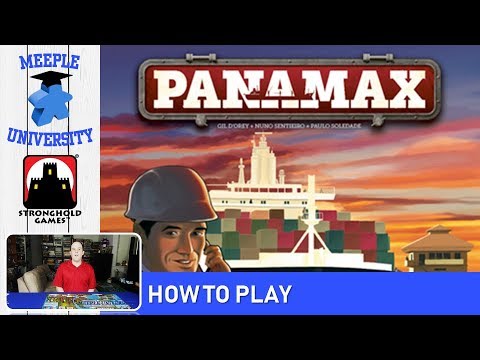

























Panamax Deep Dive
What the Community Thinks About Panamax
Panamax stands as a sophisticated economic game that divides the board gaming community across skill levels and appetite for economic simulation. Reviewers consistently praise its mechanical depth and thematic execution, though some find the premise of shipping-company management dry. The game has maintained a loyal following despite releasing alongside heavier competition, and those who embrace it often rank it among their personal all-time favorites. Before You Play place it near the top of their list, while Foster the Meeple represent the skeptical end, framing it as work rather than play.
Core Mechanics That Define Panamax
Dice-Driven Action Selection and Pick-Up-and-Deliver
At its heart, Panamax employs a dice-driven action selection system where available dice are laid out in the center of the board. Players select which dice to take, and that choice determines both the action they perform and the strength with which they perform it. The game's central arc revolves around pick-up-and-deliver: players load cargo onto card ships and navigate them across the Panama Canal from east to west, fulfilling cargo contracts to generate income. The canal itself becomes a bottleneck. Players can camp their ships inside the canal, and because other players must move through this narrow passage, opponents passively push trapped cargo forward without the owner spending actions to clear the chokepoint. This creates a satisfying puzzle where positioning matters as much as direct action.
The Stock Market as Economic Engine
The economic layer extends well beyond contract fulfillment. A stock market system lets players invest in their own shipping companies and, crucially, in their opponents' companies as well. Reviewers highlight this as a source of dynamic tension: if a rival takes an early lead, you can invest heavily in their company and profit from their success through dividends. This inversion of zero-sum competition creates opportunities for sophisticated play and real interaction. Ultimately, Panamax is won not by who moves the most cargo, but by who runs the best overall business, with money determining the victor.
The Panamax Experience
A Heavy Economic Puzzle
Players describe Panamax as a genuinely economic game that demands constant forward planning and resource management. The interplay between action selection, cargo logistics, and financial investment creates a brain-burning experience. Each turn forces meaningful decisions about efficiency: fulfill a high-value contract now or invest in a future opportunity, block an opponent or profit from their success. The game rewards players who think several moves ahead and understand how cargo flows through the system.
Elegant Blocking and Dynamic Interaction
Beyond pure economics, Panamax generates dynamic player interaction through its canal mechanic and shared action pool. Because passing through the canal requires movement from other players, there is constant subtle jockeying for position. The ability to invest in opponents' companies creates moments of surprising alliance. Reviewers note that Panamax does not feel like a solitary optimization puzzle; instead, it feels like a living economic system where rivals are partners as much as competitors.
What Makes Panamax Stand Out
Thematic Integration Without Overthinking
Panamax delivers on its Panama Canal shipping theme with restraint. The mechanics reinforce the theme without burying players in chrome. Navigating cargo through a narrow canal feels like managing a real shipping corridor, and the stock market mirrors how shipping concerns actually operate. Reviewers appreciate that flavor and function align, creating a cohesive experience rather than ornamental historicity.
Replayability and Emerging Strategies
For a game released during the same era as Terraforming Mars, Panamax has aged well in the eyes of dedicated fans. The dice-selection mechanism ensures no two games play identically, and the variable values force constant tactical adaptation. Reviewers note they would happily keep playing it across multiple sessions. The stock market and contract systems create enough depth that new approaches keep emerging with experience, rewarding players who invest time in mastering the system.
Potential Drawbacks
Economic Abstraction May Feel Dry
Some players find the premise of shipping-company management conceptually unengaging. While the mechanics are sound, the theme of managing cargo and contracts for profit reads as pure work simulation to certain audiences. Where other economic games weave narrative or asymmetric player powers to offset spreadsheet-like optimization, Panamax doubles down on its economic systems, which can feel procedural to those seeking more drama.
Availability and Learning Curve
Panamax has drifted out of print, making it increasingly difficult to acquire. Combined with its reputation as a heavy economic game, this limits its reach. Reviewers acknowledge that while it rewards players once learned, the initial teach requires careful explanation of how the action-selection economy and cargo logistics intertwine. For casual players or those new to heavy euros, the complexity barrier can prove steeper than comparable titles released in later years.
If You Enjoy Panamax
Players who gravitate toward Panamax tend to appreciate other systems-heavy economic games. Terraforming Mars shares similar DNA in card-driven action and engine building, though reviewers note it has proven more durable in the wider market. The canal-blocking and interaction echo lighter economic games like Concordia, which streamlines card play for elegance. The investment-and-timing tension recalls the work of designer Vital Lacerda in games like Kanban, where layered systems reward forward planning. For those who love the satisfying crunch of multi-system economic games, Panamax represents a masterclass in integration.
What Reviewers Are Saying
"You're trying to fulfill different contracts of cargo by moving literally cargo on these card ships across the Panama Canal from the east all the way to the west. It gets very interesting because in the canal you can get passive movement from your opponents. There's a bottleneck in the canal, so you can camp in the canal and then have other people passively move you through, so you're not wasting actions just trying to get your cargo across."
— Before You Play
"You're trying to glom on to your opponents in a sense, you're trying to get them to ship your goods, and you have to plan how your ships are going to go through the canals, and you can lock up the canals. I also love the stock market of this game, where you can invest in your opponents. If you see someone taking a lead, you just invest in them. Really, really fun."
— The Secret Cabal Gaming Podcast
"You are investing in not only your own company, but you can also invest in other players' companies if you see that they're doing something really well, and ultimately it's the person who's run the best business that wins the game."
— Before You Play