/pic4711533.jpg)








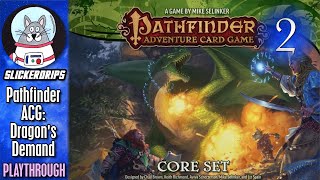




Pathfinder Adventure Card Game: Core Set Deep Dive
What the Community Thinks About Pathfinder Adventure Card Game: Core Set
The 2019 Core Set redesign of Pathfinder Adventure Card Game has earned genuine praise from board gaming communities as a substantial improvement that transformed the franchise into something special. Reviewers describe it not merely as an expansion, but as an effectively redesigned experience that fixed fundamental problems while maintaining the soul of the original game. The Core Set has become a benchmark for how to iterate on an existing game system successfully, attracting both veteran players and newcomers seeking a cooperative adventure experience grounded in meaningful decision-making.
Core Mechanics That Define Pathfinder Adventure Card Game: Core Set
The Time Track and Resource Management
The time track forms the backbone of Pathfinder's turn structure. Rather than alternating in fixed order, players act based on their position on the time track, with the character furthest behind always taking the next turn. This creates organic pacing where each player's decisions ripple through the group's shared timeline. Every exploration, combat, and skill check costs time, forcing players to weigh whether pushing forward to defeat a powerful enemy or acquire better equipment justifies advancing further along the track. This mechanic transforms risk management into a group conversation: should we act quickly and risk fatigue, or move methodically and risk running out of turns before closing all locations? The elegance lies in how it prevents dominant strategies and forces constant tactical reevaluation.
Deck Building and Character Progression
Characters begin with slim starting decks of basic weapons, armor, and spells, but the Core Set explicitly rewards acquisition. Every scenario completed grants hero points that unlock permanent upgrades: boosted statistics, expanded deck sizes, modified character powers, and crucially, the ability to carry more of each card type. This creates a genuine character arc across the campaign. Players acquire blessings, weapons, and allies by defeating enemies or completing challenges, then decide which cards to keep, which to discard for powerful effects, and which to hold for future scenarios. The deck becomes an autobiography of each character's journey through the campaign, making progression feel earned rather than arbitrary.
The Pathfinder Adventure Card Game: Core Set Experience
Narrative Choice Within Mechanical Structure
Rather than replacing mechanics with story, Pathfinder Adventure Card Game weaves narrative directly into its card encounters. Story cards present textual passages describing situations and choices, but the mechanical resolution determines the narrative outcome. A locked gate blocking a location might be opened through a combat check, a knowledge check, or perception check, with each approach reflecting different character approaches to the same problem. The game's campaign structure features 24 chapters organized into adventures, each building on the previous one. This extended narrative arc rewards players who engage with the story while maintaining complete mechanical integrity: you progress whether you care about Belhaim's fate or only about optimizing your character's power curve.
Cooperative Problem Solving and Shared Stakes
The Core Set is fundamentally cooperative. Players must collectively close all locations within a limited number of turns, meaning one character's poor luck directly affects everyone's chances. However, cooperation operates through optional effects rather than mandates: allies can be recharged to grant distant companions d4 bonuses, armor can be discarded to add traits to combat checks, and spells can be exhausted to support group efforts. This voluntary collaboration creates natural team synergy without requiring perfect information sharing or quarterbacking. The time track ensures that turn order constantly shifts, preventing any single player from optimizing for everyone else. Groups learn to specialize: one character might become a scout excelling at perception checks while another evolves into a melee fighter, each filling genuine roles without explicit team-building rules.
What Makes Pathfinder Adventure Card Game: Core Set Stand Out
Iterative Refinement as Design Philosophy
The Core Set achieved something rare: it substantially improved an existing game through careful mechanical tweaks and rebalancing. Rather than wholesale system changes, the designers targeted specific friction points. The redesigned power systems make character abilities more impactful. The expanded hero point customization system creates more meaningful long-term decisions. The card distribution across scenarios feels more carefully calibrated. Most importantly, the designers learned that the Core Set isn't called a second edition not for marketing reasons but because the substantive changes warrant recognition. This kind of thoughtful iteration, where a publisher revisits a game with years of player feedback to create something meaningfully better, has become increasingly rare in the industry.
Variability Without Overwhelming Complexity
Pathfinder Adventure Card Game incorporates immense variability within a tight mechanical framework. No two campaigns play identically because card order, scenario structure, and character builds combine to create distinct experiences. Yet this variability never requires understanding dozens of special abilities or managing symbol-heavy card text. The rules remain learnable in a few hours, but campaigns naturally encourage replays because different character builds unlock different strategic paths through the same scenarios. A second playthrough with different character choices feels genuinely fresh, not like rereading the same story.
Potential Drawbacks
Card Shuffling and Variance Can Create Frustration
As a card-based cooperative game, Pathfinder Adventure Card Game is vulnerable to brutal variance. A character might fail critical checks despite reasonable odds, or encounters might fall in unfavorable sequence within the deck. Some players approach this as part of the narrative risk; others find it punishing. The game provides tools to mitigate this (blessings that reroll dice, spells that add dice to checks, allies that grant bonuses), but these resources are finite. A campaign can end in failure, particularly if several characters make poor luck rolls in succession. This isn't a flaw for players who enjoy the stakes, but groups preferring more deterministic outcomes may find the randomness frustrating across a 24-chapter campaign.
Setup and Teardown Complexity
Pathfinder Adventure Card Game requires meaningful setup for each session. Sorting scenario-specific cards, arranging location decks, tracking time and damage across multiple characters, and managing the campaign's persistent deck modifications creates overhead. The Core Set improved organization compared to earlier editions, but sessions still demand table space, careful organization, and attentiveness to bookkeeping. Groups with limited play windows or preference for faster-playing games may find the logistical burden outweighs the narrative payoff.
If You Enjoy Pathfinder Adventure Card Game: Core Set
Pathfinder Adventure Card Game fans typically gravitate toward other cooperative deckbuilders and adventure games. Gloomhaven offers similar campaign structure with different mechanical systems. Descent provides dungeon crawling with a more modular approach. For card-specific mechanics, Through the Ages and Clash of Cultures deliver strategic depth with civilization-building themes. The Core Set's narrative-mechanical fusion appeals to players seeking story-driven games that maintain mechanical rigor rather than sacrificing mechanics for narrative flavor. Solo board gaming communities have embraced it specifically for the solo variants and campaign structure, and fans of games rewarding character specialization and long-term planning find genuine satisfaction in watching characters evolve across extended campaigns.
What Reviewers Are Saying
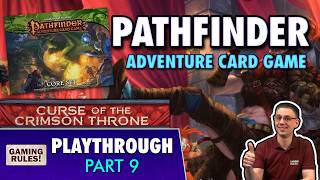
"For me, the core set of Pathfinder adventure card game that came out in 2019 is effectively the second edition of the game. It contained enough tweaks and changes that you would normally find in a second edition of a game. And that for me, those tweaks made it into a much much better game that I thoroughly enjoy playing a lot."
— Gaming Rules!
"We definitely want to close the location which we need to close them all. And I've got a blessing to help her check. And the hour is zero. So we'll get to recharge that. So I think she's going to discard this to explore."
— slickerdrips
"I love the insane amount of variability that each of these boxes has. Just choosing the three different settings, pirate, dark Asian theme, and then classic fantasy, I just love how much game there is between those three boxes."
— AzureDeath | Solo Board Gaming