




























Perch Deep Dive
What the Community Thinks About Perch
Perch has made an immediate impression on board game reviewers as a game that delivers shenanigans, laughs, and surprising tactical depth. Players consistently highlight the game's ability to create moments of competitive fun while maintaining accessibility. The bird-themed area control mechanic becomes a vehicle for clever player interaction and intentional "take that" moments that feel natural to the design rather than punishing. Reviewers praise the modular board setup for its variety while noting that mastery emerges through repeated plays. The game succeeds in being both funny and genuinely strategic, a balance that many competitive games struggle to achieve.
Core Mechanics That Define Perch
Area Control Through Bird Placement
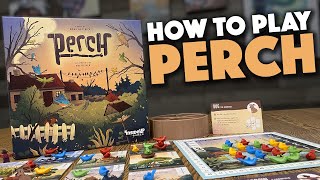
At Perch's heart lies an area control system where players compete for majority at location tiles by placing their own birds and strategically placing opponent birds. Each round, players add birds to a shared bag, then draft from it, guaranteeing mixed bird colors in each player's hand. This creates the central tension: you must place birds not fully under your control. Players take turns placing one bird at a time on location tiles, building stacks where birds of the same color must remain together. The scoring varies dramatically by tile, with some locations rewarding the most birds, others rewarding second place, and some punishing the player with the most birds by awarding zero points. This variable scoring transforms decision-making from straightforward majority-chasing into puzzle-solving about what each location actually rewards. Reviewers note that tied majorities cancel out completely, creating situations where blocking an opponent might cost you points but prevents them from scoring anything at all. The tension between securing locations and denying opponents becomes Perch's strategic core.
Creatures and Resource Manipulation
Throughout the five rounds, players gain control of woodland creatures that execute powerful effects. The dog allows a player to move a bird from one location to an adjacent space, enabling strategic repositioning. The squirrel can swap a bird from any location with one in the fountain, pulling back birds that were previously removed. The scarecrow, placed at any board intersection, can send birds from two adjacent locations to the fountain. Each creature operates under specific movement rules and limitations, preventing them from becoming universally powerful. In rounds four and five, birdhouses let players freeze stacks in place, protecting them from creature effects and lightning strikes. The lightning token in round five lets a player remove any bird to the fountain, even their own if it creates better scoring opportunities. These tools, combined with creature effects, create cascading possibilities where a single turn action can trigger a chain of consequences across multiple locations.
The Perch Experience
Tense and Confrontational Gameplay
Perch establishes itself as a game where confrontation feels earned and entertaining rather than mean-spirited. Reviewers describe playing "as mean as possible" without it creating negative table feelings because the mechanics support intentional blocking and strategic removal. A player might deliberately place opponent birds to steal their majority, or intentionally fail to secure a location to prevent another player from controlling a creature. The modular tiles create new strategic landscapes in each game, so a cheap move in one location might become essential strategy in the next. Players report laughing throughout games, finding humor in the wheeling and dealing rather than in randomness or luck. The game respects player agency, making moments where you get outplayed feel like clever opponents rather than bad breaks.
Interactive and Dynamic Scoring
Perch's variable scoring per round keeps the game unpredictable and engaging throughout all five rounds. Because scoring happens immediately after each round's bird placement, players can plan ahead, knowing their position before round two even begins. The fountain mechanic adds another scoring layer, with birds removed to the fountain occupying a tiered structure where higher positions earn significantly more end-game points. Players discovered that sometimes sacrificing position on a location tile to get their bird into a high fountain tier becomes the winning strategy. This dynamic creates games where the leader shifts multiple times, and the final score often reflects accumulated fountain points as much as location control. Reviewers noted that the recalculated turn order after each round, based on scores, means going first is actually a disadvantage, preventing kingmaking and giving players strategic options for when to push for points versus when to stay subtle.
What Makes Perch Stand Out
Modular Board Creates Varied Tactical Puzzles
Every game of Perch presents a unique tactical landscape through its modular tile system. Basic tiles offer straightforward scoring, special tiles introduce variable conditions, and creature tiles reward majority with access to powerful effects. The number and type of tiles scale by player count, ensuring balance while creating different strategic focuses. Reviewers appreciate that the recommended setup for first games doesn't overwhelm newcomers, yet the expansion of possible tile combinations keeps experienced players discovering new interactions after multiple plays. The modular design also means discussing strategy between games remains challenging because each game requires analyzing a different board state. A location that seemed insignificant in one game might become the critical battleground in another.
Elegant Component Integration
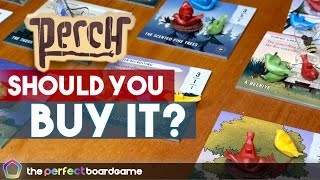
The bird stacking components serve as both visual feedback and game mechanic. Tall stacks become immediately obvious to all players, allowing everyone to quickly assess board control without tallying numbers. The fountain board shows where birds have been removed, with higher tiers reserved for birds placed late in the game, creating a visual representation of momentum shifts. Creatures and their effects integrate cleanly into the turn structure without feeling tacked on. The birdhouse tokens and lightning bolts serve as clear visual markers of round progression and player resource availability. While some reviewers noted the bird stacks can be physically awkward to manipulate, the elegant presentation of information through components outweighs these minor handling concerns for most players.
Potential Drawbacks
Scoring Calculation Slows Game Pacing
The most consistent criticism from reviewers concerns the scoring phase. With five rounds of gameplay followed by five rounds of scoring, plus end-game bonus calculations, the game spends significant time on administrative tasks. In games with more players or more tiles, tallying majorities, applying creature effects, and awarding points becomes lengthy. Reviewers noted this particularly affects families with younger players who lose engagement during scoring rounds. The scoring itself is not complicated, but the volume of locations requiring resolution creates downtime. This pacing issue grows more pronounced in four or five-player games, where more tiles means more scoring per round. Some players have adapted by speeding through scoring phases or accepting that Perch is best played with adults who accept the scoring commitment as part of the experience.
Limited Interaction Between Turns
During other players' turns, there is minimal ability to take actions. You can observe and theorize about placements, but you cannot interrupt, block, or respond to opponents' decisions. This creates extended periods where three or four players watch one player place four birds. Reviewers expressed wishing for optional stop cards, creature activations on other turns, or some other mechanism to keep everyone engaged throughout the round. The modular turn order and knowledge of what birds other players hold partially addresses this by letting you plan defensive responses, but active interaction throughout the phase would improve perceived pacing. The game remains engaging because turn order shifts based on score and creatures control specific intersections, but the fundamental structure leaves players waiting between their own actions.
If You Enjoy Perch
Players drawn to Perch likely appreciate area control games like Power Grid and Root that create asymmetric competition within a shared board. The emphasis on player interaction and take-that mechanics places Perch alongside Wavelength for games that celebrate playful confrontation. Fealty, another area control game with variable scoring, appeals to similar audiences. The modular board and replayability compare to games like Carcassonne or Ticket to Ride in how each game tells a different story based on tile configuration. Perch works best with players who embrace the competitive dynamic and enjoy laughing at unexpected turns of fortune, making it ideal for game night with close friends or family groups comfortable with lighthearted player elimination moments.
What Reviewers Are Saying
"This is a game all about competitive shenanigans. The birds are backstabbing, conniving, and ferocious, and you're attacking birds with cats, birds are going to the fountain they're going to bird heaven. I think the game is hilarious."
— Board Game Dad
"You're placing not only your birds but the opponent's birds too. The most points come from second or third most birds in an area. It's such a clever mechanic that there are lots of things you want to consider."
— Meeple University
"There's a lot of uh take that in there, and that's why I wanted to like take a look at this game. You can steal and move birds. You can get messed over, but it's part of the fun because everyone's getting messed over."
— Board Gaymes James