











Photograph Deep Dive
What the Community Thinks About Photograph
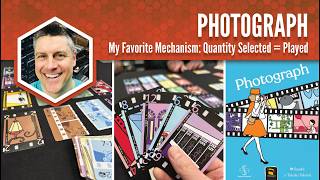
Photograph is a card game by Sashi, first released as Wind the Film! in 2016. It plays two to four people and suits players aged 10 and up. Reviewers keep coming back to one idea: the order of the cards in your hand is the heart of the game. Jamie of Stonemaier Games placed it in a small group of titles where hand order matters, alongside Bonanza and Scout, and then argued that its approach to that order is something not seen before. Reviewers who discuss the game under either name tend to focus on the same thing, which is the push and pull between building a strip of film and living with the cards you were dealt.
Core Mechanics That Define Photograph
Drafting a Strip From the Table
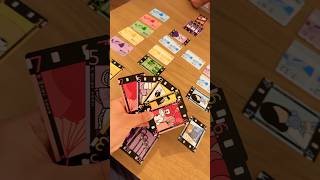
On your turn you take one, two, or three cards in a row from the display in the middle of the table. Those cards may be face down. You can see their color, and you know the hidden value falls between seven and twelve, but nothing more. Jamie explained that you can take a visible card and then add hidden cards after it in a chosen order, and you only learn what those hidden cards are once they reach your hand. Every pick is therefore a partial bet on what you will receive.
Winding the Film and Playing From the Back
Your hand has a fixed order, and the main way to change it is to wind the film, which lets you move one card during your turn. The final step is to play the same number of cards you just gained, drawn from the right side of your hand. Jamie pointed out that the cards you play will not be the ones you just added, because they sit in a different part of your hand. That rule makes taking three cards less attractive than it first appears. You then have to play three cards in an order you may not have set up yet, and playing them in the wrong order costs points.
Scoring Colored Straights
The set collection side of the game is built around straights in each color. Completing a straight of good shots earns a bonus, while out-of-focus shots and incomplete straights take points away. The rules are simple to summarize, yet they reward planning turns ahead, because the penalties usually land on cards you were forced to play before you were ready. The player with the highest total at the end wins.
The Photograph Experience
Tension Built Into Every Turn
The clearest word for the mood of the game came from a community reviewer who called Photograph deceptive. That reviewer described a game that seems simple at first and then reveals more depth than expected. The fixed hand order, the forced plays, and the penalties combine to create tension, and the reviewer admitted that the frustration is part of the appeal once a strategy starts to form. Players who like working out a plan that keeps paying off over time will likely enjoy the slow reveal.
Familiar Feel for Set Collectors
Board Gaming Ramblings compared the experience to Los Cities. The reviewer had played the game before at a convention, and the second session confirmed that it still held up. The comparison centers on trying to keep a color active for as long as possible while fitting new cards into a plan. That reviewer also described Photograph as more strategic than luck-based, which sets it apart from the randomness some collectors expect.
A Dense Final Stretch
Board Game Sanctuary highlighted the late game as the point where the design pushes hardest. Red cards gather in the final round, and players must deal with the options and penalties those cards bring. The reviewer warned that the game does not allow you to do everything you want, and that good play often means holding back a color so that later rounds have room to breathe. That reviewer called the result a very crunchy experience.
Compact Enough for Travel
The game ships in a small box and is easy to carry. One reviewer noted that it costs under twenty dollars and fits anywhere, which makes it a reasonable pick for travel or a quick session with a new group. A pocket game video also placed it among the titles that deliver a large amount of thinking in a small package, which fits the way the box is built for carrying.
What Makes Photograph Stand Out
Hand Order as the Central Idea
Photograph is best understood as a hand management game with a set collection goal. Hand management determines which cards you can play and when, and the set collection goal determines which cards are worth taking in the first place. Jamie called the link between the number of cards you gain and the number you must play a neat hook, and it is the detail that sets the design apart from Scout or Bonanza.
A Bridge Between Two Styles
Players who enjoy tight hand management usually want a deterministic puzzle, while set collectors want a steady sense of progress. Photograph sits between those two expectations. The hidden cards add uncertainty, but the fixed order means that good planning consistently pays off. That blend is why the game shows up in discussions about both genres.
Potential Drawbacks
Limited Mid-Turn Flexibility
Because you can move only one card during a turn, players who prefer to rearrange their hand freely may find the design restrictive. Jamie described the one-card limit as the main way the hand changes during a turn, so a plan that falls apart because a card is out of position can be hard to repair. The Los Cities comparison points the same way, since the reviewer described the game as more strategic than luck-based.
Penalty Pressure Late in the Game
The penalties arrive most sharply in the later rounds, when the cards to be played are heavier and the room for mistakes is smaller. Board Game Sanctuary described this pressure as part of the crunch. Groups who want a relaxed evening may find that the late game asks for more focus than they planned to give.
If You Enjoy Photograph
Players who enjoy Scout or Bonanza will recognize the interest in hand order, and they will likely find the fixed sequence of Photograph refreshing rather than frustrating. Fans of Los Cities will feel at home with the effort to keep a color alive across turns. Anyone who wants a compact game that sparks strategic debate after the box is closed will find plenty to discuss, and the strip of film you build during a session is a satisfying thing to look back on.
What Reviewers Are Saying
"it's one of those games that seems simple but is more complex than meets the eye"
— Community Reviewer
"it gave me the same feeling that I really enjoy from Los cities"
— Board Gaming Ramblings
"it really makes for a very crunchy experience"
— Board Game Sanctuary