/pic6970585.png)

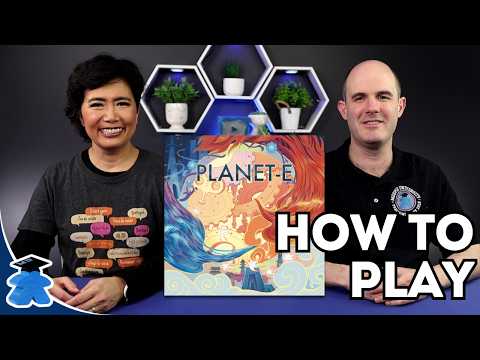



























Planet B Deep Dive
What the Community Thinks About Planet B
Planet B has captured reviewer attention as a fresh take on tile-laying strategy that combines beautiful component design with genuinely clever mechanics. Reviewers highlight the game's irreverent humor, a willingness to poke fun at dystopian futures while delivering real strategic depth. The theme of building something living from nothing resonates with players who appreciate games with a sense of purpose beyond pure point accumulation. Many describe the experience as engaging without demanding the extensive table talk that can bog down longer Euro games.
Core Mechanics That Define Planet B
Tableau Building and Economic Engine
At Planet B's heart is tableau building. Players construct buildings across the game, with each card selected requiring careful consideration of cost versus benefit. Reviewers note that the economic layer, managing resources through production lines that can be customized to focus on plastics or higher-end materials, creates meaningful decisions. Resources harvested from these production lines can either be spent to acquire buildings or converted directly into cash. This feedback loop means early economy-building choices ripple throughout the game, rewarding players who think several turns ahead while remaining accessible to those playing reactively.
Worker Placement With Election Cycles
The election system distinguishes Planet B from standard worker placement. Rather than a linear action selection, players place vote tokens throughout the game. When the election marker triggers, players draw random tiles from a bag, competing to place the most of their own tiles in front of themselves. Winning elections grants both points and special abilities. Since votes reset differently for president, vice president, and other positions, with the sitting president losing all their votes before the next election, the balance of power constantly shifts. This prevents any one player from building insurmountable board control while keeping the competitive tension high-stakes without becoming cutthroat.
The Planet B Experience
Humorous and Whimsical World-Building
Planet B's setting is a deliberately silly dystopia. The art and card names drip with joke-laden flavor that rewards close inspection. Cards reference Carcassonne reprints, space llamas, counterfeit gummy bears, and the tongue-in-cheek "Soylent Green" option. Reviewers consistently note that part of the joy comes from simply reading the cards and laughing at the designer's irreverence. One reviewer mentions discovering planets (Planet D, with sand worms and Martian immigration) hidden throughout the card pool, turning component inspection into a treasure hunt. The game generates memorable stories after play, moments of absurdity and clever combos that players discuss long after the session ends.
Optimistic Science Fiction Aesthetic
Beyond the humor lies a warmer vision: building a new civilization on an alien world. The game presents tile-laying mechanics focused on cultivating an ecosystem in a domed biosphere, managing oxygen and water resources while ensuring bees, the "true keepers" of the ecosystem, have their needs met. This mirrors real-world ecological principles while remaining playful. The colorful, cartoony art style keeps the mood light despite the sophisticated systems underneath, creating a game that feels both intellectually engaging and emotionally inviting.
What Makes Planet B Stand Out
Integration of Thematic Elements Into Mechanics
The news cards system exemplifies this. Players often take news cards purely for their effects rather than their thematic flavor, yet the moral-immoral framework actually shapes how certain in-game effects resolve. Choosing to produce plastic meeples carries mechanical consequences: you gain points if you become vice president, but lose public happiness. This ties theme directly to strategy without feeling forced. The "mood" system creates another dimension where public opinion matters, preventing purely utilitarian play.
Flexible Gameplay That Rewards Different Strategies
The range of building costs and point values means players can pursue aggressive building strategies, push hard for elections, or focus on tableau combos. Some buildings offer steady income; others are expensive but gamewinning point farms. Demolition is available, allowing players to pivot when circumstances demand. Reviewers appreciate this flexibility; the game doesn't force a single path to victory. Elections matter, but a player focused entirely on buildings remains competitive. This multiplicity of viable strategies keeps the table feeling open and dynamic rather than funneling all players toward a predetermined optimal line.
Potential Drawbacks
Downtime and Analysis Paralysis
The primary concern voiced is downtime. With multiple action spaces, building combos, and card interactions to consider, turns can lengthen significantly, especially for players planning several moves ahead. The first playthrough in particular can slow as players learn to chain actions together. One reviewer notes that the election cycle timing, where workers must be retrieved between elections, adds another layer of scheduling complexity. While this is intentional design (forcing tough tradeoffs about when to use buildings), it can create moments where other players wait while someone calculates optimal move sequences.
Luck in the Election System
The random tile draw in elections, while balanced over time through the vote reset mechanic, introduces luck. A player with the perfect hand of votes can be undercut by the randomness of tile order. Reviewers note this is a design choice that works; the mechanic rebalances before dominance becomes oppressive. Players who prefer pure strategy may bristle at voting outcomes partly determined by the draw. This is less of a flaw than a stylistic choice that some tables will embrace while others may house-rule.
If You Enjoy Planet B
Players drawn to Planet B would likely enjoy Carcassonne for its foundational tile-laying simplicity and modular board development. For election mechanics mixed with area control, Dune: Imperium provides conflict-driven worker placement that rewards political maneuvering. If the irreverent theme appeals, Galaxy Trucker shares that sci-fi humor with a construction mechanic. For pure tableau building with economic depth, Splendor offers a tighter engine-building experience with similar resource conversion decisions.
What Reviewers Are Saying
"This game creates great stories after you played and that makes a good game in its own right."
— Meeple University
"There's just some really clever ones, some of them get a little bit bleak, but the theme and the little jokes make it worth discovering every card."
— Before You Play
"Simone Luciani and designer Andrea Manini, you've got me from Cranio, you've got me with this subject matter where we are building a biosphere on a barren alien planet. The subject matter is very very cool, positive looks of science fiction, of humanity, a Star Trek future where we're actually doing good."
— Rahdo Runs Through