


Power Rangers: Heroes of the Grid Deep Dive
What the Community Thinks About Power Rangers: Heroes of the Grid
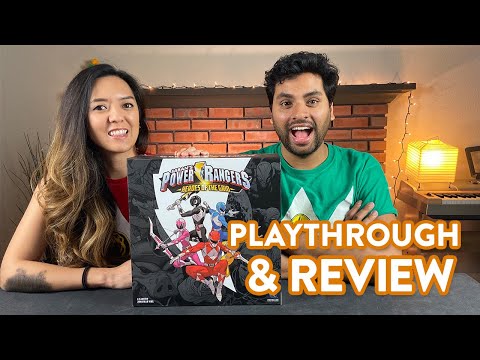
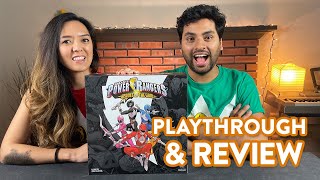
Reviewers approach Power Rangers: Heroes of the Grid from two directions. Fans of the 1990s television series treat it as a tabletop version of the show, while players who care about mechanics judge it mainly on its combat design. Designed by Jonathan Yang and published by Renegade Games, the game draws reviewers who repeatedly describe the production quality as a strength. One Stop Co-op Shop ranks it ninth on its list of cooperative games and praises the combat system, but the same review warns about downtime at higher player counts and difficulty that can swing suddenly. Before You Play is more enthusiastic. After a two-player playthrough, its reviewers call the grid system well designed and say the game feels very different from the dice battles their household does not usually play. Drive Thru Games approached the game before its release with little franchise knowledge, but it was drawn to the design approach, describing a cooperative game that borrows the feel of a dungeon crawl and moves it onto an abstract board. The consensus is that the game rewards players who enjoy tactical card play, while it holds less appeal for anyone who wants a light experience or has no interest in large miniatures.
Core Mechanics That Define Power Rangers: Heroes of the Grid
Dice-Driven Combat
Combat sits at the center of the game. Each Ranger carries a personal combat deck that reflects that hero's special skills and fighting style, and attacks are resolved by rolling dice. The outcome is a matter of probability, but reviewers stress that player choices shape the odds. One Stop Co-op Shop describes the combination of combo card play, enemy activation abilities, and "the tense dice rolling" as a system it considers one of the better examples of tactical card play it has seen. Before You Play's playthrough shows how a single roll can decide a round, and its reviewers credit a late-game run of good rolls for their win. Reviewers say this mix of planning and luck makes each round feel dramatic rather than purely calculated.
Grid Positioning and Card Adjacency
The second mechanic is the battle grid. Enemy cards occupy positions across the city, and many abilities depend on where they sit. The Before You Play reviewers describe a card that lets a Ranger deal one additional hit to an adjacent enemy after defeating a target, which turns the board into a sequencing puzzle. Order matters, and reviewers warn that attacking in the wrong sequence can cost a battle that looked secure. Movement is also constrained. In the two-player game the Rangers must travel together rather than splitting up to cover separate zones, and the playthrough reviewers say this makes the early turns feel far more pressured than they do in a four-player game.
The Power Rangers: Heroes of the Grid Experience
Collaborative Pressure
Reviewers describe a shared fight rather than a contest between players. The Gaming with Edo and Jessica video presents the premise as Rangers working together to defend the city against foot soldiers, masters, and monsters. Board Games for One notes that the game is fully cooperative and can be played solo as long as a player controls at least two of the heroes. The feeling that results is one of collective risk, where a single poor turn can drag the whole team toward defeat. Before You Play describes its two-player game as harder in a different way, with fewer hands engaged in the battle and a sudden-death threat that keeps every decision heavy.
Triumphant Comebacks
The clearest sense of triumph comes at the end of the Before You Play playthrough. After a long fight that the reviewers describe as intense and close to the wire, the team defeats the villain and the reviewers celebrate the moment as Rangers saving the day. That payoff is what reviewers say makes the game feel special: the battle is hard enough that a win earns a real sense of achievement, and the reviewers note that the victory came from careful ordering as well as fortune.
What Makes Power Rangers: Heroes of the Grid Stand Out
Zords and the Megazord Payoff
Reviewers consistently praise the progression built around the Zords. Before You Play explains that each round can reward a Zord bonus, and that the Megazord, once earned, lets a player place a Megazord token in any location at the start of a battle. Doing so deals one damage to every enemy card in that location. The reviewers in that playthrough never earned the Megazord, which they say makes it a long-term goal that players must chase early by weakening the putties before the larger monsters arrive. The reward structure gives the game a clear arc that matches the television series.
Miniatures, Art, and Expansion Depth
The production is the other feature reviewers praise most often. Gaming with Edo and Jessica describes the figures as oversized, roughly two and a half inches tall, and highlights the artwork by Dan Mora, which appears across the cards. Drive Thru Games calls the production great and notes that Renegade Games usually delivers strong production. Before You Play points to the large expansion library, and says that the designer has mixed expansion content into livestream scenarios, such as a game built around an all-Green Ranger team. That flexibility gives the community a reason to keep returning to the box.
Potential Drawbacks
Downtime and Sudden Defeats
One Stop Co-op Shop says the game has downtime issues, especially at higher player counts, and that the difficulty can produce losses that feel unsatisfying. The review suggests official difficulty variants as a fix, because a player can otherwise be knocked out suddenly. Before You Play raises a similar concern in the two-player game, where a sudden-death threat can end a run quickly and the shrinking deck makes the outcome feel precarious.
Price, Miniatures, and Tracking Load
One Stop Co-op Shop calls the game a little overpriced for what it delivers, and argues that the value depends on whether a buyer cares about the miniatures. The same review adds that the expansions are tough to pick up. Before You Play raises the cognitive load. Its reviewers admit that keeping track of the grid is tough, and that remembering which active cards add damage or cost extra energy is a constant task during play.
If You Enjoy Power Rangers: Heroes of the Grid
Players who enjoy the grid-based cooperative fight will find a similar sense of shared purpose in Sentinels of the Multiverse, which also asks a group to work together against a game system rather than against one another. Players who want to see the hero theme and the miniatures carried into a different context may prefer Star Wars: Imperial Assault, a title that the Gaming with Edo and Jessica video connects to the same designer, Jonathan Yang. Each recommendation shares the core appeal of Power Rangers: Heroes of the Grid, which is a team of distinct heroes fighting a large villain across a crowded board.
What Reviewers Are Saying
"There's a puzzle aspect to it like you're trying to figure out and strategize exactly which cards to attack in what in the right order in order to be successful because order matters if you don't go in the right order you can just lose."
— Before You Play
"If you strip that away and especially if you play like Solo or lower player counts where you're always involved the combat system for this game the combo card play the tense dice rolling the enemy like activation abilities and trying to manage them it's really excellent really great tactical card play in general one of the better systems I've seen for that."
— One Stop Co-op Shop
"approach they took to this I'm very interested to see how this works more from actually like a mechanical way than for anything Power Rangers you know it's interesting so they took this IP and they kind of built like this pseudo cooperative slash dungeon crawl."
— Drive Thru Games