





































Propolis Deep Dive
What the Community Thinks About Propolis
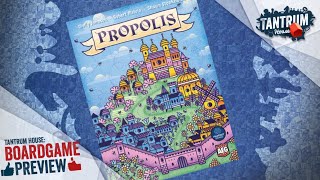
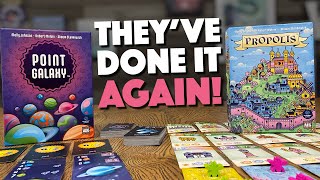
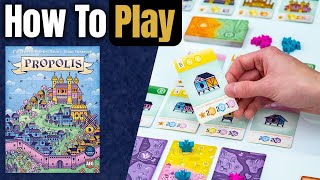
Propolis arrived through a wave of previews tied to a Flatout Games crowdfunding campaign, and several channels covered it before its wider release. Our Family Plays Games disclosed that its preview was sponsored by Flatout Games and framed Propolis as the publisher's first worker-placement title, walking through the worker-placement, engine-building, area-control and tableau mix. The Board Game Garden was also sponsored by Flatout Games for its preview, pairing Propolis with the companion crowdfunding release Point Galaxy and stepping through the game's five available turn actions in detail. Tantrum House received a prototype from Flatout Games ahead of the same campaign and gave a hands-on rundown of how quickly the game can accelerate. Ilia and Tyler taught the rules in a straightforward walkthrough and credited the design to Molly Johnson and Robert Melvin working with Flatout Games, the team behind Calico, Cascadia and Point Salad.
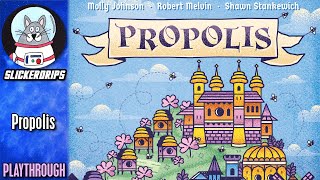
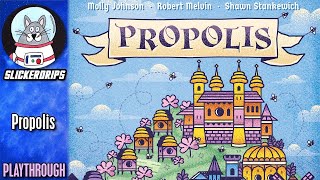
Reception after that preview wave stayed largely positive. Man vs Meeple called Propolis an interesting resource-gathering and building game built around a flexible worker-placement mechanic. Where There's A Wilz, There's a Play featured it on a showcase wall built around Flatout Games and AEG titles and enjoyed the crunchiness it packs into a small box. slickerdrips streamed a full solo playthrough, bought and owned rather than sponsored, and came away calling the game snappy with real thought behind its short runtime. The clearest dissent came from Board Gaming Ramblings, who played from a review copy and handed down a double cull: the pairing judged the game simple to the point of forgettable and named it a least-favorite pick against the rest of that episode's lineup.
Core Mechanics That Define Propolis
Worker Placement and Area Majority
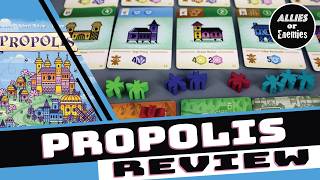
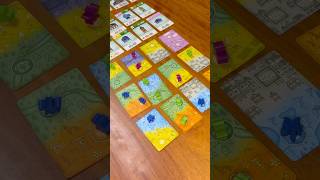
The Board Game Garden broke Propolis down to five possible turn actions: placing bees onto landscape cards to gather pollen, fortifying bees already on the board, retreating bees back to a personal supply, purchasing a structure card from the market, and constructing a queen's palace, which can only happen once per game. Tantrum House explained the majority check that fires once a row of landscape cards fills up: standing bees count as one toward majority while fortified bees lying down count as two, the player who completes the row grabs a wild resource, and whichever player holds majority in that row gets all of their bees back at once. Our Family Plays Games added that fortifying is also how a player earns extra points at the end of the game, since fortified bees score higher than bees still standing.
Engine Building Through the Tableau
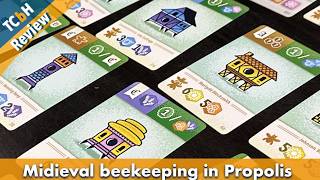
Purchased structure cards go into a personal tableau, and many of them hand back permanent resources that reduce how much a player has to spend from their temporary supply on future purchases. The Board Game Garden noted that some structures also carry immediate benefits or endgame scoring tied to sets of lettered banners, and that a queen's palace can only be bought using permanent resources already sitting in a player's tableau, plus a payment of bees back to the public supply. Man vs Meeple and slickerdrips both likened the loop to Splendor, describing how early purchases generate the permanent resources that make later, bigger purchases possible, turning a slow start into a faster accumulation of structures.
The Propolis Experience
A Fast, Snappy Session
Tantrum House described a game where the pace of play compounds quickly once players build up permanent resources, recalling a session where most players had six or seven structures on the table and the game ended just three rounds later. slickerdrips found the same speed in solo play, noting that a full playthrough, including narration, edited down to roughly half an hour.
Solo Play With Achievements
The Board Game Garden pointed out a dedicated deck of solo cards included in the box, and Tantrum House confirmed a full solo ruleset exists alongside the multiplayer game. slickerdrips played that solo mode across multiple sessions on stream, working toward a published list of twenty achievements, things like scoring seven points from a single structure card or ending the game holding two wild permanent resources, that push a solo player to chase different goals from game to game rather than repeat the same plan.
What Makes Propolis Stand Out
Colorful Bee Theme and Components
Our Family Plays Games praised the vibrant, colorful components and the way the medieval bee-colony art carries through the whole design, calling the game easy to learn and fun to play while still not overly hard for a worker-placement title. Where There's A Wilz, There's a Play singled out the same small box for punching above its weight, describing a little crunchiness underneath the cute presentation that made the pairing glad to keep it on their showcase wall.
A Flexible, Unconventional Worker Placement Mechanic
Man vs Meeple pointed to the flexibility built into placing bees, saying the design allows for more options than typically expected from worker placement, since a player can retreat bees early, fortify them for double majority weight, or leave them standing to keep options open elsewhere on the board. That flexibility feeds directly into the majority fights Tantrum House described, letting players time exactly when to commit toward a row instead of being locked into a single plan from the moment a bee is placed.
Potential Drawbacks
A Simple, Sometimes Flat Design
Board Gaming Ramblings was the sharpest critic, describing Propolis as a simple game that reminded the pairing of Splendor without matching it, landing on a verdict of meh and not very interesting enough to earn a keep from either host. That review copy ended up as the pairing's least-favorite pick of the episode, a contrast to the enthusiasm found elsewhere in the coverage.
Bee Management and Resource Scarcity
Tantrum House warned that spreading bees too thin across the board can backfire, since a player who scatters them widely may need to spend an entire turn just retrieving bees rather than advancing their tableau. The same video noted that pink and purple pollen are scarcer than yellow and orange, since fewer landscape cards offer those colors, pushing players toward the game's color-swapping spaces to avoid getting stuck without the resources a structure needs.
If You Enjoy Propolis
Reviewers reached for one comparison more than any other: Splendor. slickerdrips described a bit of a taste of Splendor in how players convert resources into structures that then produce further permanent resources of their own. Man vs Meeple agreed, describing the resource-collecting build-up as carrying Splendor-like vibes even though the worker-placement layer sits on top of it. Board Gaming Ramblings reached for the same comparison, though the pairing ultimately preferred Splendor's version of that loop to what Propolis offered.
What Reviewers Are Saying
"The game plays fast and really ramps up as you have more permanent resources. I remember one game where we were going around the table and most people had six or seven structures and then three rounds later the game was over because one player was able to purchase a structure every single turn."
— Tantrum House
"Very simple game. It was meh. It was not very interesting."
— Board Gaming Ramblings
"You can see, even with me chatting and going on everything, it's dead snappy. The playthrough with me explaining everything edited down was half an hour."
— slickerdrips