Point Galaxy & Propolis Preview! | 2 small box games with BIG gameplay for everyone!
Games in This Video
2 games are featured in this video — they unlock as you watch.
Transcript
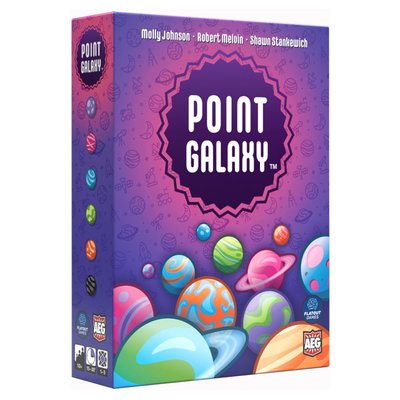
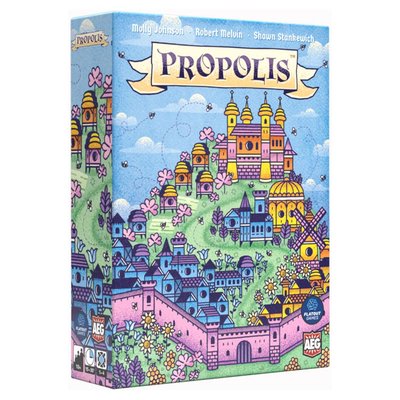
hey friends it is Jenna what is up and welcome back to the board game garden and welcome to a preview of two games that are right here with me these are both coming from the flat out games team so a huge shout out to Flatout games for sponsoring today's video but we have two new games coming to you by flat out games the first one is going to be Point Galaxy which you guys might recognize this in a little bit of a series which is point salad Point City and now we have Point Galaxy so that's actually the first game that I'm going to get into and then once we are finished with that we are going to go into the second new game that is coming from games and that is propolis which this is going to be a worker placement engine building game where all players are going to be taking on the role of medieval bee colonies so we are going to get into that one right after but these both are going to be coming to crowdfunding on February 11th they are going to be in the same campaign so definitely check that out I will have a link down below to the crowdfunding campaign if you guys are interested um but yeah without further Ado we're going to get right into this video if you guys are interested then just keep on watching give this video a big thumbs up if you enjoy Also hit the Subscribe button down below if you yet to do so we'd love to have you here in the garden comment down below if you're interested in one or both of these games and without further Ado let's get into this preview of Point Galaxy and propolis shall we all right so like I said we are starting today off with
Point Galaxy and because this video is going to be talking about two games I'm going to go through the overview and kind of the components and everything about each game pretty pretty quickly so this video is not too crazy long but I will also have some different chapters down below that you guys can skip through if you just want to go to one specific thing that you're interested in but we are starting with Point Galaxy which like I said is going to be the third in a series of games which is point salad Point City and now Point Galaxy so you guys can see by the components on the table here that this kind of takes on a little bit of the bones of Point salad but then it also includes some similarities to Point City with the different tokens out here that you can get and when we get into the overview of how the game plays you guys will see that this is kind of like Point salad it has a lot of similarities to the gameplay of Point salad but it adds on a lot more to the game to be Point salad plus because there's a lot more complexity and different strategies and different ways uh to play the game so we're going to get right into this um I am going to go over quickly all of the opponents here just give you guys an overview of everything we have the box here obviously each player is going to get a double-sided card that gives you all of the different card Types on the front and then you have the setup Aid on the back here that gives you all of the different setup stuff or information and then you also have the scoring as well so that is the reference there that each
player has each player also starts with a starting Sun so there are going to be five starting Suns this game does play one to five players so yes there is a solo mode which is awesome I love that flat out games always has solo modes within their games and also great news is they do have like a lot of other flat out games all of the different achievements and challenges in the back of each of these Rule books um but each player is going to start with a starting Sun that has a little s in the top right hand corner and then you have the middle area here that has all of the cards the cards are going to be double-sided so on one side you're going to have the space kind of icons and on the other side you're going to have the planets so all of the planets here you have the six planets that are down here and then you have the three piles that have the space side face up and whenever someone takes one of these the cards are going to fill in at the end of that player's turn so you have all of those cards you're going to shuffle them all up um take out a certain amount for a certain player count you're going to put those into three equal stacks and then that going to kind of be the main area there you also have the rocket tokens which depending on the player count you're going to have a certain amount of Rocket tokens that at any point on a player's turn if they have a certain thing you're going to be able to pick out one of the rocket tokens and this is going to help with some endgame scoring we also have the score pad here that's going to help
you with endgame scoring we have more of the rocket tokens with the campaign there is going to be a Kickstarter promo with some um exclusive rocket tokens that you can get and that is everything for the components so let's get into exactly how you play point Galaxy all right so in point Galaxy you're going to be playing very similarly to point salad where on your turn you are going to draft two cards from this main area you can decide to draft two of the bottom six cards these are Planet cards or you can decide to draft two of these space cards up here or you can draft draft one of each whatever you would like you can draft two of any of these nine cards that are out here if you do draft this a card does not automatically flip out the cards will only replenish at the end of your turn um so you have those nine choices to choose from you're going to choose two of those and then you're going to be making up different solar systems so each player is going to have a space in front of them that is going to be their Galaxy so this is their entire galaxy and within their Galaxy they can have multiple solar systems and solar systems are going to be made up of a sun a solar system can have a sun it doesn't have to have a sun but each solar system can only have one Sun so whenever you draft a sun you can either add that sun to a solar system that doesn't have a sun yet or you can use that sun to start a new solar system so
these suns are going to kind of give you endgame scoring based off of the planets that are in that solar system so this one right here it would be two victory points for every pair of purple and orange Planet within that solar system so the solar system is going to be laid out with the Sun at the top and then below that sun you're going to be placing the planets as well as wormholes and moons and then you can actually Place asteroids above the Sun so that's kind of going to be the general kind of layout of a solar system so like I said each player is going to have multiple of these solar systems that they're going to be building up and with that being said we are going to get right into what each of the cards are going to do all right so I've already gone over the Suns basically you're just going to get victory points based off of the planets and anything else that is below that Sun so in that Sun's solar system um but let's get into the planets so planets are going to be placed below the sun also you can have in there the moon cards as well as the wormholes but we will get into those after but as for the planet you're going to be drafting them and placing them in solar systems and you are going to be placing them in sequential ORD so on each of these planets they're going to have uh numbers 1 through 7even and the more cards or more planets that you can place into one solar system that are in sequential order the more victory points that you're going to get so if you're able to get all seven cards 1 through seven in
sequential order below a sun you are going to get the most victory points for that solar system um so here we have a two a one we also have an X so this is Planet X and this can actually be used as any number so if you really in a pinch you can draft one of those and place it into a solar system and that can be whatever number you would want it to be um some planets are going to be two different colors so that is going to be when scoring the Suns as well as the moons which we'll get into um but we also have a six a four and a five additionally we also have these little flags up in the right hand corner or yes right hand corner of some of these cards and these are going to be letters so we have an A and A B here and these are also going to be some endgame scoring at the end of the game where you are going to get more victory points for the more unique letters or more unique research icons that you have in your Galaxy and I will quickly add that when you are placing planets into your sequences you can Place either above or below that sequence obviously you can't take a card and put it in between two cards they've already placed but if you had a let's say four five and you got a three you could place the three behind the four um and then if you got a six you could place that six in front of the five so um yes that is everything for the planets moving on to the moons so the moons can be placed into a solar system
within all of the planets and basically the moons are going to get you victory points based off of the planets that are above and below it so this one here this orange moon is asking for orange planets both above and below and if I can manage to get an orange orange Planet above and below it um I will get two victory points at the end of the game so some moons will ask for two different colors to be kind of surrounding that Moon some of them are asking for the same um but if you are able to successfully get those colors in that Arrangement then you will get the victory points for those moving on to the Wormhole cards so these ones are very interesting because when you place a wormhole it actually reverses the gravity and allows you to change the sequence of cards so if you were going in descending order and then you are having a really hard time continuing that descending order you could actually place a wormhole and that would reverse it so that then you could change from descending to ascending um to make it a little bit easier to get more cards into a solar system so that is what the wormholes do I feel like that would be very helpful when it comes to strategy and getting Cards into solar systems um but lastly we have the asteroids which let me see if I can find an asteroid somewhere in here here we go so asteroids are going to be placed above a sun so these ones are going to be placed above and you're going to tuck
that asteroid behind the sun like this you guys will see in some b-roll as well and basically asteroids are going to be a competition between players of who has the most so at the end of the game the player with the most asteroids is going to get 10 victory points the second place player will get six victory points and then the third will get two victory points and lastly you guys might be wondering Jenna how exactly do we get these rocket tokens over here so you guys will see with some of these Planet cards that there is a rocket icon in the top right hand corner Corner whenever a player has five of these rocket icons in their Galaxy they are going to be able to automatically go and pick out one of these rocket tokens and like I said these are going to be different amounts of victory points based off of everything in your Galaxy so this one here is just simply four victory points at the end of the game this one here is one Victory point for every Wormhole this one is four victory points if you have three of the same research icons uh which in the game you are typically trying to get uh all different research icons but if you can manage to get three of the same you can get four victory points um for every two blue planets you'll get one Victory Point um but basically once you have gotten five rockets you'll be able to go over here and choose out one of these rocket tokens and then once you've gotten another five so once you have 10 rocket tokens in your Galaxy you'll be able to
get another one and for every five subsequent ly that you have you'll be able to get a rocket token so if you throughout the game got a total of 20 you will have four rocket tokens at the end of the game play will continue like this with each player on their turn drafting two cards from this area here until you cannot replenish this area to nine cards that will be the end of the game and then players are going to count up their victory points so this is going to be consisting of the asteroids so first second and third place for asteroids you will also look at each of your solar systems and score your sun victory points for each of those solar systems you will score victory points for your planets for that sequential order and how many um of those cards you have in each of your solar systems Additionally you will score for your moons you will score for your rockets and you will also score for your research icons so however many unique research icons you will get a certain amount of victory points and then after all of that is done the player with the most victory points is going to be the winner of Point Galaxy all right so that is going to be everything for Point Galaxy hopefully this gave you a good overview and gave you a good feel if this is a game for you or not please let me know if you have any questions about Point Galaxy and put those down in the comment section and I will get back to those as soon as possible but yeah that is everything for Point Galaxy let's move over to propolis all right so moving into propolis so like I said this is a worker placement engine building
game game where players are going to be taking on the role of medieval B colonies and this is a one to four player game so again this can be played solo and there is a solo mode you have this little deck of solo cards here that you're going to be playing with um but I actually didn't mention that on top of worker placement as well as engine building there is a little bit of area control or area majority on this board right here so we are going to get right into the components so like I said we have this board of cards here there are going to be double-sided cards that on one side is going to be the terrain so the terrain is going to be one or two different colors and then it's going to have um multiple kind of spots so some cards have a one spot like work replacement spot some have two some have three um but then on the other side of the cards you're going to have structures so at the beginning of the game you are going to be creating kind of this board here of the terrain cards on the back and then you're going to use the rest of the pile for the structure cards you guys can see here on the side we have a row of six cards here these are the Queen's palaces so there are going to be a certain amount of these cards based off of um player count and each player can only have a maximum of one queen's palace so when you start the game you're kind of going to be playing to work up to getting one of these Queen's palaces um and these are going
to get you victory points they're also going to get you these little banners in the top leftand Corner that are going to help you towards um endgame victory points as well so those are the Queen's palaces at the top and then you have this kind of Market here of 10 cards you have two rows of five structures and whenever someone purchases one a new one is going to get flipped out that costs various amounts of resources as well as bees um and then there's also going to be the different banners in the top leftand corner and they will additionally get you permanent resources that you can use to then purchase more cards in the future and then some of them are going to have some immediate benefit that it's going to get you some of them are going to have endgame scoring um all of that so those are the structure cards there you guys will see um in some b-roll that I'll give you some example of the different structure cards but players are going to be able to purchase these structure cards and place them into their tableau which Speaking of you have your own starting structure card here so this is going to be placed every player is going to get a starting structure card it is going to get them a starting little Banner in the leand corner mine is a b um you also have a ongoing or permanent resource that you start with I have a permanent blue resource at the start of the game and then it will also give you some sort of endgame scoring so I'm going to get two victory points for every pair of a and B banners so if I get an a banner I
am already going to have two victory points cuz I'll have an A and A B uh but then lastly at the bottom here it is going to give me my starting resources so every player is going to start with one of each of the five different resources so we have yellow orange blue pink and purple Additionally you are going to have wild resources that you can gain in various ways which I'll get into but each player is going to start with one of each of those resources and then add additionally I'm going to start with another yellow and another orange so every player is going to have some different starting resources additionally each player is going to have nine of their be in their personal Supply these are going to be be that they can use um right at the start of the game um but Additionally you have some more bees here that are in a public Supply that you can gain with different cards and different things um so that is everything that each player has um you have all of the other player stuff over here just have one player set up and then additionally um we have some Kickstarter promos here this is the propolis structural diversity Kickstarter mini expansion so if you do back this during the kickstarter you will get that mini expansion there um and then you also have the box here so that is everything for the aim of the game overview um but we are going to get into how exactly you're going to play propolis all right so like I said this is a worker placement a little bit of area control as well as engine building game gu guess a little bit of uh Tableau
building as well which Tableau building and engine building kind of go hand inand um but on a player's turn they are going to have a choice of five different actions that they can perform they can place out bees they can fortify their bees they can take back bees I'm going to continue saying peoples they can uh build a structure from the uh Market here or they can decide to construct their queen's palace which that action is only going to be made once in the game throughout the game you're only going to be able to build one queen's palace um so starting with the first action which is placing be so as the player you are going to choose one of these empty cards here and you can decide how many be you want to place and you are going to place the peoples onto a card you cannot Place onto multiple cards you have to pick a card and only place onto that card so I could decide that I want to let's say I'm going to place both of my peoples here you do have to place them um standing because we'll get into another action which allows you to put them on their back kind of laying down um but whatever places that you place be you're going to be able to gather the resources of that terrain So I placed a people on a pink and a blue so I would then gain one blue and one pink resource moving on to the second action that is fortifying so basically you're going to choose two of
your bees that are on the map here you can choose two that are on the same card you can choose two that are on different cards and you are going to lay down those be you can only do it up to twice so I would lay down both of these and I would then gain those resources again so I would gain another blue and another pink and you might be asking why you would decide to fortify your bees and why you would um lay them down and this is uh the area control or area majority uh part of the game so basically once a an entire row has been filled up so let's just say we have all of these beetles here so let's just say I was the last person to place my beetles in a row so if I am first the last person to fill up an entire row so that is there are no empty cards in a row of cards this would then trigger a majority check so whenever someone has completed because I was the last person to place a beeple into an entire row to complete a row I actually do gain one of my wild resources and those can be used as any other resource in order to purchase or build a structure um but once this happens you're going to check for majority so you are going to count up how many of each B of each player's color is in that row and if a b is standing up they count as one and if a b is then laying down they
actually count as two pow so in this situation here I have two standing and two laying down so I have 2 four five six the blue player has two because they have one fortified B and then the pink player has one 2 three so I would win that majority I would actually take off all of my bees from that row on unfortunately if the other one of the other players did win that majority they would gain a wild but because I've already gained a wild from finishing this row I do not gain a second wild so if you finish a row and you're also the majority you only can gain a maximum of one wild token you do not gain a wild token for both of those things so that is how the majority kind of part of the game is going to be played um and how one way you can get your bees off of the board and the reason why you would want to get your be off of the board which that actually takes us into the next action which is that you can Retreat your be you can actually take off as many peoples as you would like from the board and the reason why you would want to take your peoples off of the board and have them available is because some of these structures as well as the Queen's palaces do require you to pay a certain amount of peoples to the public Supply so I actually am supposed to have three here um but I possibly if I wanted to let's say purchase this structure here I would have to pay one be one
yellow resource and two pink resources so in order for me to purchase this structure I would have to pay one be to the public Supply and then I would pay one yellow and two pink and I would place that into my Tableau which that actually leads me right into the fourth action that you can perform and that is purchasing a card from the market here um like I just did you would pay whatever the resources are at the bottom and this can be a mixture of be that you have to pay as well as resources whether those resources are um in your Tableau as permanent resources or paying resources from your supply here that you've gathered from going out and collecting the resources so these are temporary resources that you spend but then the resources that you have in your Tableau on cards are going to be permanent resources that you can use towards purchasing cards so like I just did I purchased this one here this would actually at the top give me a permanent pink resource so moving forward I now have one blue and one pink permanent resource that I can use towards other structures um but once I was finished with that I would flip over a card and that would be my action for my turn all right and the Last Action that you can perform on your turn is going to be an action that you're only performing once during the game and that is purchasing a queen's palace like I said so these are a little bit different than purchasing normal structures because the resources
that you need for a queen's palace must be present in your permanent resources so you have to have the resources required for that queen's palace on cards in your Tableau so for example let's just say I had this one which this one seems pretty easy but that is that I would have to have two permanent purple resources in my Tableau I would spend three beep from my Supply and put those back into the public pool here and then that would be my queen's palace for the rest of the game this has an X in the top right hand corner for the banner and that can be used as any letter when it comes to scoring so I could actually use this as an a because every pair of A and B banners that I have at the end of the game is going to be worth two victory points so I could set that as an A so now actually with the three cards that I have here I have an A a a b and a d so I would just need a c and then that would get me additional victory points at the end of the game all right so those are the five different actions that you can take on your turn play will continue like this with each turn a player will perform one of those five actions it will go on to the next player this will then continue until one player has 10 structure cards in their Tableau and that does include their starting card as well as their queen's palace once that happens you will continue until each player has had an equal amount of turns and and then you're going to count up victory points which victory points are going to consist of the structure cards that you have in your Tableau so you're going to count up any victory points
that are just plain victory points on cards you're also going to count up victory points on cards that get you victory points based off of other things so mine here is two victory points for every uh set of A and B there's different ones here we have one Victory point for every two blue resources whenever you have resources that counts for permanent resources as well as resources within your or like leftover temporary resources um you also have victory points for just banners so this one right here is one Victory Point per B Banner um so on and so forth so everyone will count up their structure cards and then you will also count up any leftover resources that you have on your tracks here you will count up all six of the tracks and then divide that by five and then the player with the most victory points will be the winner of propolis all right friends so that is what be everything for this overview of propolis hopefully again this gave you a good overview of how the game plays if it's something that you would enjoy and want to go and check out over on crowdfunding like I said I will have the link down in the description box to the crowdfunding campaign if you guys are interested um but yes that is everything for propolis all right friends so I do still have propolis set out here on the table but I do now have both of the games here um and that is everything for today's preview so hopefully you guys guys enjoyed hearing all about Point Galaxy as well as propolis definitely go and check out the crowdfunding campaign if you are interested in either of these or both of these a huge thank you again
to Flatout games for sponsoring today's video I appreciate it very very much um if you guys enjoyed this video please give it a big thumbs up also hit that subscribe button down below if you've yet to do so we'd love to have you here in the garden thank you all so much for hanging out today and watching I love you so so much remember you are somebody's reason to smile and I will see you in the next board game video bye friends