/pic309353.jpg)
/pic1346599.jpg)
/pic309353.jpg)













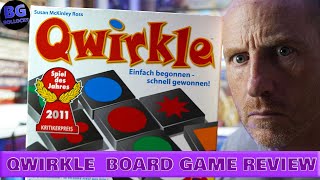












Qwirkle Deep Dive
What the Community Thinks About Qwirkle
Reviewers keep landing on the same word for Qwirkle: everywhere. On Game Night Picks - Pair Of Dice Paradise, one host admitted to feeling like a fake gamer for never having played it, since "everybody and their dog" talks about the tile game, while their co-host argued it belonged on a list of 2006 classics without question and would not let the debate go. That same episode eventually folded it into their final list of inductees alongside other long-running staples, a sign the hosts settled their disagreement in the game's favor.
BoardGameBollocks took a more mixed view after twelve years of ownership, landing on "maybe, maybe not" rather than an unqualified recommendation. They called it an engaging game that is not meant to be skillful or strategic, and judged it a success on exactly those lightweight, family-friendly terms rather than against heavier design. Getting Games went further in the other direction, calling it a really well-designed game after logging fifteen recorded plays (and many more unlogged), and argued it works for almost anyone except the extremes: dedicated abstract-haters on one side and players who only want long, in-depth strategy games on the other. Where There's A Wilz, There's a Play framed it purely as a family game, one that passed down through three generations of the same household.
Core Mechanics That Define Qwirkle
Line Building by Shape or Color
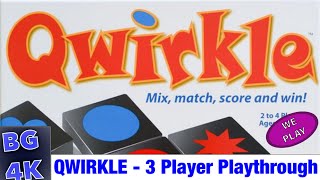
BoardGameBollocks described the core loop plainly: each player draws six tiles from a bag, and on a turn they place any number of tiles to build sequences that share either the same shape in different colors or the same color in different shapes. Placing a tile that extends more than one line at once scores in both directions, so a single placement can be worth several lines of points at once. Getting Games compared the whole system to Scrabble, except the tiles carry shapes and colors instead of letters, and the puzzle is entirely about finding the best placement on the shared layout rather than building vocabulary.
The Six-Tile Bonus
Completing a line of all six shapes or all six colors earns a flat six-point bonus, and Getting Games spent real time on the tension that bonus creates. Players start hoarding tiles once they are close to completing one of these lines, holding back pieces that could otherwise score immediately. The channel was candid about the risk: playing for the bonus too often can actually cost a player the game, because opponents playing two or three tiles on most turns will out-score a player who hangs onto tiles chasing a six-point completion. The same bonus returns at the very end, where BoardGameBollocks noted the player who empties their rack first collects it again, right as the bag runs dry.
The Qwirkle Experience
Tension at the Table
BoardGameBollocks singled out the moments right before someone completes a line as the game's best feeling, describing opponents weighing whether to risk a placement that might hand the active player a full six-tile bonus. They also pointed to the endgame specifically, saying the game is more often than not quite tight and that the final six-point bonuses can decide a close match in the last few turns.
A Game for the Whole Table
Where There's A Wilz, There's a Play traced the game through their family: a brother taught their parents, who then taught the reviewer, and the game earned a spot near the top of their personal ranking because the whole family can sit down and play it together. They recalled the pride of pulling off an early double line completion during one of their first games. Getting Games backed up that broad appeal from a different angle, noting they have watched people of very different play styles, ages, and group sizes all enjoy it, with the exception of players firmly planted at either end of the complexity spectrum.
What Makes Qwirkle Stand Out
Component Feel
BoardGameBollocks praised the physical pieces directly, calling out their chunky, solid feel and smooth finish rather than anything glossy or rough. After roughly twelve years of ownership and regular play, they reported no chips or damage to any tile, and credited the component quality relative to what they paid for the box.
A Deceptively Deep Puzzle
Getting Games was struck by how much there is to think about on a given turn given how simple the rules are, citing the tactical work of maximizing point values across multiple lines at once. They described the payoff moments as genuinely exciting, including turns that can swing seventeen or eighteen points when a tile lands in exactly the right spot, and said they could not identify a single design flaw worth raising as a real negative.
Potential Drawbacks
Luck of the Draw
BoardGameBollocks was most critical of the random tile draw, saying the game offers no way to mitigate bad luck and that a player can be left feeling like they cannot do anything useful on a given turn. The option to dump an unplayable hand back into the bag and redraw comes at the cost of an entire turn, which they called especially painful in four-player games where every other player gets an extra turn in the meantime.
Dead Zones and Easy-to-Miss Mistakes
Getting Games warned that careless placement can wall off parts of the board, creating dead zones where no tile can legally go down, which forces players to build more defensively than the simple rules suggest. BoardGameBollocks raised a related, more practical problem: once the table layout grows large and sprawling, illegal moves become easy to miss until someone notices well after the fact, at which point unwinding the mistake is not always possible.
If You Enjoy Qwirkle
Getting Games described Qwirkle as a tile game vaguely reminiscent of Scrabble, swapping letters and vocabulary for shapes, colors, and spatial placement.
What Reviewers Are Saying
"The pieces are really chunky and nice and solid. They aren't all glossy and greasy, and I don't feel like sandpaper, so I got this nice sort of silk feel to them."
— BoardGameBollocks
"The number of things that you're actually thinking about on a given turn, it's surprising considering how very simple the rule set is for this game. You need to think about the tactical issues of maximizing point values, trying to hit multiple rows to get each tile scored multiple times. It's kind of like a multiplier, but there's definite strategic things to keep in mind here, which is not at first apparent."
— Getting Games
"I will fight to the death for this game. I don't know how you make a list of classic games from 2006 that doesn't include Quarkle. So many people talk about this game."
— Game Night Picks - Pair Of Dice Paradise