















Rear Window Deep Dive
What the Community Thinks About Rear Window
Reviewers generally treat Rear Window as one of the more successful deduction games in the clue-giving genre, and several said it works better than its theme suggests. Board Games UnLocked summed it up as a re-themed Mysterium with a bigger twist, and the group in that discussion rated it highly. One speaker went further and said they would replace their own Mysterium copy with this game because they found it better. Rodney Smith, Watch It Played walks through the setup in detail and frames it as a game where a single director communicates through picture cards while the watchers reason about hidden answers.
The consensus is that the game rewards repeat plays. Drive Thru Games said each of their sessions felt better than the last as the group learned how the cards and powers interact, and Drive Thru Games in its year-end list placed it among its favorites after an initially lukewarm first impression. Travel the Board ranked it in its top 100 and praised it as one of the rare licensed IP games that works on its own terms. Reviewers agree that the first game is confusing, and that the experience clicks once players understand the director's habits.
Opinions diverge on the murder twist and on how well the game suits casual groups. Most reviewers liked the hidden traitor element, but People University felt the murder mechanic was an add-on rather than a core part of the design, and Drive Thru Games recommended playing the first game fully cooperatively before introducing the murder tile.
Core Mechanics That Define Rear Window
Deduction
Deduction is the engine of Rear Window. Designed by Prospero Hall and published by Funko Games, the game asks the watchers to identify eight hidden facts: four residents and four attributes spread across four apartments. The director holds the solution board in secret and plays eight window cards each day to suggest those answers. Because every card is open to interpretation, the watchers must reason about what the director could have meant, what was left out, and how the picture on a card ties to the previous day's cards. Watch It Played explains that the director can also play up to two cards face down, which forces the watchers to reason from absence as well as presence.
Board Games UnLocked described the satisfaction of this process in detail. Players noticed patterns across days, then changed their guesses when a card was reused in a different context. Reviewers repeatedly described the moment the pieces click on day three or four as the best part of the game, when a group that has been guessing sees the whole solution emerge from the accumulated evidence.
Variable Phase Order
Each day follows a window phase and a deduction phase, but the timing of abilities and resources can reorder play in practice. The director can discard director tokens at almost any point, even when it is not their turn, to redraw part of a poor hand. The watchers can spend their one-use placards during any deduction phase, including on day one, and can look back at face-down windows from earlier days. Drive Thru Games highlighted this flexibility as a source of tension, since a director who spends tokens early has fewer options later. Players who understand when to act can gain a decisive advantage, which makes timing as important as the clues themselves.
The Rear Window Experience
Suspenseful
The game builds suspense through the uncertainty of whether a murder is in play. Reviewers described the director's position as a balancing act: the director wants the watchers to get most answers right, but if a murder tile is in the solution, the director must steer them toward a wrong guess on the murderer. Board Games UnLocked described the dynamic as a constant second-guessing of the director's motives, with players unsure whether a card was sincere or a misdirection. That uncertainty, combined with the cramped table and the tension of a final-day guess, gives the game a pressure that reviewers compared favorably to classic mystery films.
Mystery and Detective Work
The game feels like a detective story told in pictures. Watch It Played notes that the characters carry one-time abilities, such as asking the director which tile is correct or asking a yes or no question about a specific token, and these abilities function like the tools of a detective. Drive Thru Games described the reveal at the end of a day as a moment when the group finally understands what the director was pointing at, and that feeling of being let in on the logic is central to the game's appeal.
What Makes Rear Window Stand Out
Theme and Presentation
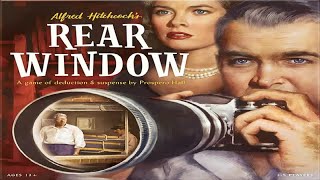
Reviewers consistently praised the way the artwork and the Hitchcock source material reinforce the mystery. Drive Thru Games highlighted the production quality, including the tray that keeps the many tokens organized, and Drive Thru Games noted that the setup and components feel cohesive and easy to store. The illustrations are dense with small details, such as objects on shelves and background colors that link a character to a card, which rewards close attention.
Interpretive Clue-Giving
Reviewers repeatedly singled out the director role as the game's most distinctive feature. Because the director cannot speak, every clue depends on arrangement, placement, and the viewer's guesses about intent. Watch It Played explains that the director must play all eight cards every day, so even a poor hand forces the director to communicate something. That constraint creates a unique puzzle for the director, and reviewers said the role is as fun as the watcher side.
Potential Drawbacks
The Murder Twist Can Feel Bolted On
People University said the murder tile introduces useful discussion but felt like a bolt-on to a game that works well as pure cooperative deduction. Drive Thru Games made a similar point and suggested that a murder tile can swing difficulty too far toward the director if introduced too early. Some reviewers felt the director's need to mislead the group makes it hard to tell whether the game is cooperative or adversarial, which can frustrate players who want a clear goal.
A Steep Learning Curve for Casual Groups
Several reviewers noted that the subtleties take a few plays to appreciate. Drive Thru Games reported that a family group found the game too nuanced at first, and Board Games UnLocked noted that the early games can feel random before patterns emerge. Some attributes are hard to spot in the art, and players can struggle when a character's identifying detail is small. Reviewers agreed that the experience improves with practice, but groups looking for a light, quick game may find the initial sessions discouraging.
If You Enjoy Rear Window
Players who enjoy Rear Window's interpretive clue-giving will find similar satisfaction in Mysterium, which Board Games UnLocked directly compared to Rear Window. Mysterium uses a ghost who communicates through abstract cards, and the group must solve the crime through the same kind of reasoning about intent.
Players who appreciate the hidden-role tension of the murder tile should try Obscurio or Deception: Murder in Hong Kong. Both games build suspicion around a hidden traitor or murderer, which mirrors the director's deception in Rear Window. Board Games UnLocked noted that these games keep the table on edge in a similar way, although Rear Window takes a more cooperative approach. Players who enjoy the picture-based guessing itself may also like Dixit, where players interpret evocative images to communicate ideas to the group.
What Reviewers Are Saying
"The director cannot communicate in any other way than by adding cards to the board, so the challenge is to arrange them in ways that communicate the important aspects within the pictures, especially when you consider that they're limited to just the eight cards in their hand."
— Rodney Smith, Watch It Played
"Rear Window is something that I feel like a lot of people look over in the board game industry because usually games based around IPs tend to not always work out the greatest. I think this one worked out really well and I really really enjoy it."
— Corey, Travel the Board
"I think the game works perfectly well as a fully Cooperative. I think the murder introduced some nice discussions but it felt a bit like a bolt-on."
— People University