/pic2247258.png)
Game Info
Year
2014
Collection
Ratings
Creator Score
Mechanic profile
Not enough video data yet
Vibe profile
Not enough video data yet
Description
The rules of "Red" are simple: highest card wins! But "Red" is just one of seven games you'll be playing in Red7, and if you're not winning the current game at the end of your turn, you're out! The last person standing wins the round.
The deck in Red7 is 49 cards: each of the colors of the rainbow numbered 1 to 7. A hand takes just a couple minutes!
Ask a Rules Question
All mentions
Browse transcript mentions, sentiments, pros/cons, mechanics, topics, quotes, and references.
Total mentions: 14
This page: 14
Sentiment:
pos 11 ·
mix 1 ·
neu 0 ·
neg 0
Showing 1–14 of 14
Video 0FXsaqOJpRY
Rolling Dice & Taking Names Discussion at 3:27 sentiment: positive
video_pk 93584 · mention_pk 253439
Click to watch at 3:27 · YouTube ↗
Overall sentiment (raw)
positive
Pros
- Seen played a lot at BGG Con
- Everybody's been talking about it
- Family holiday game
Cons
none
Thematic elements
Comparison games
none
Mechanics (from transcript analysis)
Mechanics unknown.
Video topics + discussion points
No key topics recorded for this video.
Quotes (from this video)
- I love the Lord of the Rings lcg but I kind of got out of it the past couple years because I was so into other games like Netrunner but when they started releasing these Saga expansions that go along with the story of Lord of the Rings which I absolutely love I kind of got back into it
- I fell in love with it I I love the simple mechanics of it it makes a great quick fast Euro which is kind of my thing right now
- we all know all know that games can be so important and play such an important role in a child's life as far as developing social skills and even for education and just for Flatout fun
References (from this video)
No references stored for this video.
Video u_CkKm7m6TM
Watch It Played Analysis at 1:02
video_pk 92297 · mention_pk 247932
Click to watch at 1:02 · YouTube ↗
Pros
none
Cons
none
Thematic elements
Comparison games
none
Mechanics (from transcript analysis)
Mechanics unknown.
Video topics + discussion points
No key topics recorded for this video.
Quotes (from this video)
- Awards can set our expectations so high for the game that the game can really do nothing but disappoint us in the end
- while Game Awards don't influencing my purchasing choices they do influence what is available for me to purchase
- The actual winners are the board game fans
- Awards provide at the very best a good footnote a marker in time or just a good jumping-off point for discussion and exploration
- Awards matter for the reasons that others have highlighted and as you've mentioned they inspire discussion they put games in our mind that might not otherwise have gotten there but perhaps the most valuable thing they do is they force us to consider why do we like the games we do
References (from this video)
No references stored for this video.
Video ifvEL5sSzHY
3 Minute Board Games Other at 11:56 sentiment: positive
video_pk 91254 · mention_pk 244685
Click to watch at 11:56 · YouTube ↗
Overall sentiment (raw)
positive
Pros
- Hilarious experience
- Best table talk and banter of any game
- Really good time
- One of my favorite co-op game experiences of all time
Cons
- Replayability means the mysteries gone, the magic's gone
- For all intents and purposes a legacy game
- Second play would likely be a pale imitation
Thematic elements
- Bureaucratic middle managers arguing and bickering while their colony ship starts to burst into flames.
- Colony ship
- Campaign-based with evolving story and player decisions.
Comparison games
none
Mechanics (from transcript analysis)
- Campaign — Played through a campaign with a story.
- Cooperative — A cooperative game experience with elements of player conflict driven by theme.
Video topics + discussion points
No key topics recorded for this video.
Quotes (from this video)
- I appreciate Tigris and Euphrates. I admire its design but I don't really enjoy playing it that much.
- One of the problems of Kickstarter and there are many problems with Kickstarter is that it creates games that are more flash than substance and one of those games for me was Vengeance.
- It's also quite similar to a game I really like called Pay Dirt and Paid it was on my hidden gems list.
- Gen7 for us was a hilarious experience of four people playing bureaucratic middle managers arguing and bickering while their colony ship started to burst into flames around them.
- I really didn't like tapestry I really didn't enjoyed it all and it's not because I wasn't good at it I knew how the game worked I could get big scores.
- The game keeps punching losers in the face.
References (from this video)
No references stored for this video.
Video 2J_srW8atyM
Meeple University Top 10 List at 8:05 sentiment: positive
video_pk 90724 · mention_pk 331673

Click to watch at 8:05 · YouTube ↗
Overall sentiment (raw)
positive
Pros
- Very simple; good for teaching logic
- Fits in a small box; compact
Cons
none
Thematic elements
- Card-driven color/shape interaction
Comparison games
none
Mechanics (from transcript analysis)
- Color-based rules — Colors correspond to different rules; the goal is to adapt to changing rules.
Video topics + discussion points
No key topics recorded for this video.
Quotes (from this video)
- it's a small tin game it's cute
- it's the most well known out of all the ones we're going to say here
- this is a new small box game from the cult express family
- it's a puzzle in a box
- it's just such a straightforward game
References (from this video)
No references stored for this video.
Video 0Mp1hn3SFMk
Watch It Played Discussion sentiment: mixed
video_pk 88208 · mention_pk 232063
Overall sentiment (raw)
mixed
Pros
none
Cons
none
Thematic elements
Comparison games
none
Mechanics (from transcript analysis)
- Player Elimination — Discussion of elimination as a mechanism and how it influences play.
- trick-like scoring via tableau — Elimination interacts with scoring where players aim to stay in until the round ends.
Video topics + discussion points
No key topics recorded for this video.
Quotes (from this video)
- I advise anyone to get it I know it looks like a slice of pizza
- I'm a massive fan of what we all call the Seven Wonders dual box size
- the best ball game insert is any game that comes with enough baggies to put things in
- art matters in games obviously it does it's marketing it's like you wouldn't produce a movie and then not Market the movie
- I like to play with as many people as there are sitting around the table
- this is too many cooks brilliant art love it absolutely fantastic you everything is an anthropomorphized vegetable
- I played a game called perch recently... best first play mechanism I've ever had
- Polish version of battle line it's amazing I want to buy that game again
References (from this video)
No references stored for this video.
Video QwN_YK8d7E4
Board Gaming Ramblings Top List at 11:33 sentiment: positive
video_pk 85471 · mention_pk 219114

Click to watch at 11:33 · YouTube ↗
Overall sentiment (raw)
positive
Pros
- Very interesting card game.
- Very easy, very straightforward, but a very unique game.
- I would like to play it again.
- Really like it and I'm glad we have kept it.
- It was really enjoyable and it's so simple.
Cons
none
Thematic elements
Comparison games
none
Mechanics (from transcript analysis)
- changing rules — There's like a rule card in the middle, and at the end of your turn, you always have to win according to that rule card or you're out.
- Player Elimination — If you can't play a new rule card or cards to the table, and if you can't do that, you're out of the round.
Video topics + discussion points
No key topics recorded for this video.
Quotes (from this video)
- Flip 7 is a very silly push a lot game, but it just works.
- It's the only game where I don't teach the rules before we start playing. I just steal a card and say, "Do you want another one? There is 12, 11, 10. You don't want the same one." Boom. Oh, you're out. Haha. You lose.
- But flip seven is just it's even less. Flip seven is just like the perfect breakdown game.
- When it was at its best, Time Stories is one of the most fantastic storytelling vehicles in a board game ever.
- When it was at its worst, it was very bad.
- Dominion is the deck building game. It's like the OG deck building.
- Gloom Heaven we actually finished still one of my favorite experiences in a game ever.
- Basically everything I didn't like Frost Haven has just made better.
- It's a card game. It's a push your luck kind of game.
- So, you're always trying to trick your opponent into trying they can have have a color to themselves or trying to wait as long as possible to see if those good cards come up or just like doing whatever and see what happens.
References (from this video)
No references stored for this video.
Video C2Wv9d3HxNQ
Board Gaming Ramblings Discussion at 6:18
video_pk 85358 · mention_pk 218502
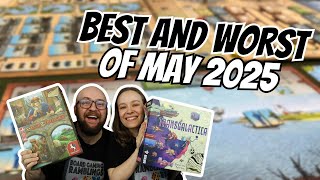
Click to watch at 6:18 · YouTube ↗
Pros
none
Cons
none
Thematic elements
Comparison games
none
Mechanics (from transcript analysis)
Mechanics unknown.
Video topics + discussion points
No key topics recorded for this video.
Quotes (from this video)
- My biggest let down is the rules for uh Transgalactica.
- I think it's fun that a game can be the biggest disappointment and number one in the same month.
- It's an old school Euro. Like it's high interaction, very low on the rules overhead, but a lot of interesting choices.
- I still am unbeaten in Shipyard, which I think I I just have to stop playing it now because at some time I will not I will not win.
References (from this video)
No references stored for this video.
Video YwdvKm67VUo
Rahdo Runs Through Top List at 4:28 sentiment: positive
video_pk 84877 · mention_pk 216462

Click to watch at 4:28 · YouTube ↗
Overall sentiment (raw)
positive
Pros
- Incredibly simple and elegant
- Super crunchy
- Very pretty
- Smart, fast-playing
Cons
none
Thematic elements
- Paying respects to deceased loved ones
Comparison games
none
Mechanics (from transcript analysis)
- Card Play — Players play cards smartly to a "altar" where cards either want to be next to or stay away from other cards.
- Set Collection — Meeting the needs of cards as they are played allows players to flip them over and score points.
Video topics + discussion points
No key topics recorded for this video.
Quotes (from this video)
- Planet Unknown is Planet Unknown in my top 10 of all time now.
- I'm generally not a fan of that, but the game is so good I'll allow it.
- I think Earth is near perfect as it is, but abundance for my wife makes the game even better.
- A musthave expansion for one of the 10 greatest games of all time, Earth Abundance.
References (from this video)
No references stored for this video.
Video zXb-3LS1WFs
Rahdo Runs Through Top List at 1:34:15 sentiment: positive
video_pk 81162 · mention_pk 200160
Click to watch at 1:34:15 · YouTube ↗
Overall sentiment (raw)
Positive
Pros
- Very clever game.
- Slimmed down mechanics.
Cons
none
Thematic elements
Comparison games
none
Mechanics (from transcript analysis)
- Multi-Use Cards — Cards can be used for different purposes.
Video topics + discussion points
No key topics recorded for this video.
Quotes (from this video)
- I just love that resource progression.
- It the resource progression feels to me like that you start with a wheel then you get cards then you get uh spaceships right?
- The game is just way too heavy. It is insane.
- It's like a rock paper scissors. I'm building my ship this way to count to your ship. Then you should build your ship another way.
- Yeah. Because they are so heavy, right? They do take such an investment you want to like uh go through, but people were saying that that Colution was was awesome.
- I think the moral of this stream is we can call anything a Civ game if you try hard enough.
References (from this video)
No references stored for this video.
Video TrwkNt9rwMw
Watch It Played Live Chat at 12:28 sentiment: positive
video_pk 68670 · mention_pk 248026
Click to watch at 12:28 · YouTube ↗
Overall sentiment (raw)
positive
Pros
- short
- easy to fit in your pocket
- easy to teach
Cons
none
Thematic elements
Comparison games
none
Mechanics (from transcript analysis)
Mechanics unknown.
Video topics + discussion points
No key topics recorded for this video.
Quotes (from this video)
- if you haven't watched the gameplay yet and you plan to then stop watching
- we won just at the last minute on the last thing we couldn't have anything else go wrong
- Steve we're on you yeah we're on you Steve
- who cares if a tiny Kingdom get it's just tin one tiny Kingdom what's the who cares if it burns
- I don't like to use my platform to share opinions of games
- you want to just stick a GoPro on my forehead I'll do whatever
- I did promise that I would do Arkham Horror eventually
- I don't review things Tom can do that he can say whatever he wants about whatever game he wants because it's his opinion
- I don't think you want to send your family we have not attended the Asylum as a family and we are not going to play Arkham horror probably as a family either
- I only do games I like at least somewhat I don't have to love the game I have to like it somewhat
- my mom always said don't talk to strangers
- people don't just get an accent though like you just got an accent well I mean maybe I'm normally hiding it
- you're really about it's about sort of betting do I have what I think I have
- Watch It Played has eaten my life and I love it I love that it has eaten my life this is what I want to be doing
- I don't want to make supporting our show be similar to your electric bill
- I hope it still exists not to beat this drum too loudly or too often but I mean it will come down to the fundraisers honestly
- my my what I want to do is I want the show to be something that I retain control of I get to play the games I want to play work with the Publishers I want to work with
- I would love to have a dedicated Studio I'm in my basement right now it's unfinished it's pretty good I'm pretty happy with where it is now but I I I could be happier
- Pep should get his own segment on watch it play Pep's Pep's play period make it happy Rodney you're holy back
- this is what I want to be doing I find the work people sometimes say oh you must have so much fun when I'm staring down the barrel of 15 hours of shooting an instructional video I'm not sitting there going wow this is fun but is intensely satisfying
References (from this video)
No references stored for this video.
Video -ziQ27f1qKU
Top 10 List at 13:21:20 sentiment: positive
video_pk 67762 · mention_pk 164011

Click to watch at 13:21:20 · YouTube ↗
Overall sentiment (raw)
positive
Pros
- Does it make me happy? Yes, it is pretty cool.
- The way you're building this altar is so, so interesting.
- The part that I absolutely love is the very crunchy moments of failure.
- I love games like that.
- The really intricate puzzle of how you're placing those cards and the different conditions they affect.
- The thematic element of it is very inviting.
- It's a really unique theme.
- A game that will hit our table again and again.
Cons
- The game will get to a point where whatever you do is just going to suck.
- Making sure and hoping that you get the right stuff because it does feel really good when it does work out.
Thematic elements
- Building an altar to the Day of the Dead
Comparison games
- Calico
Mechanics (from transcript analysis)
- Card Drafting — Players draw a card from the center of the board.
- Objective Fulfillment — Each card has an objective, and surrounding cards also have objectives that influence each other.
- Tile Placement — Players place cards into their 'Afrenda' (altar).
Video topics + discussion points
No key topics recorded for this video.
Quotes (from this video)
- I think this game not only has the potential to be game of the year for me, but even after one play, I can see it being like a top 10 game for me.
- This month was extremely hard.
- I even proposed to Tyler. I was like, 'Tyler, we should do a top 10 of June this month.'
- It wasn't hard for me. Tyler did not want to do a top 10. He stuck with us five cuz that's the format that we have.
- We are halfway through the year. And we are 54% through our challenge.
- It's July second. Please. We played a lot of games for Canada Day.
- This is definitely one that we'll be playing again and again.
- I think this game not only has the potential to be game of the year for me, but even after one play, I can see it being like a top 10 game for me. Yeah, this game hit this game hit good. So good.
- The most important mechanic: Fun.
References (from this video)
No references stored for this video.
Video Ww1ZPHMF_uo
DaniCha Discussion at 0:02 sentiment: positive
video_pk 60833 · mention_pk 153276
Click to watch at 0:02 · YouTube ↗
Overall sentiment (raw)
positive
Pros
none
Cons
none
Thematic elements
- Remembrance and afterlife, ritual imagery
- Day of the Dead themed, Mexican cultural motifs
- ritual-themed, decorative atmosphere with abstract scoring
Comparison games
none
Mechanics (from transcript analysis)
- card-based scoring with endgame requirements — Cards provide requirements and potential endgame scoring conditions
- compact component storage and player boards — Small cards and indented player boards designed for compact setup
- dice-based solo mode — Solo variant relies on rolling a die to drive actions or outcomes
Video topics + discussion points
No key topics recorded for this video.
Quotes (from this video)
- So, this is a game for one to four players.
- Ooh, very strong smell of a new game when I open this one up.
- the solo mode on page 10.
- Let's just appreciate the box cover art here.
- Maybe they're flowers.
- the cards are tiny. They'll probably fit perfectly in these slots.
- I love when games don't have full-size cards because that typically means I'll be able to play it with minimal space.
- Day of the Dead.
References (from this video)
No references stored for this video.
Video IEyptD08TjU
TheGameBoyGeek - Hi Quality Hi Energy Board Game Reviews Top 100 List at 15:59 sentiment: positive
video_pk 41693 · mention_pk 207578

Click to watch at 15:59 · YouTube ↗
Overall sentiment (raw)
positive
Pros
- short, tense, highly replayable
- compact and quick to teach
- great tension with every decision
Cons
- highly luck-reliant in some modes
Thematic elements
- card-driven elimination game
- abstract color/number challenge
- light, tense, bluffing-driven
Comparison games
none
Mechanics (from transcript analysis)
- King of the Hill — highest number/score remains, others are out; various rule modes
- king of the hill / elimination — highest number/score remains, others are out; various rule modes
- rule-modification by hand management — use cards to change the end-condition on your turn
Video topics + discussion points
No key topics recorded for this video.
Quotes (from this video)
- This is a gem and Kenitzia brilliance with Feld style.
- The action selection mechanism is the cog that makes this game go.
- This game is literally clue on steroids.
- So many fun, interesting little reveals as you're going through it.
References (from this video)
No references stored for this video.
Video i3COwLZp88o
TheGameBoyGeek - Hi Quality Hi Energy Board Game Reviews Top 10 List at 4:10 sentiment: positive
video_pk 37367 · mention_pk 240766
Click to watch at 4:10 · YouTube ↗
Overall sentiment (raw)
positive
Pros
- clever, fast, highly interactive
- works well with multiple players
Cons
- can be mean with two players
- some may find it abstract
Thematic elements
- changing winning rules
- abstract/card game
- rule-creation through play
Comparison games
- Uno
Mechanics (from transcript analysis)
- Card play order — you choose a card to play to influence the rule
- changing rules — the current winner condition changes as players play cards
- Hand Management — build and play a hand of cards to meet the current rule
Video topics + discussion points
No key topics recorded for this video.
Quotes (from this video)
- it's such a mean game
- the game's quick it's only about 30 minutes
- it's a fantastic game that can be played anywhere
- the brilliance of this game is when you break up with the teams and you're coming up with trap words
- QE is just brilliant
References (from this video)
No references stored for this video.
Transcript Navigation
Showing 1–14 of 14