/pic5478770.jpg)


















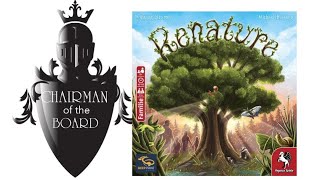





Renature Deep Dive
What the Community Thinks About Renature
Renature has earned quiet admiration from board game reviewers who recognize it as something special, even if it hasn't received the mainstream attention its design deserves. The game strikes an unusual balance that reviewers consistently praise: it functions as an accessible gateway-level game for newcomers while harboring enough strategic complexity to reward experienced players. Reviewers describe it as "breezy" yet "vicious," beautiful in appearance yet surprisingly confrontational in play. Wolfgang Kramer and Michael Kiesling have created a game that welcomes non-gamers while satisfying those who demand depth, and the community has responded with genuine enthusiasm across multiple gaming communities and channels.
Core Mechanics That Define Renature
Domino Placement with Territory Control
The mechanical heart of Renature is deceptively simple on the surface. Players place domino tiles on the board by matching animal illustrations from end to end, spreading their presence across the landscape as the game progresses. What begins as a straightforward tile-placement puzzle quickly reveals layers of strategic consideration. The board features regions of increasing value as players advance from smaller point areas at the top toward larger, more lucrative scoring zones at the bottom. This natural progression creates inherent pacing: investing too heavily early means running out of valuable pieces before reaching the high-value regions, while playing conservatively risks ceding control of crucial zones. Reviewers note that this forced resource management creates tension where none should exist on paper, making every placement decision meaningful without overwhelming players with options.
Majority Control Through Living Pieces
The majority mechanism in Renature operates through tree and bush placement, where players claim regions by establishing control through pieces of varying strength. Players place trees of different sizes (valued at one, two, three, or four strength) on regions adjacent to their dominoes. The region scoring rewards the player with the highest strength value, with a crucial twist: if two players tie for control, both canceling each other out, the next highest player scores instead. Each player also controls neutral pieces that can block opponents without contributing to their own score, creating opportunities for tactical sabotage. Reviewers emphasize that this mechanism demands careful thinking about investment, preventing runaway leaders while ensuring players always have opportunities to participate meaningfully, even from behind.
The Renature Experience
Accessible Strategy Without Overwhelm
Reviewers consistently highlight how Renature achieves what many heavier games struggle with: maintaining meaningful strategic depth while keeping decision points focused. Players face only three domino tiles available each turn, and they must connect to existing animals on the board. This constraint, far from feeling limiting, becomes liberating. Rather than analyzing infinite possibilities, players tunnel vision toward viable moves and make genuine strategic choices within that focused space. Reviewers compare this favorably to other Kramer designs like Mexica, which offers six action points and can become overwhelming even for experienced players. Renature strips away such complexity while retaining the satisfaction of careful planning and tactical timing. The game plays in 45 to 60 minutes, roughly the same length as some of Kramer's more intricate designs but with significantly less mental fatigue.
The Interactive Dance of Regional Combat
Despite its welcoming aesthetic, Renature demands aggressive play. Players can use neutral pieces to directly counter opponents' positions, can strategically close regions to deny points to leaders, and can leverage bonus tokens to pull previously placed pieces back for reuse in contested areas. This creates a surprisingly confrontational dynamic that catches players accustomed to the game's peaceful theme off guard. Reviewers describe moments of "nastiness" and "guile" emerging naturally from the simple rules, with players blocking each other off from regions, forcing awkward placements, and executing well-timed strikes to claim closing bonuses. One reviewer noted teaching the game to their non-gaming partner, who normally avoided competitive games with war or fantasy themes but found Renature's nature theme inviting enough to try it, then discovered she genuinely enjoyed the strategic maneuvering. This accessibility to non-gamers combined with sufficient interaction for experienced players represents one of Renature's greatest achievements.
What Makes Renature Stand Out
Elegant Design Solving a Difficult Problem
Renature succeeds at something many games attempt but few achieve: balancing accessibility with strategic satisfaction. The domino mechanism isn't merely thematic window dressing; it's a constraint that simplifies decision-making without removing meaningful choice. Reviewers credit Kramer and Kiesling's design expertise, noting that these designers have decades of experience distilling complex strategic ideas into clean, streamlined systems. Renature exemplifies this philosophy. It looks simple enough for anyone to teach in minutes, yet experienced players immediately recognize layers of positioning, timing, and resource allocation. The extra wrinkles (bonus tokens, neutral pieces, region-closing mechanics) aren't bolted-on complexity; they're integral to creating a game that interests both audiences simultaneously.
Hidden Depth in Plain Sight
Multiple reviewers expressed initial skepticism about Renature's depth, assuming it was "just about placing dominoes." After multiple plays, they discovered that early assumptions underestimated the game significantly. The tempo curve matters; the choice of which domino to play matters; the regions you prioritize and those you concede matter enormously. There's a feel-good quality to how the game reveals itself. It doesn't punish newer players with hidden complexity they couldn't anticipate. Instead, it rewards learning through play, with each subsequent game uncovering new strategic possibilities. One reviewer upgraded their mental rating from a seven out of ten after one playing to an eight after discovering how the bonus mechanics, piece recycling, and blocking tactics created rich decision spaces that most first-timers would miss entirely.
Potential Drawbacks
Randomness in Domino Availability
Reviewers acknowledge that tile draws influence outcomes, though they generally consider this well-managed. With ten different animal types and six tiles available each turn, players rarely face situations where they're completely locked out of viable moves. Reviewers note that only through extreme bad luck would a player consistently fail to find animals they need, and even then, they can spend bonus tokens to change the wild animal, providing safety valves against truly punishing luck. The balance of constraint and flexibility seems intentional and well-calibrated, though players very unlucky with draws might feel frustrated occasionally.
Variable Player Count Experience
Renature plays best with three to four players, according to reviewer consensus. Two-player games become more cutthroat and strategic but lose some of the dynamic tension of multiple competing interests. Four players can suffer from downtime as multiple turns must resolve before certain key decisions come due, particularly for players eliminated from contention for certain regions. Three players appears to hit the sweet spot where blocking and positioning matter most, where multiple players can credibly compete for each region, and where downtime remains minimal. Reviewers suggest that potential buyers should confirm their expected player counts align with these recommendations.
If You Enjoy Renature
Players drawn to Renature likely appreciate area control games with accessible on-ramps. Reviewers suggest exploring other Kramer designs, particularly Mexica and El Grande, if you want similar strategic satisfaction at higher complexity levels. For those wanting more accessible games in the same vein, Azul and other modern gateway titles offer shared DNA in their focus on meaningful constraint. The game also appeals strongly to players of tile-laying games like Carcassonne who want more direct interaction and players of light Euros who don't want to sacrifice strategic texture for simplicity. Renature works beautifully as an introduction to area control mechanics, often converting casual players into enthusiasts willing to explore deeper strategy games.
What Reviewers Are Saying
"Mechanically this game is ultra simple, just place a domino, choose to put a bush either side of that domino which you can use quite cleverly if you back people into corners and don't leave an opportunity to put their trees into regions."
— Chairman of the Board
"It's so interactive, so thinky, it has this awesome arc where early on you don't really know what's going to happen yet, the game starts to open up the decision space a whole lot and then near the end you start to get this squeeze."
— All You Can Board
"This one strikes quite an interesting balance between being a very breezy gateway-level game as well as injecting some elements of strategy into this game, and despite you being on this list it is quite a vicious and very confrontational very intense style game."
— Chairman of the Board