/pic7412285.png)















Rome in a Day Deep Dive
What the Community Thinks About Rome in a Day
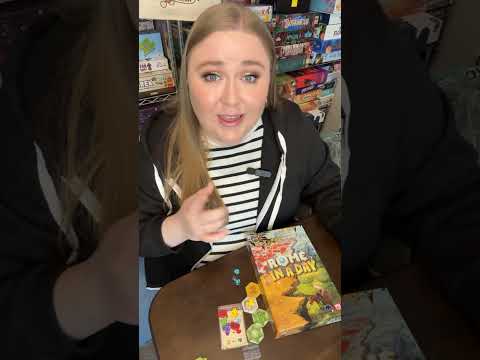
Rome in a Day arrived in 2023 as a fresh take on city-building tile placement, and board game reviewers have embraced it as a compact gem that punches above its weight. Channels like Chairman of the Board and Jamie, Tabletoptiktok consistently praise the game for delivering surprisingly engaging decisions within a 20-minute window, creating what reviewers describe as feeling like a much more substantial experience than its playtime suggests. It has resonated with players seeking quick, accessible games that do not sacrifice strategic depth or replayability.
Core Mechanics That Define Rome in a Day
The Split and Choose Mechanism
The heart of Rome in a Day is its elegant split-and-choose drafting system. Each round, players draw a group of tiles, and the first two automatically receive that round's building pieces, which cannot be moved. The active player then secretly divides the remaining tiles into two piles, hiding the decision behind a privacy screen. Opponents choose which pile they want, leaving the divider with the remainder. This hidden-information drafting creates constant tension: divide tiles too generously and you gift your opponent points, but divide them too unevenly and your opponent claims the larger pile while you are left with scraps. Reviewers note that this keeps every player engaged, because both the divider and the chooser face meaningful decisions at the same time.
Building Placement and Adjacency Scoring
Once tiles are claimed, players arrange them on their tableau however they wish. Buildings score points based on proximity to matching terrain colors, earning more when buildings of the same color cluster together. This creates a satisfying puzzle layer: players must balance accepting whatever tiles they receive against the long-term geometry of their city, knowing that early placement constraints will linger across the short game. The interplay between the drafting tension and the spatial puzzle gives the game more weight than its footprint suggests.
The Rome in a Day Experience
Quick to Learn, Quick to Play
Rome in a Day delivers teaching and gameplay at remarkable speed. Reviewers emphasize that the game can be taught and completed in roughly 20 minutes, making it accessible for both experienced gamers and casual players. One reviewer noted that this rapid pace means players finish their first game, absorb the strategy they wish they had used, and immediately want to play again. The split-and-choose mechanism is intuitive enough that players grasp it within a single round, yet deep enough that strategic mistakes become apparent only through subsequent plays.
Charm and Accessibility as Core Strengths
Reviewers consistently characterize Rome in a Day as charming and breezy. Rather than layering fiddly rules, it focuses the entire experience on the drafting decision and the tile-placement puzzle. One reviewer emphasized that keeping the design simple was intentional and beneficial, since overcomplicating the placement could have harmed the game. The wooden components and clean production reinforce this pleasant aesthetic. The result is a game that welcomes new players and still satisfies veterans seeking a quick palate cleanser between heavier titles.
What Makes Rome in a Day Stand Out
A Fresh Take on Tile Placement
While tile-laying games abound, Rome in a Day differentiates itself through its combination of mechanics. The game compresses city-building into minutes rather than hours, and its split-and-choose system adds a social negotiation tension absent from traditional tile-laying. Reviewers note that the game captures the appeal of competing city-builders like Cascadia and Carcassonne but delivers a fundamentally different feel through its drafting layer, which keeps the tension interactive even in a short, light package.
Remarkable Replayability in Minimal Playtime
One reviewer called Rome in a Day an evergreen in their collection, a designation usually reserved for games that stay on the shelf indefinitely. The reason is its rare niche: quick enough to play casually but engaging enough to sustain multiple plays in a row. Reviewers emphasized that they could hardly imagine someone disliking it, and its brevity means it functions equally well as an opener, a filler between heavy games, or a standalone activity. The random tile draw ensures each game unfolds differently, while the split-and-choose mechanism gives every decision meaningful consequences.
Potential Drawbacks
Light Weight May Not Suit All Collections
While the lightweight design is intentional and praised, some players may find Rome in a Day insufficiently meaty. Reviewers who gravitate toward heavy euro games or complex strategy acknowledged that it is extremely light, almost feather-light. Even these reviewers appreciated the design discipline that kept the complexity focused rather than padded. The game is not meant to be a brain-burner; it is meant to be approachable, and that choice is deliberate.
Two-Player Play Perceived as Less Optimal
Several reviewers noted playing Rome in a Day at two players and found it pleasant but suspected it would shine more with three or more. At two players, the dynamics of the split-and-choose mechanism change, and the drafting psychology differs from multiplayer configurations. Reviewers indicated they wanted to test the game at higher player counts to fully assess its peak experience, suggesting that while two-player Rome in a Day is enjoyable, it may not represent the designer's intended sweet spot.
If You Enjoy Rome in a Day
Players drawn to Rome in a Day typically enjoy other tile-laying games with set-collection and area-control elements. Cascadia delivers similar satisfaction through landscape-building but offers a spatial pattern puzzle rather than negotiated drafting. Carcassonne provides the classic tile-laying experience with deeper player interaction, though it runs longer. Patchwork offers another quick two-player tile game with timing decisions, while Ra shares the auction tension through a different mechanism. Cartographers delivers a roll-and-write tile-placement puzzle for players who enjoy the spatial side without the negotiation layer.
What Reviewers Are Saying
"Such a lovely, charming little game, and one of the best light games of the year I think."
— Chairman of the Board
"It feels like you played a much bigger game than a 20-minute game. I really love this. I love the wooden components, I think it's great quality."
— Jamie, Tabletoptiktok
"This one is growing on me. The more I play it, the more I like Rome in a Day. It's been a hit for me and it's actually growing on me."
— Chairman of the Board