









Rook Deep Dive
What the Community Thinks About Rook
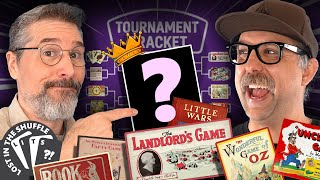
Reviewers treat Rook as a foundational card game rather than a recent release. Dice Tower placed Rook ninth on a list of favorite games published before 2000, recalling how the game filled the common areas of a college dormitory and how it introduced the reviewer to trick-taking. Pair of Dice Paradise ran a tournament of antique games first published between 1900 and 1925, and Rook advanced to the semifinals, where it lost to Jin Rummy. Heavy Cardboard hosts learned the game on stream with a family house variant, and one host concluded that Rook was better than Spades but took some getting used to because it was unfamiliar.
Core Mechanics That Define Rook
Trick-Taking With a Rook Trump
Rook is a trick-taking game in which players must follow suit when they can. The Rook bird card is the highest trump, ranking above the ace, and the Heavy Cardboard hosts counted it as part of the trump suit, so a player holding only the Rook must play it when trump is led. Points come from a small set of cards: fives are worth 5, tens and kings 10 each, aces 15, and the Rook 20, for 180 points available in each deal. Trump can be led at any time without waiting for it to be broken, a point the hosts contrasted with the breaking rules common in other classic trick-takers.
Bidding for Trump With a Kitty
Rook begins with a bidding auction opened by the player to the left of the dealer, and a player who passes is out for the rest of the round. The Heavy Cardboard hosts used a house minimum of 100, although their family normally played 110. The winning bidder takes the five-card kitty, discards five cards, and names the trump suit. Points in the discarded cards go to whoever wins the last trick, so the bidder must decide which cards are safe to throw away. Bidding is a team commitment: a bidder may ask a partner for a preferred trump suit at a cost of 10 added points, and the bidding team loses its bid if it falls short while the defending team keeps whatever points it takes.
The Rook Experience
A Battle of Wits Between Partners
Heavy Cardboard described the game as a partnership trick-taker in which the bid sends signals to a teammate who cannot speak freely about their hand. One host noted that a partner who bids is communicating, and that judging a hand requires weighing the strength of the cards against the points they will capture. The hosts found that the bidding round rewards caution, since a conservative pass can be the right call when the team lacks a clear trump. Several hands turned on guesses about where the Rook and the aces sat, which made each round feel tense and tactical.
A Lasting Social Fixture
Reviewers describe Rook as a game people return to for years. Pair of Dice Paradise noted that some people hold a weekly Rook night and play nothing else, taking the game very seriously. Dice Tower recalled that the game was a constant presence in college dorms, and Heavy Cardboard hosts described learning it as part of a family card table tradition that also included Bridge and Scat. The game comes across as social and sticky, the kind of table game that gets passed from relatives to friends.
What Makes Rook Stand Out
Historical Roots of the Trick-Taking Genre
Game Night Picks argued that Rook is one of the earliest trick-taking games with trumps, first published in 1906, and that many later games grew out of it. The reviewer noted that Rook came out about 20 years before Bridge, which makes it an important ancestor of the partnership bidding games that followed. Heavy Cardboard hosts linked Rook to other regional relatives, including Shalm, a card game popular in Iran that shares many features with Rook, and to Bridge, which one host described as a sort of baby Bridge. Dice Tower also observed that trick-taking has seen a recent wave of experimentation, and Rook remains the reference point for that tradition.
Accessible Play With a Standard Deck
Rook is sold with a dedicated deck from Parker Brothers, but Heavy Cardboard hosts pointed out that the game does not require it. Their version removed the twos and threes from a standard 52-card deck and used one joker as the Rook, giving a 45-card deck. The hosts said the change to a standard deck makes the game play a little differently, but not in any meaningful way. That flexibility lowers the barrier for a table that wants to try the game on a Saturday night without buying specialty components.
Potential Drawbacks
House Rules and a Steep Start
Heavy Cardboard hosts repeatedly flagged that Rook is played with house rules. Questions about the minimum bid, whether trump is named before or after the kitty is viewed, and whether a bidder may ask a partner for a suit all varied from one family to another. One host said the minimum bid felt deceptive because a team can overreach quickly when the target is high. Newcomers without an experienced partner may find the rules and the partnership communication hard to pick up.
The Luck of the Rook
Because the Rook alone is worth 20 points and acts as the top trump, a single card can swing a hand. The hosts discussed how a lucky Rook on top of the kitty can change the entire bidding round, and how a team that bids confidently in a suit can be undone by the Rook sitting with an opponent. Modern trick-takers also compete for table time, and Dice Tower and Game Night Picks both noted how many newer games have built on the genre, which means Rook must offer enough tension to stand beside them.
If You Enjoy Rook
Reviewers who like Rook tend to point toward its relatives. Bridge is the closest comparison, both because Heavy Cardboard called Rook a baby Bridge and because Game Night Picks placed the two side by side as long-lived trick-taking traditions. Spades and Hearts appear as familiar partnership and trick-taking games that the Heavy Cardboard hosts also played. Shalm, the Iranian game the hosts mentioned, offers a similar experience for players who want to explore the wider family of Rook-like games. Players who want a modern take on the genre can look at the newer trick-takers that Dice Tower and Game Night Picks described as building on Rook's foundation.
What Reviewers Are Saying
"This was kind of the OG for me. This is the one that really kind of helped me to enjoy and I played it a lot in college."
— Dice Tower
"Even if it's not being played, there wouldn't be all of these other trick-taking games without Rook. Like Bridge, there are people I have known in my life that have a weekly Rook night and that is all they play every time and they take it very seriously."
— Pair of Dice Paradise
"I do think it's actually better than Spades, but it takes some, yeah, it's just it's unfamiliar, right? That's all, it's brand new."
— Heavy Cardboard