/pic8257140.jpg)













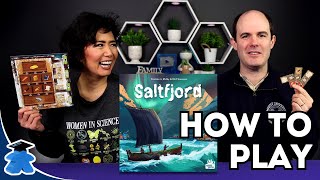















Saltfjord Deep Dive
What the Community Thinks About Saltfjord
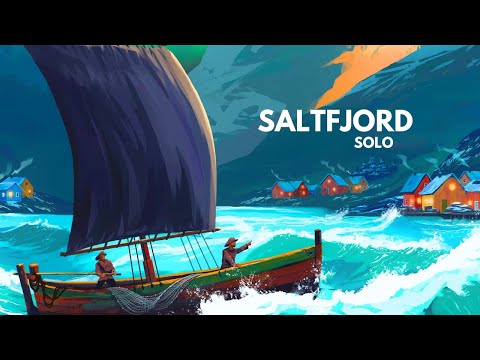
Saltfjord is a standout reimplementation that takes the proven mechanics of Santa Maria and transplants them into a thematic Norwegian fishing village setting. Reviewers consistently highlight the game's elegant balance between strategic depth and accessibility. The core appeal lies not in a single dominant strategy but in the flexibility to pursue different paths: invest in fishing for long-term resource gains, establish trade routes to neighboring settlements, advance technology tracks for permanent bonuses, or construct buildings to unlock new actions. What makes Saltfjord remarkable is how these paths interconnect, forcing players to make meaningful choices about resource allocation and dice manipulation.
Core Mechanics That Define Saltfjord
Dice Drafting and Placement as Central Puzzle
The heart of Saltfjord is its dice drafting system, where players select dice from a shared pool and use them to activate rows or columns of buildings on their village boards. The constraint is elegant: you can take only three white dice and a limited number of orange dice per round. When you place a die on your board, it activates every building in that row or column until it reaches the end, at which point the die blocks that space from further activation. This creates a spatial puzzle where building placement and die value selection must work together. Players spend fish as a free action to modify die values up or down, making fish a critical resource for controlling outcomes.
Multiple Interconnected Systems
No single action dominates Saltfjord. On each turn, you draft and activate dice, build new structures to expand your action economy, advance technology tracks to unlock permanent abilities, complete trade orders for victory points, or retire to claim special bonuses. The fishing system exists alongside these: sail your boat out to claim catch tokens, then return home to convert them into resources and points. Each system feeds the others. Better fishing technologies let you see and choose from multiple tokens. Building discount technologies reduce the wood cost of construction. This interconnection creates an engine-building experience where each upgrade amplifies future decisions.
The Saltfjord Experience
Relaxing Yet Thoughtful Gameplay
Despite its mechanical depth, Saltfjord maintains a relaxing atmosphere. The Norwegian fishing village setting, the gentle tile-placement mechanics, and the three-round structure create breathing room that heavier Euro games often lack. Players are not racing against each other; they are building their own economic engines and managing resources against personal objectives. Even when luck with the dice roll favors one player, the game's multiple paths to scoring mean no single run of good fortune determines victory. This balance between luck and control makes each decision feel meaningful without inducing decision paralysis.
Solo Mode as a Different Beast
The solo experience transforms the dice drafting system entirely. In multiplayer, dice are competed for; in solo, the game manages dice availability for you, creating a different puzzle. Reviewers praise the solo mode as excellent and mechanically distinct enough to warrant separate strategies. The objectives shift to meeting specific threshold conditions while beating a high score, adding a narrative arc to the solo experience. Many players report the solo mode being their preferred way to play, which speaks to how well the asymmetry is handled.
What Makes Saltfjord Stand Out
Theme and Art Execution
As a reimplementation of Santa Maria, Saltfjord improves dramatically on presentation. The Norwegian fishing village setting feels thematic and earned rather than tacked on. Buildings produce wood, grain, paper, fish, and planks in logical ways. The fishing boat mechanic, where you sail farther to riskier waters for better catches, creates meaningful tension and connects to the broader narrative of establishing prosperity in a harsh environment. Reviewers consistently note that the art and production make the game a genuinely attractive package on the table, solving one of Santa Maria's greatest weaknesses.
Mechanical Elegance Through Constraint
Saltfjord demonstrates how constraints create elegant design. The limits on white and orange dice create natural scarcity that forces tempo decisions. The three-round structure means players must balance short-term wins against long-term setup. The boardwalk bonuses that unlock only when a row or column fills completely create cascading moments of satisfaction. Every rule serves a purpose, and nothing feels extraneous.
Potential Drawbacks
Fiddliness and Cognitive Load
With four resource types, four technology tracks, a boat with slots, crate storage, worker placement, and building activation, Saltfjord demands organization. Players with multiple colors of cubes managing different resource types sometimes lose track of what they have. Newer players occasionally overwhelm themselves with options and spend more time deciding whether to fish, trade, or build than executing their choice.
Luck Dependency in Dice Rolls
The initial dice roll can heavily favor some player positions over others, particularly if the dice distribution matches one player's board layout and not another's. While fish allow modification, spending them early for die manipulation depletes a resource needed for other crucial upgrades. Skilled players mitigate this by planning for multiple scenarios, but new players can feel unlucky and fall behind early.
If You Enjoy Saltfjord
Players who love Saltfjord typically gravitate toward Santa Maria, where the same core dice mechanism operates but with a vastly different setting. Castles of Burgundy appeals to similar players who enjoy dice-based action selection with multiple scoring paths. Terraforming Mars and Everdell appeal to those who enjoy optimizing interconnected engine-building systems. For those drawn to the Norse setting, A Feast for Odin provides thematic resonance with deeper complexity. Solo enthusiasts should explore Mage Knight for similarly dedicated asymmetric solo modes.
What Reviewers Are Saying
"Santa Maria is a fantastic game, but it's really hard to recommend because the theme is not very good and the production, the art, it's just not a terribly attractive package. Having a new game with a new setting, new theme, and better art is exactly the kind of game we would love to see."
— Totally Tabled
"The heart of the game is this board right here and manipulating this to do what you need to do. There are so many different actions, and you have to figure out what die you want to grab, what actions you want to trigger."
— Totally Tabled
"With the fishing upgrades and the boat tile that flips to hold more catches, combined with the ability to draw two tiles and pick one, Jen's going to be a super powerful fisher for the rest of the game. That's a really compelling mechanic."
— Rahdo Runs Through