/pic5177758.jpg)



















Santa Monica Deep Dive
What the Community Thinks About Santa Monica
Santa Monica has resonated strongly with board game reviewers across platforms, earning consistent praise for its elegant design and beautiful presentation. Reviewers consistently highlight how the game strikes an impressive balance between accessibility and strategic depth. The game appears on multiple 2020 year-end lists and continues to generate positive engagement among board game enthusiasts. Most commentators emphasize that Santa Monica delivers a polished, satisfying experience despite its simple ruleset, with particular appreciation for how it welcomes newer players while remaining engaging for experienced gamers.
Core Mechanics That Define Santa Monica
Card Drafting and Tableau Building
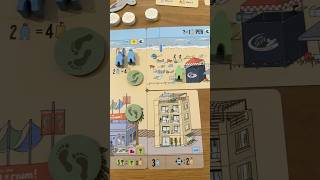
At its heart, Santa Monica is a drafting game where players build out their own personal tableau representing the Santa Monica seafront. Each turn, players draft one card from a display of eight cards arranged in two rows. When a card is taken, the card below it in that column slides forward, creating dynamic choice moments. These cards form either the beach or boardwalk area of your tableau, and players construct a unique landscape across 14 cards plus their starting tile. The simplicity of the turn structure contrasts beautifully with the strategic considerations around when to prioritize which cards, especially since later card availability shifts constantly based on previous selections.
Worker Movement and Meeple Placement
Beyond card placement, Santa Monica adds a layer of spatial puzzle through meeple management. Players control three types of meeples: locals, tourists, and VIPs. Cards grant movement abilities that let players relocate these pieces to specific locations on their tableau. The game rewards getting meeples into designated activity rings and spaces on particular cards. VIP movement leaves footprints behind that score points if they meet certain conditions at game end. This worker movement system creates multiple paths to victory and forces players to balance the card economy with positioning efficiency, ensuring that downtime spent moving meeples feels purposeful rather than fiddly.
The Santa Monica Experience
Beautiful Production and Artistic Atmosphere
Reviewers consistently highlight Santa Monica's visual appeal as central to its appeal. The artwork by Jeremy Irizarry captures a vibrant, breezy aesthetic with muted, warm colors that immediately evoke a Southern California beach town. The bird's-eye perspective and composition create an inviting, transportive quality that draws players into the theme without relying on heavy narrative. One reviewer notes the whimsical style lets you see exactly what the meeples are doing at each location, observing whether they are playing volleyball, going to the cinema, or getting married. This level of visual storytelling elevates what could be a purely mechanical puzzle into something that feels alive and charming. The overall package is described as lovely and stunning, making setup itself a source of pleasure.
Satisfying Engine Building with Strategic Variety
Santa Monica delivers what reviewers describe as an oddly satisfying experience once the game reaches resolution. The core satisfaction comes from getting tourists into activities and watching your personal beachfront ecosystem function. Multiple scoring paths create a satisfying puzzle: cards grant points for adjacency bonuses, forming chains of matching symbols, collecting sets of specific icons, and fulfilling objective goals. The sand dollar economy lets players unlock special abilities that vary each game, adding replayability. Players find the experience breezy and accessible while delivering genuine decision-making around balancing immediate bonuses against long-term tableau composition and meeple positioning needs.
What Makes Santa Monica Stand Out
Elegant Simplicity Masking Strategic Depth
Santa Monica exemplifies how outstanding game design can compress surprising strategic weight into straightforward mechanics. The decision tree each turn involves assessing whether to prioritize cards that immediately advance your scoring conditions, grab cards that offer valuable movement bonuses for meeples, or secure objectives that complete more complex patterns. One reviewer describes it as a wily little beast that constantly makes you lament your inability to get the cards you want while pondering deeply how to make the best out of a bad situation. Players must also decide when taking a card that might break existing chains is worth the movement compensation it provides. This push-your-luck tension combined with set collection creates a game that rewards both careful planning and adaptive play.
Gateway Appeal with Genuine Longevity
Santa Monica succeeds as both a gateway game for introducing newcomers to hobby gaming and as a game with staying power for experienced players. The rules teach in minutes and gameplay never stalls or requires lengthy calculation, making it easy to get to the table. Yet the variable objective cards, random special abilities, and shifting card availability through drafting ensure meaningful replayability. Each game generates a different tableau composition, creating visual variety that keeps returning players engaged. Reviewers appreciate that nothing about the mechanics is groundbreaking, but the way they integrate with the theme and presentation creates something cohesive and polished that rewards repeated plays.
Potential Drawbacks
Point Salad Complexity and Mental Load
The game's greatest weakness is also its identity: Santa Monica is fundamentally a point salad game with approximately eight different simultaneous scoring criteria to track. Keeping adjacency bonuses, icon chains, activity placements, objective fulfillment, and meeple footprints all in mind requires mental bandwidth. One reviewer warns that if keeping eight different scoring options in your head makes you wince, this game is not for you. The scoring is never unclear or ambiguous, but the sheer number of paths to victory means players prone to analysis paralysis may struggle. Players must develop comfort with partial information and occasional suboptimal card selection, as perfect play is mathematically impossible given the drafting constraints.
Box Size and Component Disappointment
Santa Monica arrives in a surprisingly large box relative to its contents. The physical footprint of the game on shelves is notably inefficient, and some collectors note frustration at dedicating significant shelf space to what is ultimately a relatively compact playing area. Additionally, while the card quality and meeple designs are solid, some players feel the component selection represents a missed opportunity. The game could benefit from enhanced production touches that further emphasize the beachy theme without compromising accessibility or teaching clarity.
If You Enjoy Santa Monica
Players drawn to Santa Monica tend to appreciate several adjacent design philosophies. The simple turn structure and quick player interactions suggest fans of lighter tableau builders like Streets, Calico, and Cascadia. The drafting mechanism appeals to those who enjoy Point Salad and Sushi Go. Players who love the polyomino aesthetic and satisfying spatial puzzles may explore Tiny Towns, which combines set collection with grid-building constraints. The worker movement elements without blocking suggest interest in lighter engine builders. The emphasis on beautiful presentation and approachable rules makes Santa Monica a natural recommendation for anyone interested in gateway games that respect the intelligence of their audience, games like Love Letter, Isle of Cats, and Sagrada.
What Reviewers Are Saying
"Santa monica is a quite simple drafting game with a pleasant presentation that will make it easy to get to the table but once it's there though you'll find it's a wily little beast of the game that will have you constantly lamenting your inability to get the cards you want and pondering deeply how to make the best out of a bad situation. The big decision points will be when to take cards it might break combos and chains just because you need the movement or coins a lot more at that time. All up this is a nice looking game that has pretty broad appeal doesn't take too much time and is pretty thinky. The best thing about this game is finally getting all those tourists into activities, it's oddly satisfying."
— 3 Minute Board Games
"Santa monica is a wonderful wonderful game. I think the art style on this one is perfect I just think it's stunning I just think the box is beautiful I love the whimsical art I love the little meeples wandering about. When I put them somewhere I can see exactly what they're doing oh they're going off and they're playing volleyball or these ones are going to the cinema or these ones are getting married. You know it's just really nice that it's not telling me a story is it but I'm getting a sort of snapshot of a seafront and I'm just watching people moving around and where they're going. The gameplay is mega simple it's got slightly more complexity I suppose than something like Calico but essentially that's still what we're doing we're picking a single card might give us a couple of bonuses and then we're placing it and moving a few pieces around to score in various different ways often based on adjacency and things like that but the overall picture that we create is great."
— Adam in Wales
"Santa Monica is a great game it's a tableau builder where you're sort of building up the strip on Santa Monica you have the lower area like the boardwalk or street level area and then you have the top level which is the beach and the water and everything and you're building that out on two sides. The abilities that you're trying to trigger involve moving different tourists around on these different spots to be able to fulfill different conditions where you have to have certain colors or amounts of people in different spots. There's a lot of really cool stuff going on. The way that it implements them all and marries them all together matched with the amazing art style and really cool theme it just put it over the top for me."
— All You Can Board