/pic6202222.jpg)

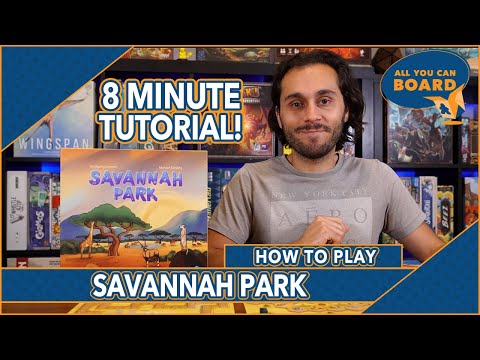




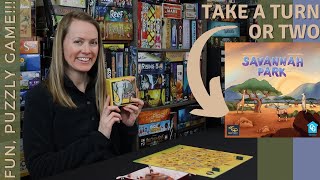




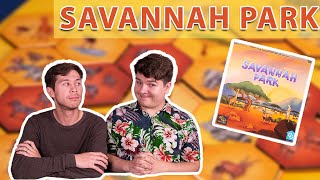









Savannah Park Deep Dive
What the Community Thinks About Savannah Park
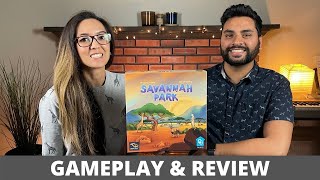
Savannah Park has earned strong recognition from board game reviewers since its 2021 release. Reviewers consistently praise its elegant design, family accessibility, and the clever puzzle at its core. The game has become a favorite among those who appreciate timeless design and meaningful decisions without excessive complexity. Multiple reviewers emphasize that the game feels neither too light nor too heavy; it strikes a balance that appeals to both casual players and strategy enthusiasts looking for a quick, satisfying experience.
Core Mechanics That Define Savannah Park
Tile Movement and Board Manipulation
At its heart, Savannah Park is about moving tiles and creating space on your board. On each turn, the active player selects one of the six animal types on their board and everyone else must locate and flip that exact same tile to its colored side. The twist comes next: you must place it somewhere other than its original location. This creates a cascading puzzle where players slide tiles around like a moving block puzzle, constantly opening and closing spaces. The meerkat token marks the previous position to ensure players don't accidentally return a tile to where it started. Reviewers note this mechanic creates satisfying spatial reasoning; each turn forces you to navigate tight spaces and think several moves ahead.
Scoring Through Herd Multipliers and Watering Holes
Savannah Park's scoring system rewards efficient grouping. At game end, you identify your largest contiguous group for each animal species and multiply the number of animals in that herd by how many watering holes connect to them. A herd of nine ostriches adjacent to three watering holes yields 27 points. Some tiles feature combinations of multiple animals, allowing clever players to chain herds together across species. Reviewers describe this as an efficiency puzzle where every placement decision matters; one poorly positioned tile can fragment a valuable herd or waste a potential water connection.
The Savannah Park Experience
Controlled Chaos and Graceful Adaptation
Reviewers highlight a unique tension in Savannah Park: the game opens with players full of hope and strategic plans, but as tiles get selected by others, those carefully laid plans crumble. One reviewer described this beautifully: in the beginning everything feels perfect and mapped out, but midway through the game everything is on fire and you are crying. By the end, players find themselves salvaging what they can from the ruins of their original vision. Yet this isn't frustrating; instead, it creates a dynamic where players quickly adapt and find new scoring opportunities. The appeal lies partly in knowing you can do better next time, making Savannah Park highly replayable.
Offense, Defense, and Social Dynamics
The game creates interesting social moments because choosing which tile to move is a form of player control over everyone else's boards. More strategic players recognize opportunities to sabotage opponents by selecting tiles they are not yet ready to place, while newer players simply choose what makes sense for their own position. Reviewers note this creates a layer of player interaction and tactical reading that elevates the game beyond pure puzzle-solving. The social element makes each game feel different depending on player sophistication and table dynamics.
What Makes Savannah Park Stand Out
Timeless Design and Elegant Simplicity
Multiple reviewers describe Savannah Park as feeling timeless, with a rule set that is deceptively simple yet yields surprising strategic depth. The designers, Wolfgang Kramer and Michael Kiesling, are renowned for other titles like Azul and Miyabi, and this design carries their hallmark of doing more with less. Players learn the rules in minutes, yet the puzzle unfolds across the entire game. Reviewers compare it favorably to other spatial puzzles like Karuba and Calico, noting that Savannah Park distinguishes itself through its shared board manipulation mechanic and the constant need to adapt to others' choices.
Accessibility Across All Player Counts and Ages
Savannah Park plays well at 1 to 4 players and always takes the same amount of time because you flip all 33 tiles regardless of player count. The game includes variants for younger children who can ignore watering holes and focus simply on building the biggest herds of adjacent animals. As children develop mathematical skills, the core scoring system adds another layer. Reviewers particularly appreciate how the game scales gracefully and remains engaging whether playing competitively, cooperatively, or solo, where players maximize their own score by controlling every tile selection.
Potential Drawbacks
Limited Strategic Control and Luck Dependency
One reviewer noted that because you have no control over which animals others select, you cannot always execute your ideal plan. The game is somewhat at the mercy of luck in terms of tile order, and overly analytical players might find this frustrating. Another reviewer who had played Savannah Park extensively noted that returning to it after a break resulted in a terrible performance, showing the game rewards familiarity with positioning strategies and tile selection timing.
Potential Simplicity for Experienced Gamers
For some players, Savannah Park may feel too light or too much like a simple efficiency puzzle. Reviewers who focus on heavier Euro games acknowledge the game is intentionally accessible and family-weight; it is not designed for those seeking engine building or complex interactions. The puzzle-solving nature, while elegant, does not appeal to everyone, and some might find it lacks the depth or strategic layers they prefer in a modern board game.
If You Enjoy Savannah Park
Fans of Savannah Park should explore other Kramer and Kiesling designs, particularly Azul and Miyabi, both of which share a focus on spatial puzzles and elegant mechanics. Comparisons to Karuba, Kingdomino, Tiny Towns, Calico, and Palaces of Carrara are apt; these games all reward smart tile placement and herd building. The game is also similar to Cascadia, another charming tile-placement puzzle with animal placement and spatial challenges. For those seeking lighter family games with surprising strategic depth, Savannah Park is an excellent gateway that respects the intelligence of all players while remaining approachable for newcomers.
What Reviewers Are Saying
"This is a very solid rule set that just works really well. It's elegantly designed and you know when you just play a game where you're like that is a solid design."
— Before You Play
"It's one of the coolest games in terms of turn angst and frustration because if someone chooses a tile you're not quite ready for, that can really throw a spanner in the works and mess with your plans."
— Chairman of the Board
"In the beginning everything is perfect and mapped out, nothing can go wrong, and then midway through the game everything is on fire and you're crying, but you embrace the chaos and play again because you know you can do better."
— kovray