






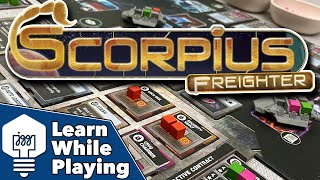




Scorpius Freighter Deep Dive
What the Community Thinks About Scorpius Freighter
Scorpius Freighter is a 2018 engine builder for two to four players, and the video coverage of it is more enthusiastic than its low profile suggests. The most detailed account came from John Gets Games, who found the rules hard to teach at first, but once the game clicked, the table's mood turned. In their words, the game "felt fresh in a lot of different ways," and by the end of that first four-player session everyone at the table had come around. The same channel returned to the game for a dedicated question-and-answer segment months later, describing it as a rondel-based sci-fi engine builder and noting that the host had reread the rules about a month before recording. That detail is worth noting, because it suggests the game rewards a second look after a first read. The Rolling Dice and Taking Names podcast took a more measured tone, treating it as a solid but unspectacular entry in a crowded year for engine builders.
Core Mechanics That Define Scorpius Freighter
Three Communal Rondels
The board holds three communal rondels of different sizes. One moves a player's freighter to new tiles, one activates the tiles already installed, and one lets a player spend cubes on side deals and contracts. Every player moves the same pieces, so each turn competes with the rest of the table for the same spots. John Gets Games explains the pacing this creates:
the game ends as soon as any one of those three communal rondelle's spins around a certain number of times
John Gets Games
Tile placement matters as much as movement around the rondels. Adjacent containers of different colors interact, and some equipment tiles fill the containers next to them. That turns the freighter itself into a small tile-laying puzzle, one built out during the early and middle game and then run once the engine is producing cubes.
Crew, Hands and Tucking
Each player starts with four crew. On a turn, a player tucks one or two of them under the board and moves a pawn, and the hands still showing on the untucked crew set how strong the action is. Crew powers become active when a player flips them by spending money at the right spot, and once flipped they stay active for the rest of the game. That means the order crew is collected matters less than the combinations built from what is on hand. The game ships with seven sets of four crew, and John Gets Games describes a draft variant where players deal out six crew, pass cards around to build a hand, and keep four of them for the game.
The Scorpius Freighter Experience
Learning Curve and Table Mood
Teaching is the sticking point reviewers return to most. John Gets Games said the rules did not feel familiar at first, and that a quarter of the way through the first four-player game, two people at the table were actively disliking it.
it felt fresh in a lot of different ways
John Gets Games
A cleaner second explanation, with a three-player group, went much better, and one of the players who had been unhappy the first time called it simpler than they remembered. Both accounts point to the same practical lesson: the game rewards a clear first teach and a willingness to sit through a slower opening session before judging it.
An Engine Builder First
The Rolling Dice and Taking Names episode calls the game a solid engine builder at heart, and places it below other releases from that year, including Istanbul.
this at its root is really an engine builder that's all
Rolling Dice & Taking Names
The verdict is measured rather than rapturous, and the hosts invite listeners to try it for themselves before judging. That matches a game whose payoff arrives in the middle stages, once the engine finally runs and the tile network starts paying off.
What Makes Scorpius Freighter Different
Most engine builders hand each player a private board to optimize alone. Scorpius Freighter instead routes every player's rondel movement, activation, and contract actions through the same three shared tracks, so the tempo of the whole table, not just one player's plan, decides how quickly the game ends. Combined with the tucking mechanic for crew, where unused hand strength becomes the resource that gates each action, the game asks players to manage both a personal engine and a shared clock at the same time.
Potential Drawbacks
The teaching overhead is the clearest drawback reviewers raise. John Gets Games described a first session where part of the table soured before the mechanics clicked, and recommended a second, cleaner explanation rather than trying to nail it in one pass. Rolling Dice and Taking Names likewise placed it a notch below other AEG-era engine builders from the same year, suggesting it does not stand out sharply once a table already has strong alternatives like Istanbul on the shelf.
If You Enjoy Scorpius Freighter
Players drawn to Scorpius Freighter for its rondel-driven engine building and crew customization may also want to look at Istanbul, which reviewers used as the benchmark for this style of tight, resource-routing design.
What Reviewers Are Saying
Across both of John Gets Games' visits to the game and the Rolling Dice and Taking Names review, the throughline is a game that rewards patience with its rules and pays that patience back once the engine is running.