/pic6973911.jpg)






































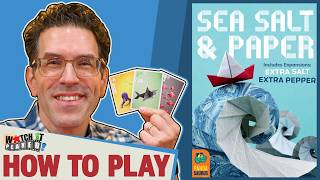




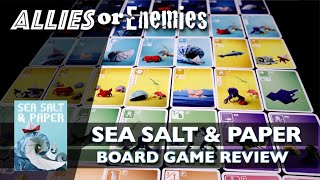







Sea Salt & Paper Deep Dive
What the Community Thinks About Sea Salt & Paper
Sea Salt & Paper, designed by Bruno Catala and Theo Rivier and published by Pandasaurus Games, has carved out a reputation as one of the most beloved small-box card games in recent memory. Reviewers across the board land on the same verdict: this is a game that punches far above its weight. Allies or Enemies called it their "surprise hit of the year," praising how the gameplay fully backs up the game's stunning visual presentation. Paula Deming ranked it her number one convention game, noting she played it more than six times at Aircon 2023 and it never got old. Watch It Played's Rodney Smith praised how the push-your-luck ending mechanic creates genuine tension with every round. Board Game Critique highlighted how the game produces "beautiful moments of tension" around the stop-or-last-chance decision. The rare criticism that surfaces relates to score-tracking complexity in early plays and the learning curve for scoring counting, but reviewers consistently dismiss these as minor friction for what is otherwise a tightly designed experience. Might I Suggest A Game describes the game as "quick, clever, and strategic," while Allies or Enemies note that the combination of accessible rules and deep decisions makes it "unique, fun, and infinitely replayable with just a deck of cards."
Core Mechanics That Define Sea Salt & Paper
Push Your Luck
The mechanism that elevates Sea Salt & Paper from a pleasant card game into a genuinely dramatic experience is the stop-or-last-chance decision at the end of each round. As Watch It Played explains it, once a player has collected seven or more points, they may end the round either by calling stop, which lets everyone score normally, or by calling last chance, which gives every other player one final turn. If the player who called last chance still holds the highest score after those extra turns, they earn not just their card points but also a color bonus equal to the count of their most common card color. If anyone overtakes them, they score only the color bonus and nothing else. Board Game Critique describes the experience vividly: a player with 28 accumulated points, holding two mermaid cards and feeling confident, declared last chance, only to have their opponent play a shark-and-swimmer pair to steal a key shell card. That single steal flipped the score, and the player who had been victory-dancing went "from victory dance to complete silence in about three seconds." Paula Deming notes that this decision shapes the entire personality of a session: some groups call last chance constantly, some always say stop, and each style completely changes how the game plays out. The mechanism elegantly compresses high stakes into a tiny footprint.
Set Collection
The engine underneath every round in Sea Salt & Paper is its layered set collection system, which Meeple University and Watch It Played both walk through in careful detail. Players collect shells, octopi, penguins, and sailors, each of which gains value exponentially as the set grows. A single shell is worth nothing; two shells score two points; six shells score ten. The deck also contains multiplier cards, a lighthouse that scores one point per boat collected, a shoal of fish worth one point per fish, a penguin colony worth two points per penguin, and a captain scoring three points per sailor. Mermaids add another layer: each scores points equal to the player's largest single color group, and if a single player collects all four mermaids, they instantly win the entire game. Allies or Enemies describe how this structure creates wildly different round strategies. Spot an octopus early and you chase a set. Pick up a multiplier card and you pivot to hunting its companion type. The mermaid win condition, while rare enough that Watch It Played's Rodney Smith says he has "never seen this happen" in a game he played, casts a spell over every session. Allies or Enemies write that once you hold two mermaids, "it is almost impossible not to chase the mythical instant mermaid win." The distribution of card types, across just thirteen types in a 58-card deck, creates this variety of viable paths in every single round.
The Sea Salt & Paper Experience
Dramatic
Few small card games generate the kind of table moments that Sea Salt & Paper consistently delivers. Board Game Critique's account of a game turning on a single stolen card captures something reviewers return to again and again: the game creates reversals that players remember long after the session ends. Paula Deming highlights that depending on who is at the table, the same rules produce completely different gameplay tones. Players who lean on the shark-and-swimmer pair to steal cards introduce an aggressive, cutthroat feel; players who avoid it play a quieter puzzle. The last-chance bet is the engine of drama: you reveal your hand, watch others take their final turns, and know that a single card combination they assemble could flip everything you built. Allies or Enemies capture this with a note about the two-player experience specifically, observing that at two players the shark-and-swimmer cards become "almost must-takes" because you know exactly who they are targeting. The game's structure ensures that no round ends quietly.
Quick and Snappy
Sea Salt & Paper earns consistent praise for its pace. Paula Deming recommends it specifically as a convention game because it is small enough to throw in a bag, easy to teach new players, and quick enough to play multiple times in a single afternoon. Might I Suggest A Game describes it as "easy to learn and quick to play." Allies or Enemies note that the game usually runs four or five rounds before someone hits the target score, and that the varying targets by player count, 40 points for two players, 35 for three, 30 for four, keep the overall play time consistent across group sizes. Board Game Critique puts the typical session at 15 to 20 minutes. Because each turn is a single card draw plus optional duo plays, downtime is minimal. The result is a game that feels brisk even when it is tense, a combination that makes players want to reset and go again immediately.
What Makes Sea Salt & Paper Stand Out
Artwork as a Genuine Selling Point
The artwork in Sea Salt & Paper is not merely decorative. It is a core part of why the game is remarkable, and reviewers go out of their way to explain why. Allies or Enemies describe the cards as featuring "the most amazing nautical themed origami you have ever seen," noting that even without playing the game, you could leave these cards out on a coffee table as a conversation piece. They also observe that first plays tend to run slow because players are busy admiring each card. Watch It Played's Rodney Smith notes the game's publisher Pandasaurus Games helped sponsor that video but still uses the artwork as a genuine recommendation hook. Paula Deming says the game is "so beautiful to look at" that its visual appeal alone draws people in at conventions. Board Game Critique calls the art beautiful and maritime-themed. Allies or Enemies point out that the cards also include color-blind-friendly symbol coding alongside the visual art, showing that the production is both beautiful and thoughtfully accessible.
Surprising Depth from a Tiny Deck
Sea Salt & Paper runs on 58 cards, and reviewers find it remarkable how much decision space that tiny foundation creates. Allies or Enemies state directly that "it is impressive what could be done with 13 types of cards in just the right distribution," noting that the replayability is higher than most card games because the paths available each round shift based on which cards surface early. Might I Suggest A Game emphasizes that the game has "a surprising amount of strategy" that keeps players coming back for another round. Paula Deming highlights how the shark-and-swimmer dynamic changes based on who is at the table, making the social environment itself a variable. Meeple University's rules breakdown shows how the duo effects chain together: a pair of boats gives an extra turn, which can unlock another pair, creating cascading turns that feel earned rather than random. Board Game Critique notes how the two-player game rewards tracking what has been played, enabling "calculated gambles" rather than pure luck. Allies or Enemies close their review by saying the game "manages to do something unique, fun, and infinitely replayable with just a deck of cards."
Potential Drawbacks
Scoring Complexity in Early Games
The scoring system in Sea Salt & Paper has more moving parts than the rulebook length implies. Allies or Enemies note that "the score counting can get a smidge complicated with some hands" and that new players will need a few sessions to internalize how all the card types interact. Watch It Played addresses this by dedicating significant time to worked scoring examples, which itself signals that the scoring is a real learning hurdle. Meeple University recommends players keep a running mental tally throughout their turn because the threshold for ending a round depends entirely on knowing your current point total. For casual players who prefer to stay fully in the moment, this bookkeeping can feel disruptive in the first few sessions, though reviewers agree it becomes natural quickly. Allies or Enemies acknowledge it as "a small barrier for those first few plays."
No Included Score Tracker
A practical frustration that Allies or Enemies raise is that the game does not include any way to track cumulative points across rounds. In a game that plays over four to five rounds with scores accumulating toward a target of 30 to 40 points, this omission is noticeable. They suggest "a simple card system like they have in Star Realms would have done the trick" and note that players end up relying on a phone or pencil instead. Meeple University also mentions that no scoresheet comes in the box. For a game so beautifully produced in every other respect, the missing score tracker is a small but real oversight that comes up in nearly every review that covers the full unboxing experience. It does not diminish the game, but it is a practical gap that players need to plan around before their first session.
If You Enjoy Sea Salt & Paper
Players who enjoy the push-your-luck tension at the heart of Sea Salt & Paper will find a natural companion in Patchwork, which similarly delivers tight two-player decision-making in a short play window, though its puzzle-placement feel differs from Sea Salt & Paper's card-draw structure. Seven Wonders Duel is another frequently cited comparison, offering similar feel of a card game with meaningful draft decisions and escalating tension, albeit with more rules overhead. Doomlings comes up in the Board Gaymes James sessions as sharing the addictive card-game vibes and set-building pull. Star Realms is mentioned by Allies or Enemies specifically in the context of score-tracking elegance, but both games share a small-box, high-replayability DNA. Mo appears alongside Sea Salt & Paper as another lean card-collection game for players who love the gathering-and-scoring rhythm without heavy rules. All of these games share Sea Salt & Paper's core appeal: meaningful decisions, fast play, and a small footprint that makes them easy to pull out anywhere.
What Reviewers Are Saying
"Sea salt and paper is our surprise hit of the year the art makes it instantly interesting but the gameplay it backs up that look 100 percent we were hooked on this one even when we were just playing it online but now that we've got a physical copy it pretty much lives in our backpack."
— Allies or Enemies
"It's fascinating that depending on the style of the people I'm playing with the game can feel really different so some people want to call last chance a lot and some people always want to just call stop and let everyone score and some people really use the shark and swimmer to steal cards and some people just ignore that and each of these styles totally changes how the game plays out and I love that."
— Paula Deming
"That one steal flipped everything. Their score jumped above mine. And because I called last chance and lost, I basically scored nothing that round while they got everything. The swing was massive. That's what makes Sea Salt and Paper special. It creates these beautiful moments of tension where you're asking yourself, do I play it safe or do I go for glory?"
— Board Game Critique