Let's Talk Board Games #16 - Reviews (Astra, Velonimo, Sea Salt & Paper, & Mille Fiori)
Games in This Video
4 games are featured in this video — they unlock as you watch.


Transcript
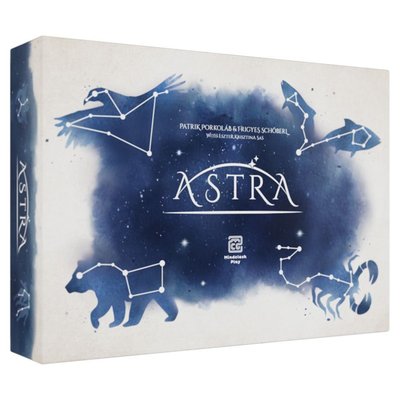
hi everyone my name is money and I'm Naveen from before you play and welcome to another episode of let's talk board games where we pretty much just do some quick reviews of board games we've been playing yes these are going to be four different games that are more on the Lighter Side uh we've been playing lighter games recently just coming out of the holidays and so we're going to talk about them today yes but before we do we do want to mention that in a couple of weeks we are going to be at aircon which is a convention in the UK we're going with watch it played we were there last year and it was a little bit shorter last year yeah it's going to be four days this time it's going to be held uh March 9th through the 12th up in Harrogate in the UK so if you will be in the area we'll be there and we're just gonna be playing games and just kind of hanging out that's right it's going to be a great time so we hope to see you there otherwise we're just gonna go ahead and get straight into the games this time right all right our first title is a family weight game that is published by a publisher who doesn't typically make funny Way games that's right this is a game called Astra and it's published by mind clash games if you're not familiar with them they put out titles such as an acrony to carry on uh perseverance there are a few very heavy crunchy titles that they have under their belts yeah void Falls their newer one that's going to be coming out soon and so this game is under their their family weight line called Mind Clash play right so this is supposed to be geared towards people who are not necessarily wanting to play the heavier stuff they just kind of want something that's still crunchy but on a lighter scale that's right yeah so the theme of this one is basically you are charting the different constellations in the sky you're trying to gain wisdom to
be able to kind of complete your charting of these uh different constellations and ultimately trying to set collect to score the most amount of points yes it comes with dry erase markers so it's it's almost like a roll and write or a flipping right I guess maybe it is maybe it has a flipping right game kind of yeah yeah to an extent and so essentially what's happening is there are these different constellation cards that are going to be put out on the table and on your turn you're either going to observe the Stars by spending Stardust in order to connect some of the dots that are on the card or you're gonna rest a majority of the time you're going to be observing and so there are some rules that come into play when you're connecting the dots on the cards such as they have to be all connected in kind of one linear fashion if you are the person to fill in the last spot on the card then you get to claim the card as long as you have enough wisdom to hold on to it and so these cards are going to score you point at the end of the game but they will also provide you with in-game powers that you can utilize and every time you exhaust one of these cards to use its ability you can't refresh it until you rest but only if the uh the board is on that specific element that relates to the card and that makes sense there's gonna be a mechanism where um it's almost like four seasons I I can't remember the exact title as to what it is but over the course of the game this token is going to move around into one of the Four Seasons if you happen to rest during that phase when that token is there and the constellation matches it then it will become unexhausted so there's kind of a timing element of like I have Stardust to spend but I also don't want to set somebody else up to take this
consolation right so maybe I'll just rest because this is the most ideal time to refresh the card that I have yes and you can rest prematurely when you think that you can block somebody from being able to untap like a really strong ability in addition to that there are also rewards on the constellations uh for people who just have a star filled in when somebody completes the constellation so you didn't get to take the constellation card but you get to choose one of the benefits below right because if you've contributed to let's say there's 10 total dots to be filled in and you've contributed some level of uh of those dots the Stars yeah when you're charting it yeah you get a consolation prize and whoever has the uh the most of the leftovers basically who did not collect will get first dibs on some of the bonuses that are at the bottom and those can be very helpful yeah the bonuses are going to be stuff like points or telescope uh chips which is what we find to be very very useful because they allow you to observe on multiple constellations instead of just on one card on your turn another one allows you to increase the amount of free Stardust you get after you do the rest phase so when you rest you basically re-accumulate Stardust so that you can use in your actions phase yes but if you have uh kind of gotten more bonuses when you rest you're going to get more Stardust meaning you can now go out and observe more constellations more in one go right and so that's essentially it as soon as the game ends then you go into final scoring and everybody has their own sort of asymmetric mat when you flip it over there's a chart that kind of shows what starting elements you you've already
crossed off and depending on how many of those elements you've matched in either completing sets or completing multiples of the same type of element then you'll score a certain number of points right right and whoever has the most points wins yes so that's basically the set collection part of it it's like why am I going and gunning for this do I like the bonus do I like the base points that are on this console solution or am I trying to get it so that at the end of the game I've completed my set or maybe it's a combination of all those things so there's a lot to think about um definitely uh the way the um the maps of the stars are laid out you can never just complete it in one go so there's a lot of this kind of chicken element of like all right so I I definitely like that bonus yeah I'm not sure if I'm gonna be able to complete this so I'm just going to get a a star just charted there so I can get some sort of passive right uh benefit when somebody else completes this and I'm okay with that or you can be like Naveen and be super annoying and put like one dot in the middle so that you can't complete it on your turn and it takes multiple players multiple turns to complete a constellation that was Naveen was the antagonist in that stuff so when you're charting uh these constellations we may not have been super clear about it you can only go in One Direction there's no backtracking so let's say I want to spend three Stardust but from this starting point it only goes up and there's another space beyond that starting point that you cannot access it's going to take a whole other turns yeah yeah you can start kind of putting these little like dots out there just to sit and turtle to be annoying to get some passive things and so when other people call it you know uh complete it
then then you'll get something some sort of bonus out of it because you can only write on one constellation you can only observe one constellation on your turn unless you have those telescopes so if it's just that one dot because Naveen did the thing then that's all you get yeah so there's a decent amount of strategy here kind of what bonuses do you take at what time uh what do you value uh basically um for the rest of the game um I thought it was okay it wasn't uh uh I don't know it was it was just okay for me yeah
it is kind of light in rule set although the rule book is kind of long but when we are learning it it's not complicated you know you can get into it pretty quickly uh but there is a lot of strategy to it which I was surprised about but it is a little bit dry yeah I think that's probably probably what it is I couldn't like I couldn't pinpoint what it was but when we finished playing it I was just like I'll play it again but I'm not like driving to like okay let's get that back to the table ASAP it was a very quiet experience uh each time we played it and it was it was almost like too thinky for what it was because you're just and it's a majority of the time you're you're just plotting uh dots on the cards yeah so it's not like the most riveting game I think that's what it is probably yeah yeah especially compared to the frontier titles that my Clash puts out those are so rich in the theme you really enjoy you know you really enjoy the experience because of what you're doing and there are a lot of moments in the game that that make you feel like you're into it right like you're really engaged yeah and this one is just a little bit more on the dress side yeah I think there's a decent amount of player interaction like you can convince like hey if you put a big chart I'll finish it off you get the bonus like there's a little bit of that going on um but it wasn't as engaging as I assumed it was going to be when we first got the game we picked this up at Essen and so I'm glad we got to play it a handful of times and now we can finally talk about it uh in the long run um I think I'm willing to play it more but it's not something that I'm gonna be asking to play yeah I mean it's not that
long so that's a thing and like I guess for us for midweight games I guess which is what this is considered to be uh it has to have something that's either really tense like there's a lot of tension that keeps you like really excited or just some some kind of juice Factor right and it was a little bit missing on that yeah but otherwise I thought the theme was really cute that's the thing that kind of intrigued me with the game in the first place I really enjoyed the idea of stargazing and constellations and such but yeah just a little bit dry so that is Astra and that's published by a mine Clash play the next two we have some small card games this one is from 25th Century games and it is a cycling themed card game with the ladder shedding or a ladder climbing game and a hand shedding game called the villanimo um this one uh is a interesting kind of take on ladder climbing where you basically have these uh different animals that are riding these bicycles and you're essentially trying to be the first person to get rid of all of the cards in your hand first of all uh well actually first of all I keep wanting to call this voluminous it's not valomino and it's the LA Nimo the End come before the F yeah M and the other thing is for those of you who are not familiar with the term ladder climbing or uh card hand shedding those are terms that we kind of just learned within the past year if you can think or if you've ever played a game called Scout I think that's technically ladder climbing right that is where we we learned that term it's basically where you're trying to one-up the person's hand that they play out in front of them you're constantly trying to beat it and so that's the same
concept here and then hand shedding you're trying to get rid of your entire hand first yeah you wanna it's a race to get rid of your hand yes and so if you're familiar with a game called Scout that's exactly what you're doing in that game and very similar in this one the difference is this one's a lot more simple so in this game you have a deck of cards and they're all numbered I think it's one through one two nine nine they're all different animals you also have um these hair hairs like rabbits and they have higher values like 25 30 and such the game is complete over the course of five rounds and on your turn you're basically going to play a hand of cards that are all the same suit or all the same number and then you're gonna do some math and that is how you calculate the strength of your hand for example if I have a hand of Threes I can play three threes and the way that you calculate your hand is you get 10 points per card plus the lowest value on your cards so with three threes that would be 33 right if I had all the same suit if maybe I played a one two three that would be 31 because it's three cards and then the lowest value is a one and then the next player would go and they would try to beat out the hand they would have to exceed the value right and they can still choose a suit or number it doesn't matter what I play they just have to beat out the value so I could pass maybe I do have something to beat it out but I think I can get something stronger and I don't want to give up my hand right away uh and then you can always hop back in if the the round or if the cards come back to you right so uh let's say I did have something to Beat It I would beat it I would get rid of some cards and it
goes on to the next player until everybody says pass once somebody uh once everybody has gone and passed then whoever had the highest hand will start again with throwing out a new hand discard the entire stack exactly so that's that's sort of how that goes the hair cards uh have to be played by themselves so those are an exception but they are really high valued cards I think the highest value is 50. I think 50 yeah so you're kind of wanting to hold that one back um for like a really big banger right they're also the ones which are the the tortoises and they have a leader ability for each one that you play in your hand you get to steal a card from somebody else's hand and that is an element that you don't see in a game like Scouts so not only do you steal it but you can then then you swap apart from your hand so if there's something that's kind of clogging up your hand that's not going to make anything of Big Value if I played two ones out there that would equate to again 21 right 10 per card plus one with those two ones I can take one player's hand and steal deal two cards look at them and decide do I want to keep these do I want to swap some out and then give them maybe potentially bad cards yes or what I think it would be bad cards so that I can create something with this new uh kind of influx of cards that I just got so it's it's good it's um it was it's exactly the the style of game I like when it's like a quick five minute round yeah um you're never quite out of the game uh because of the way that it scores so right at the end of every round um the person that got rid of their cards first gets uh 1.4 every person
still left in the game but then that increases depending on the round so in the later rounds it's more valuable to go out yeah you essentially get the points equal to what round you're in for each person who is still in the round right so you want you definitely want to be out first that's the whole goal of the game and then by round five you're scoring five points per person who's still in so you know you can be halfway through the game and and not doing well but still win by by doing really well towards the end exactly so I thought it was really fun it's it's kind of funny right the theme is really cute the art is spectacular and I really like the addition of those leader cards because it makes for really interesting moments when you're stealing cards from other people right potentially ruining their plans between the game like this and say Scout which is a game that we keep on comparing it to it's a really really popular uh ladder climbing card setting game as well I still prefer Scout over this but Scout is a lot more complicated I feel especially for people who are not used to playing these kinds of games or even for younger players and so for that reason I think this does have a nice kind of place in that genre of games if Scout is a little bit too complicated for your family or such then this is a great one to go to because you're just doing the math on how many cards you played yeah this this one is um this is like one of those ones like where you're either starting a game night or finishing a game night and you just want to play one more game or you want to get into something while you're waiting for people this one is it's pretty good for that it's placed up to five players which is always nice and we found it we
found it very uh very good I think we're gonna keep this one around for a while so anyway that is a villanovo by 25th Century games we have another small card game and this one is called sea salt and paper and it's published by bomb mix for two to four players and uh actually the first time we heard about this game was on the Gen Con preview list uh I thought it sounded really interesting it looked really cute but then we went to Gen Con and we didn't play it yeah we walked by the demo Booth a couple times three or four times and every single time we went by it was completely full and so we're just like okay we're just not gonna get to play this at this time uh we did get to pick this up though at Essen yes and so we finally got into play it a couple times now yes so we went to F and he picked it up and then uh it just kind of sat there for a while and so uh we finally or I finally was able to play it because Rodney for a lot that played I started a game with me on board game arena because this game if you didn't know is on board game arena so if you wanted to play it you can but I played it with him and I thought wow this is a this is a different game it is really interesting and so if you're not familiar with this game it's basically a push your luck set collection game where you have this deck of cards and all of the illustrations are this like really super cute origami style right that's good it's all like folded paper it feels very like if you've ever seen the movie uh Isle of dogs it's kind of like that like that art style a little bit I don't know how else to describe it yeah well I love dogs I think is like claymation it is like claymation but it's like claymation like but like it looks like
paper almost makes sense it's a great movie you should watch it but it's very very cute art style and so on your turn you're basically just drawing two cards from the deck choosing one to keep in your hand and discarding the other to one of the two discard piles or if you like what you see in the discard pile instead of drawing from the deck you can just take one off the top of one of the two discard piles and so a majority of the cards are going to have some sort of uh set collection scoring So like um I don't know if they're Penguins the penguins are like if you have two penguins it's two points if you have one penguin it's zero points this would be octopus also has something like that but there are also four different types of Duo cards where if you collect two of the same type of crab for example on your turn after uh taking your turn you can play them in front of you in order to take its special effect so it's going to be stuff like the boats if you collect two boats um they'll let you take another turn right or if you play down a Duo of two fish then you can take the top card off the deck and if you have several of these Duos you can play several of them I believe to take their effects um one of the funny ones is if you have a shark and a swimmer that is a Duo you play it in front of you and now you can steal a card from your opponent right and so the thing that's um interesting about the game is the way that the game ends so as soon as either player has I think it's seven points and that's between the cards that are in front of you as well as the ones that are hidden in your hand uh then you are eligible to end the round and if you end the round
you have to choose to either stop it immediately or I forgot what the word is but you can basically give everybody else one more chance yes yeah I forgot it's called something but you can basically give everybody else an extra turn and depending on which option you choose that is going to dictate how you score points so if you choose to stop it immediately then everybody is just going to score their hands and the cards in front of them as normal if you choose to give everybody an extra turn then you are saying that you potentially have the highest score amongst everybody you're you're betting on that and if you're correct you had the highest score or were tied for the highest then not only do you score the points on your cards but you also get a color bonus because all the cards are of different color suits and you basically get one point per card of the color that you have the most of and I believe everybody else only get it's the color bonus and cards yeah so because you're giving everybody else an extra turn there's kind of this element of like okay is 10 points good enough do I think 10 points is good enough okay I'm gonna say stop it now because I don't know if it is good enough or be like oh I definitely have this then uh you know you're kind of pushing your luck just a little bit there yeah and if you are wrong or your color bonus I think something like that everybody else scores not wrong yet nobody's been wrong yet yeah but uh that that element of it reminded me of what I like about Cabo if you're familiar with that game or golf where you're really just trying to uh bet that you're the person who has the lowest score and that's pretty much the entire game you play you keep on playing several rounds until you've hit a
cumulative score and so you basically you basically just play until we're we're not playing but uh I thought it was really neat um that I really really am a sucker for the card design yeah it's really nice the art really gets me it really adds to the enjoyment of the game such a simple concept too you just draw you know you draw two cards and you make a decision keep one give one back sometimes you draw the same exact cards like so remember Monique was saying that uh you have these Duo cards what if you drew both a shark and a fish then you choose on the swimmer and you're like these both need to be together now I have to toss one back yeah which pile should I toss it back in because maybe maybe I'm covering up something else that somebody else wants so they're going to clear things out for me and I can get right back to it at the right time so um yeah the discard element this is actually strategic yeah uh when I discard I think okay maybe if I really want this next turn maybe I'll discard it so that Naveen won't take it because maybe he'll take the other side yeah so maybe the other thing that I'm not covering up is something that looks more lucrative to my opponents so maybe I'll just toss this in the other discard card uh discard pile and then they'll start drawing from the other one and then when it comes back around to me that card that I had to get rid of because of the rules it's right there for me and then I now I can score and take the bonus off yeah so yeah it's pretty clever uh very very simple to understand yes and I think that's the best part about it that is yeah it's so simple in rule set you get into it immediately um and it's it's a it's a mix of strategy and luck yeah the only thing I
would say is um I wish there was a small little card that had all the different uh bonuses on it just kind of outlined exactly what it is yes the Duos um because you know you'll have to be thumbing through the rule book to be like okay that's exactly what it instead of just here's a card right that is very in simple text granted there's only four so the more you play it the more you'll just memorize it but the first few times we were like wait is there a key somewhere there's no key we've only played this by the way at two um I think it's a fantastic two-player game I don't know how it would play at higher player counts but this is definitely a purchase that I I really really like that super small yeah really nice artwork very simple to teach I mean we'll we'll be keeping this for a very long time yeah so there you go that is sea salt and paper and what a title right yeah sure okay the last game that we're gonna talk about is the biggest box amongst the poor that we have this is from devere games as well as Schmidt and it is called I believe is Miley fiori please correct us please correct us if I'm wrong I do not know uh it is a two to four player game and uh just right up front I would like to say that this should be only a three or four player game you think so I think so yeah you thought something this is a basically it is a card drafting game uh where you're going to be placing out your glass pieces onto one of six different areas of the board to try to score points this is a very big Point solid Style game where each region of the board has a different way that you're going to be able to score the
card that you select in the drafting dictates what kind of action you're going to take the cards are multi-purpose so if a card has an image on it that's going to say I can place one of my glass pieces in the region that that image belongs to or I can say I don't want to do that in the card that I have chosen I'm going to be able to move a boat a certain distance to score points and essentially what you're going to be trying to do is score the most amount of points by the end of the game right but at the end of the day it is a drafting game okay so a majority of the time you're passing around the cards looking at them choosing which one you want and then passing the rest of the hand to the person to your left so you're potentially looking at the stuff that they're scoring and then giving them the selection for the next round right yeah one area of the board you want to try to Cluster a bunch of your glass because every time you place it down you get one point for each one in the cluster another area of the board you're trying to score for each uh consecutive glass so if one area the first time you put it down it has two points if you get to go again and nobody has gone there and you put another one down and has three points on it not only do you score the three points but also the one previous to that Five Points so then you can continue to chain so it gets to this point of like is anybody gonna do anything about this is anybody going to stop this you cannot just let that person just keep going yeah yeah and so it becomes like your burden a lot of this game is like okay the burden is on me to stop the bleeding in this one area bleeding is what this game is about yeah there's another region where you're building uh pyramids like a triangular formation of glass you need to build the
base before you can kind of build up but every time you build upwards it rescores there's a rescoring element to those two regions and then every region also has like uh if you're the first person to uh to get all five numbers then you get this bonus and you get to take an extra card which is essentially an additional action additional action from the supplier or something each region also has a a bonus for uh like one of the regions if you surround a particular symbol then you get to put out a token on a bonus and the bonuses are either valued 20 15 10 or 5 so you really want to raise to those because that's basically in your actions you're going to get a free potentially 20 points yeah each region has their own kind of way to score those yes so it's a very very simple game you know these are your cards choose one which ones am I willing to pass place a glass or move the ship and spare points yeah it's simple in rule set your the majority of the time you're just going to be learning how each region scores that's pretty much the the rules yeah and uh the thing about it is all points are pretty much scored in game and there's a lot of points so the the scores are going to fluctuate so much you're going to be in last place and you're going to be in the first place and then you're going to be like really losing and suddenly you're going to be catching up like that is the heart of this game there could be a moment where you're you're taking an action to set yourself up for for success in the future where you're like I get one point your turn I get 15 points like okay like that didn't feel good my turn I got one you got 15 but if
you play your cards right yeah and if you draft properly and set yourself up properly then maybe you'll have those points where it's like I'm getting 12. I'm getting 15 on my turn and from what I remember I don't think the draft uh changes directions I don't think so right so I was uh next to somebody when we were when we played we played a three-player game of this and I was sitting next to Michael you know Michael is a fantastic gamer and he was doing that region where it was like the consecutive thing you just can't pass it I it was my responsibility to not pass him that was car so there's there's some you know there's some of that uh politics well there's also the uh an element of you can foresee two players in front of you right so if I saw Michael was doing this then I'm passing you cards saying it's your responsibility on your turn to stop this while I do something for myself yes now I'm gonna put the the pressure on you to be like Monique aren't you gonna stop this and that Naveen did so in short this game is a wild child just the wildest child of the bunch um it gave me a lot of in-game anxiety I will say uh it's a big uh feeling of fomo if you're familiar with that term uh the fear of missing out basically every time I would see somebody just shoot up in points I would feel terrible yeah that's what I'm saying like if you're like it's taking down one or three points yeah 15 and the bonus yeah even though I didn't do too well in the I'm sorry I didn't do too bad in the end
I think I I got second in that game during the game game the emotional roller coaster is just too much it's too much for my poor heart yeah and because of this element of this it's not area control but it's like semi it feels like area control by just putting tokens out there I I feel like this game is best at three and four players at two players it's just you or me it that does not seem like enough Dynamic there so I do agree I think the more players the better with
there is still room for a two-player game it's gonna be the same experience in the sense that if you're scoring high here well I'll do this thing it's gonna be the same kind of uh uh pendulum of points you know what I mean just not as interesting yeah it's definitely much more interesting in higher player accounts and the thing about the game that's good though is it's very fast it's beautiful it is just uh such such great table presence and no matter the player count it's gonna be over pretty quickly yeah I I don't what like an hour maybe yeah once we knew the rules yeah if you're a seasoned gamer the rule set is very very quick it's like okay that's how that works perfect let's just move into it yeah but you have to be okay with the score fluctuating you have to be okay with not being able to foresee the future and not being able to properly uh plan strategically because sometimes if you're trying to really strategize in one region sometimes that card might not even come out yeah you might not get it yeah so you have to be okay with that and just it's one of those games where you just roll with a punch is and just have a good time and uh kind of laugh off those moments yeah that's exactly it yeah so anyway that is Miley Fiore and that's it the four games as you can see board game has been a little bit lighter in our household as of late but uh we have some trips planned coming up as well as a local convention and so we are going to be playing a lot more uh soon yeah until next time please let us know what games you have been playing we would love to hear about any games that you're excited about especially in the coming year uh because we we hear about a lot of our
recommendations through you all in the comments section and I hope you are all having a wonderful start to your 2023 and we'll see you next time thanks thanks bye thank you