







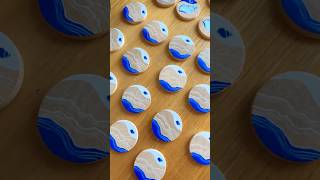










Seaside is a game that features only wooden tokens, and being lightweight and super portable, can be played everywhere. Bring it along on your next adventure!
The sun is shining, as a light, salty wind sends cottony clouds scudding across the sky. Sandpipers filling their bellies with strange insects, crabs hiding under piles of rocks, seashells washed up on the sand, curling waves that break along the beach. Nature in its simplest beauty.
One token at a time, create your Seaside with the elements the sea sends your way. The goal of the game is to have the highest stack of tokens.
How to play:
Put all tokens in the Bag and mix them up. The Play area is divided into 2 spaces: The sea (central area) and the Seaside (area in front of each player)
On your turn, draw a token from the Bag, look at it secretly, choose the side that interests you and apply its effect. Once you have chosen the side of the token you'd like to play, it will remain like that for the rest of the game.
Once you've applied the token's effect, your turn is over; pass the Bag to the player on your left.
There are two types of tokens:
Tokens with a blue design are thrown into the sea
Tokens with a white design are placed on your Seaside
If you pick a token with a blue design and throw it into the sea, you immediately take another turn. Your turn ends when you pick a token with a white design and put it on your Seaside.
The key to the game lies in the interaction among the various elements of Seaside’s ecosystem. The Sandpiper allows you to fetch Isopods from the Sea. The more Beaches you have, the more Shells you can collect from the Sea. Having one Rock does nothing, but the second one you place allows you to collect all the Crabs from the Sea... and even steal one from another player! Finally, Waves wash across the Beach tiles and flip them over.
As soon as the bag is empty, the game is over. Stack up all the tokens from your Seaside, and the player with the highest stack wins!
—description from the publisher
Keyside ►►► This is the DEEP end of the pool!
- Zero setup game ready out of the bag
- Fast play sessions suitable for light and casual sessions
- Dual-faced tokens introduce meaningful choice
- Accessible theme with clear tactile components
- Competition around building a single tallest stack with risk of losing others
- Early luck can heavily influence outcomes due to token draws
- Limited depth for experienced euro-game players
- Only a handful of strategic levers; repetition may lead to fatigue
- Coastal foraging and competition: players try to assemble the tallest isopod stack while navigating sea creatures and tidal effects.
- A sun-drenched beach and tidal shore where shells, isopods, crabs, and waves populate a central sea-play area; players operate on a compact, pocket-friendly coastal tableau.
- lighthearted, whimsical, and abstract; emphasizes ease of play and quick decision-making.
Mechanics (from transcript analysis)
- Area Control — Selected components (isopods, shells, crabs) move into a shared central play area that emulates a tidal pool or sea.
- Central sea area and area control — Selected components (isopods, shells, crabs) move into a shared central play area that emulates a tidal pool or sea.
- Compound Scoring — At game end, players score based on the largest isopod stack they possess, with other components discarded.
- Crab habitat and interaction — Grabbing rocks can create a crab habitat and steal crabs from other players, introducing adversarial interaction.
- Dual-sided tokens — Each token presents two possible effects via its two faces; players choose one face to apply, shaping strategy.
- End-state scoring by largest stack — At game end, players score based on the largest isopod stack they possess, with other components discarded.
- Hidden information and secret selection — Players secretly inspect a drawn token and select which side to activate, adding psychological tension and uncertainty.
- Ordering — After a action, the bag passes to the next player, creating a rotating information and tempo dynamic.
- Push Your Luck — The player must balance building a tall stack while discarding other isopods, creating a tense endgame race to the top.
- Push-your-luck / endgame optimization — The player must balance building a tall stack while discarding other isopods, creating a tense endgame race to the top.
- Resource accrual and management — Beaches provide shells as a resource; the total number of beaches influences how many shells can be taken.
- Resource management — Beaches provide shells as a resource; the total number of beaches influences how many shells can be taken.
- Turn order and passing the bag — After a action, the bag passes to the next player, creating a rotating information and tempo dynamic.
- Wave mechanic and beach flipping — Choosing a wave allows reshaping the player's beaches by flipping a tile and then stacking waves for future turns.
Video topics + discussion points
Quotes (from this video)
- Seaside is a game which requires zero setup.
- Yep. You play this game straight out of the bag.
- The goal of the game is to have the highest stack of tokens by the end.
- On your turn, you'll draw a token for the bag, look at it secretly, and choose the side that interests you.
- If you grab pairs of rocks, you'll be able to create a crab habitat and take all the crabs from the sea, including one crab from another player.
- Think of it as the ocean or the sea or a rockpool.
- If you choose the sand piper, you get to take as many isopods from the sea as you wish.
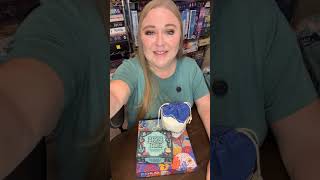
- It's a waterproof game and I love it.
References (from this video)
- High variability due to modular harbors and scoring tiles
- Engages multiple mechanics in one system
- Potential for deep engine-building through upgrades and resource combos
- Overwhelming amount of setup and information at the start
- Parts feel disjointed and don’t always integrate into a cohesive whole
- Diminishing returns for most actions; many bonuses feel marginal compared to the cognitive effort
- Dice-driven resource management and scoring with modular harbor setups
- Harbor-based trading and resource collection with ships moving on tracks
- Procedural engine-building with variable setup and scoring tiles
- Key Flowers
- Cathedral
- Key Dum
- Key Town
Mechanics (from transcript analysis)
- dice drafting — At the start of each turn, players draft a number (1-6) to determine available actions and potential bonuses.
- Dice drafting/selection — At the start of each turn, players draft a number (1-6) to determine available actions and potential bonuses.
- dice placement — On a turn, you drop a die to move a boat and then place the die to claim actions and bonuses; nearby players with equal or lower dice can also place.
- End-game scoring and variable setup — End-game scoring is driven by harbor tiles, resources accumulated, and upgrades; setups vary with harbor placement and scoring tiles.
- Movement on tracks and area bonuses — Dropped dice advance boats along tracks to unlock bonuses and scoring opportunities; players can move their own workers to spots to collect resources.
- Resource collection and building upgrades — Gather resources from harbor spots and upgrade buildings in your areas to gain points or bonuses.
- Track advancement — Dropped dice advance boats along tracks to unlock bonuses and scoring opportunities; players can move their own workers to spots to collect resources.
- Worker placement / placement of dice — On a turn, you drop a die to move a boat and then place the die to claim actions and bonuses; nearby players with equal or lower dice can also place.
Video topics + discussion points
Quotes (from this video)
- There is a lot going on in this.
- The sum of all the parts is less for me than what I was hoping for.
- It's too much for me at the beginning.
- There are no difficult basic concepts in this game. Like everything is pretty straightforward.
- I like all that, but it doesn't come together.
- It's a bit of a mess.
References (from this video)
- Rich and deep decision-making with high thematic integration
- High replayability due to setup variability and asymmetric powers
- Strong endgame planning and multi-step strategies
- Very high complexity and learning curve, not a keeper for some players
- Two-player game can be heavy and slow to resolve
- Strategic planning can be fragile to other players' optimal moves
- harbor economy, resource management, area control
- island of Keyside
- modular setup with variable boards and asymmetric powers
- Go
- Arkham Horror
- Age of Steam
- Pandemic
Mechanics (from transcript analysis)
- Area Control — Players place meeples/keeples on harbors and land to gain bonuses and end-game scoring based on placement.
- Area control / placement — Players place meeples/keeples on harbors and land to gain bonuses and end-game scoring based on placement.
- asymmetric player powers — Player boards provide unique upgrades and relative strengths (e.g., gems, livestock bonuses).
- dice drafting — On each turn, a player selects one of their dice and assigns it to a harbor, with other players potentially following the space if they have matching color dice with sufficient value.
- Dice drafting / dice allocation — On each turn, a player selects one of their dice and assigns it to a harbor, with other players potentially following the space if they have matching color dice with sufficient value.
- end game bonuses — Players upgrade buildings and score points from endgame objectives and house types.
- endgame scoring & building upgrades — Players upgrade buildings and score points from endgame objectives and house types.
- Resource management — Managing grains, lumber, stone, fish, gems, and livestock across farms, markets, and fields.
- variable setup — Harbors and scoring tiles are randomly assigned and two-sided, plus random die strips and optional starting cottages for asymmetry.
Video topics + discussion points
Quotes (from this video)
- This is the deepest modern designer board game I have ever played.
- There is no randomness in this game at all.
- this is maybe one of the most brilliant, maybe the most brilliant Keyside game that's ever come out because it's so rich.
- the depth of the decision-making you have to make
References (from this video)
- compact footprint
- quick to teach
- weight estimates varied in the video
- Sea Salt and Paper
Mechanics (from transcript analysis)
- tile placement — placing tiles to build shoreline/boats
Video topics + discussion points
Quotes (from this video)
- this here's the wildest game in the wilderness if you're wearing hats and sunglasses best remove them
- Isle of cats is 5.1
- actual weight of cosmic frog is 4.2 lb
- the physical weight of war of the ring is 6.3
- Prodal Club amazing game amazing game
References (from this video)
- Excellent quick filler
- Easy to teach and universally approachable
- Pattern emphasis may not appeal to heavier gamers
- pattern-based scoring and stack progression
- set-collection with tokens; quick rounds
- light, breezy filler
Mechanics (from transcript analysis)
- end-of-round scoring — Scores occur based on collected tokens with simple decision thresholds.
- set collection — Players collect tokens and build stacks to maximize end-round scoring.
Video topics + discussion points
Quotes (from this video)
- We've talked about this one a ton. This is the filler game we pull out the most.
- Sea Salt and Paper is addictive and a very, very good production.
- It's super quick. It's super simple. So, you could teach this to anyone.
- Castle Party is awesome. I love that freaking game.
- My Shelfie is essentially like Gamers Connect 4.
- My ideal game day is a big one, a bunch of fillers, and then maybe one more big game.
- Captain Flip is awesome. I love that freaking game.
- The video is chaos.
- We would love to know in the comments below what are some filler games that you love.
References (from this video)
- Cute components
- Quick gameplay
- Family-friendly
- Not great at two players
- Limited strategic depth
- Token collection
- Beach/ocean environment
- Push your luck
Mechanics (from transcript analysis)
- Push Your Luck — Draw tokens and make strategic choices
- Token Collection — Collect and stack tokens with different abilities
Video topics + discussion points
Quotes (from this video)
- We are trying to get through as many of the games released in 2024 that we have as possible
- We're trying to do a better job at playing more games this year
References (from this video)
- Waterproof
- Compact
- Easy to learn
- Travel-friendly
- Token collection
- Outdoor/Beach
Mechanics (from transcript analysis)
- Token drawing — Pull tokens and choose action side
Video topics + discussion points
Quotes (from this video)
- Here are five games you can play in those situations.
- Some of them are even waterproof.
- Most of them don't take a lot of space and all of them are quite easy to teach.
References (from this video)
- accessible and quick
- great beach-game vibe
- high luck factor
- replayability may feel limited
- push-your-luck with stacks and timing
- beachside casual environment
- beachy and breezy
- Sears Catalog
- Panda Royale
Mechanics (from transcript analysis)
- push-your-luck / stack building — Players pull and stack wooden tokens; biggest stack wins.
- push-your-luck and stacking — Draw tokens and stack them to create tall piles; the largest stack wins.
Video topics + discussion points
Quotes (from this video)
- break breaking news I really do got breaking news
- it's a co-op family game this is it this is it
- the box art sold me the cards were cute and colorful
References (from this video)
- Beautiful production and tactile components
- Accessible for families and new gamers
- Juggling tokens could feel abstract to some players
- Replay variety depends on token distribution
- coastal economy and exploration with a light, table-ready feel
- coastal retreat with wooden tokens and collectable actions
- family-friendly, approachable
- Sushi Go (token drafting vibe)
- Other light drafting titles
Mechanics (from transcript analysis)
- set collection / resource management — Tokens enable actions; players manage a small pool to trigger high-value plays.
- token drafting / token management — Players select and resolve actions using wooden tokens, building strategies over rounds.
Video topics + discussion points
Quotes (from this video)
- this is ridiculous
- I came home with a copy of that as well
- face dropping Tom Bassel there
- I'm a sucker for a gimmick
- it's basically deduction like clue mixed with trick taking
- look at that butt now
- this game's going to blow your mind
- blueprints of Mad King Ludwig
- a really cute Christmas thing
- I'm pumped for the retail release of this