/pic4948024.jpg)
In Second Chance, each player starts with a 9×9 grid that they want to fill as completely as possible. To begin the game, everyone receives a different card with a starting tile and marks off its spaces on their grid.
Every turn, two puzzle tile cards are revealed, and each player chooses one of them, then marks off squares on their personal grid that match the shape of the image shown on their chosen card. Multiple players can choose the same card. If a player cannot fit either revealed shape into their grid, they get a second chance and reveal one card from the deck just for them. If they can fit this shape in their grid, they do continue normally next round; otherwise they are eliminated from play.
The game ends when all players have been eliminated, the deck of puzzle cards has run out, or a player has completely filled their grid. If someone has filled their grid, they win. If all players have been eliminated or the deck ran out of cards, then whoever has the fewest empty spaces wins.
- Innovative take on polyomino and card selection mechanics.
- Unique gameplay due to different card choices.
- Filling a 9x9 grid with polyomino pieces based on card selections.
- Cards come out, and players draw pieces onto a grid, aiming to fill it in the most efficient way.
- Cottage Garden
- Indian Summer
- Spring Meadow
- Tetris
Mechanics (from transcript analysis)
- Card Drafting — Players select cards that determine the pieces to be drawn.
- Pen-and-Paper — A game played with pen and paper.
- Polyominoes — Uses polyomino pieces to fill a grid.
- Simultaneous action selection — Everyone selects different cards, leading to unique board states.
Video topics + discussion points
Quotes (from this video)
- You will not do your what was that called oh crap his spiel what's that called wow that was a joke that just totally flat on his face right there
- We're just lolling people to sleep where the music of the board game board game podcast group you know music is like it's there but you don't notice it and then when you finally hear it you just realize how annoying it is
- I'm just not really into euro games meshed with push your luck cuz again I run the odds man in my mind I'm running the odds
- Why do you make me go out and buy $18 readers I haven't bought in the Sam's multi pack yet
- It's not an alliteration but anyway pod pledge okay so but if you say it too fast podge pledge oh you know so but thank you chairs
- The biggest thing in the hobby right now is roll-and-write
- It's the one that you can keep making and making money from that's my definition
- Good games are not good enough you need great games number one and you need games that are marketed well and stand out in some way
- A game from his experience has about a two-week shelf-life that if a game doesn't catch hold within two weeks it's gone and forgotten
- The reason why I was asking about that because if you don't know Steven is is really into he's I guess a beer connoisseur beer aficionado
- We're the background noise of podcasting or board games Kirk I guess that's beautiful
- It's just the fact that it's kind of the worker placement portion is matched with putting these cards in the play that becomes an engine builder much like a game you know you dimension seven wonders or something like a mural settlers but it's not an engine it's a city
- it does get a little long Tony because as in typical engine builders there's a lot of AP that can happen there is based on the cars
- you know the fifth year anniversary would you ever consider coming out with a deluxe version with the nice player boards and everything that people tend to buy third party
- So it's like lightning in a bottle catching lightning in a bottle
- you know that the three months of sales where you can then see what's gonna happen with the game
- We have a wonderful pre-order program and I believe you still do that at a discount right Steven
- There are still plenty about regular badge sales and kids badges oh nice
References (from this video)
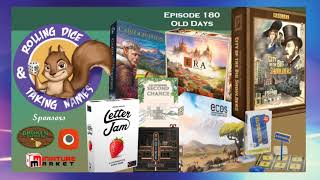
- Uwe Rosenberg game
- Donna enjoyed it, a fun game and a nice break
- Very quick game
- Easy to teach
- Player elimination can be a drawback
- The 'second chance' mechanic is crucial and can lead to elimination
- Patchwork
- Spring Meadow
- Games with Tetris-like pieces
Mechanics (from transcript analysis)
- Grid filling — The objective is to fill a 9x9 grid with pieces.
- Pattern Building — Players draw Tetris-like pieces onto a grid to complete it.
- Player Elimination — If a player cannot fit a piece after using their 'second chance', they are out of the game.
- Roll and Write — Although described as a 'drawing right', it's clarified as drawing cards and then drawing on a grid.
Video topics + discussion points
Quotes (from this video)
- I'm in some cushy office space somewhere just saying yeah send this crew out they're out into the stormy ain't gonna fix that line over there I don't do that
- we had a headache because you're sitting there racking your brain what is the best clue that I can give to somebody
- this is basically a logic puzzle disguised as a detective themed game
- the whole concept of is multiple companies and their to the end of the game
- the funniest thing when you try to screw somebody else up and you laugh at somebody
- I have no points it was pathetic
References (from this video)
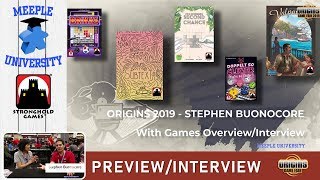
- part of Uwe Rosenberg's Puzzle Trilogy
- easy approachable game
- can play with kids
- available now
- players can be eliminated if they cannot draw a piece even with a second chance
- Cottage Garden
- Indian Summer
- Spring Meadow
Mechanics (from transcript analysis)
- Flip and Write — Players draw pieces onto their sheet of paper based on cards that come out.
- polyomino placement — Players draw polyomino pieces (Tetris-like shapes) onto their sheet, trying to completely cover spaces.
- Second chance mechanic — Towards the end, if a player cannot draw a piece, they get a second chance with another card. If they still can't draw, they are out.
Video topics + discussion points
Quotes (from this video)
- it's like the number one selling game in the industry
- it's so familiar yet so different
- this guy is called bricks and this one I can call it probably not allowed to say it like in marketing really but it's like Tetris below and right
- Uwe Rosenberg one of the great designers in the world
- you don't want to draw well in this game you want to draw shuttling
- light to Midway euro with absolutely gorgeous artwork by Michael Menzel
- everyone I'll turn over this card and I'll take the action in your chore you're first gonna take an action so you're gonna build an engine with these cards
- we merge this past here in August of lashes so coming up on the one-year anniversary merged with Indy boards and cards
References (from this video)
- Very relaxing
Mechanics (from transcript analysis)
- Map drawing — Involves filling polyominoes on a sheet with decisions that matter.
Video topics + discussion points
Quotes (from this video)
- I always like to start with theme I know some people say start with the objective I like to get you kind of invested in the setting and what we're going to be doing a little bit first
- rules turn all this lifeless junk effectively into possibly an incredibly fun experience that we're gonna have
- the success of an IP based game I think is a good thing for our hobby overall
- The more people I meet in life the more I realize that the way I see things it's you know it's so clear to me the way things are but to somebody else it's something else entirely different
- You know what I was gonna say I was gonna say mechs vs. minions but I completed that game and if I remember correctly I gave that away to someone in my game group so that means now I'm not gonna bring it out but my biggest game box is the reckoners
- The challenge with table talks is I like to pick topics that I feel feel personally invested in some way that I have like what I think is some kind of perspective to share
- So sorry we're late it was yeah well look we're here now right
- Let us know in the comments are you seeing and hearing me
- Write question in all caps and then put a colon and then after that you will write your question
- Ian and Kathy who maybe are watching tonight are having their 31st wedding anniversary
- It's a nice, relaxing little game, I think that's how I'd describe it.
- It's so satisfying to play.
- It has a constant underlying tension.
- The deduction is great.
References (from this video)
- interesting twist on trick-taking mechanics
- card guessing / timing
Mechanics (from transcript analysis)
Video topics + discussion points
Quotes (from this video)
- Hadrian's Wall is so neat it feels like a game you can play solo or with others and still have a great experience.
- Enchanted Plumes ended up surprising me; it was exactly what I wanted it to be.
- Mass Transit is a cooperative-leaning roller of logistics with approachable complexity.
- Nova Luna is a special game, a race to the finish with clever pattern-building.
- Mystic Veil balances collecting veils with building your cards in a clever way.
References (from this video)
- Accessible
- Playable remotely
- Artistic freedom
- Provides a second chance
- From a favorite designer
- Polyamino
- Patchwork
Mechanics (from transcript analysis)
- Flip and Write — It's a flip and write game.
- Polyamino — It's a polyamino game where players draw shapes.
- Remote Play — Can be played over Zoom with just a deck of cards and paper.
- Second chance mechanic — Players always have a second chance if their initial attempt doesn't work; they can flip more cards, but if they still don't get it, they're out of luck.
Video topics + discussion points
Quotes (from this video)
- This is probably one of the most unique roll and writes I think I've ever played.
- It's got a lot of challenging things in it and it's not a simple roll and write.
- You're taking tiles out of this central area, you're drafting tiles, and then you're placing those tiles into your grid on your paper.
- And then the scoring is based on sets of symbols.
- It uses very minimal components, just a pencil and paper.
- We're doing a giveaway.
- We'll be talking about the two games that we're being we'll be giving away actually today so if you're looking to win a copy of silver and gold or sonara then make sure you comment down below and check out our other videos to get even more.
References (from this video)

- Always a hit for groups.
- Quick and light.
Mechanics (from transcript analysis)
- Roll and Write — Players flip over Tetris shapes and draw them onto their grid.
Video topics + discussion points
Quotes (from this video)
- it's one of the best games Don has randomly found like ever
- know your energy level and pick the games that fit it
- it's a lot of stuff but most importantly before you even tell me how you're doing today Don what is your brood beverage
- it's just a big chunky game that makes you think and sometimes you just want to play something light and and thoughtless
References (from this video)

- sexism / gatekeeping experienced by a new player
- learning vs. gatekeeping / sexism in gaming
- social/group dynamics within a game night
- emergent social narrative from the group
Mechanics (from transcript analysis)
- learning_curve — A new player learns a game and is belittled by others.
Video topics + discussion points
Quotes (from this video)
- It's a simple game. It's straightforward, but you do have to be interactive and understand what's happening.
- Don't be that person.
- We left the game soured. We were like we don't want even we want to sell our copy of the game.
- You didn't actually win because I shouldn't have lost.
- Be sure that you are being very gentle with your first time players of especially of big involved games.
References (from this video)

- Very simple rules
- Small and quick package
- Good for kids or non-gamers
- Innovative take on Tetris/roll-and-write games
- Can feel derivative
- Tetris shape rolling right
- Quinto
Mechanics (from transcript analysis)
- Limited resources — The shapes only appear in the deck a certain number of times, with reference cards showing what's available.
- Roll and Write — Tetris shape rolling right game.
- second chance — Players get one second chance if they cannot draw a shape due to their pad being too full or the shapes being too complex.
- Set Collection — The game involves collecting shapes and drawing them on a pad.
Video topics + discussion points
Quotes (from this video)
- It has all of that frustration and decision-making that you get with other Tetris games because you'll get shapes and you're not sure which one to go for or where to put it.
- It just reminds me too much of a style of Euro game that was out sort of 10 or more years ago and I feel like a lot of companies and publishers have passed that and Isle of Skye still seems like it has one foot in the past a little bit.
- For me Blue Moon City is a good game but not a great game. It feels a little bit pedestrian.
- It doesn't have that kind of push your luck or excitement that some roll and write games have and it doesn't have the depth of something like welcome to or the awesome like comboing of Gans and clever it's just sort of somewhere in the middle and and yeah just didn't really hit the spot for me.
- I have got a lot of respect for Stone Age I think it's a really well-designed game that is almost the perfect introduction to work or placement games.
References (from this video)
- easy to teach and quick to play
- satisfying polyomino puzzle feel
- great filler game for casual play
- possible player elimination
- depends on luck of the draw for shapes
Mechanics (from transcript analysis)
- card draw and placement choice — draw two cards each round; players select one to place
- Elimination — if you cannot fit any of the drawn shapes, you may be eliminated from the round or game
- grid race / end conditions — game ends when all players are out or a deck is exhausted; winner is the one with the fewest holes
- polyomino placement — each player draws a shape card and fills a grid with shapes touching the center; shapes range from size 1 to 7
Video topics + discussion points
Quotes (from this video)
- this is the neat game like I think mechanically it's very streamlined
- I'm not a train game type of person
- downtime wasn't particularly bad
- it's a filler dice game
- the biggest plus to me is just the fresh feeling of that action selection board like I've not played something like that before
References (from this video)
- Easy to teach and quick to play.
- Tight, tense decisions with satisfying shapes.
- Shapes can be very large; may cause momentary blocking/frustration.
- puzzle, spontaneity, pattern completion
- A quick polyomino puzzle race to fill your board.
- light, arcade-like
- Patchwork
- Two-player rolling rights
Mechanics (from transcript analysis)
- Polyomino — Players draw and place shapes onto their boards.
- polyomino drawing — Players draw and place shapes onto their boards.
- Race — First to fill the board or achieve endgame conditions wins.
- race/beat-the-timer pacing — First to fill the board or achieve endgame conditions wins.
- tile drafting — Two cards are revealed; players choose which shape to draw.
Video topics + discussion points
Quotes (from this video)
- Mindspace is a new allplay game
- the box is the game board
- Patchwork is a classic
References (from this video)
- puzzle-forward play and tile placement
- abstract tiling and pattern optimization
- New York Zoo
- Cottage Garden
Mechanics (from transcript analysis)
- Polyomino — placement of polyomino-like shapes to achieve objectives
- polyomino tiling — placement of polyomino-like shapes to achieve objectives
Video topics + discussion points
Quotes (from this video)
- Mountain Goats Legacy combines dice rolling, upgrades, and events into a version of Mountain Goats with more depth and surprises.
- There’s also a new courage system that helps players mitigate the luck of the dice and refine their dice rolls.
- It’s a fully resettable and replayable legacy game, meaning that no components are destroyed or permanently altered during the campaign.
- Oh my gosh. There are 400 versions of Monopoly on Board Game Geek.
- Every themed version of Monopoly has its own entry on BoardGameGeek.
- There are 100 entries per page.
References (from this video)

- Easy to learn
- Fits travel constraints
- Good solo or group play
- Luck of the draw can dominate
- tetris-like tiling and spatial reasoning
- grid-based drawing/puzzle
- quick rounds with a steady puzzle rhythm
- Tetris
- Patchwork
Mechanics (from transcript analysis)
- two-card reveal, space-fitting draw — Each turn reveals two shapes; you pick one to place; if you’re out of space you get a second chance card to try a different shape.
Video topics + discussion points
Quotes (from this video)
- it's a tense juicy little bastard a gamer pushing your luck
- it's a goddamn tiny game and will fit in just about any pocket
- agonizing choices in this game in only a tiny amount of space
- a perfect blend of hubbub lies funny voices and getting to walk around like your puaro jacques
- the crew mission deep sea is brain burning
References (from this video)

- Incredibly compact: tiny deck of cards, pencil, paper
- Tetris-like tension, high replayability
- Abstract puzzle may not appeal to all players
- space-saving packing puzzle
- portability-focused puzzle game about space in your bag
- puzzle/compact packing
Mechanics (from transcript analysis)
- card flipping and drawing — Flip two cards and choose one tetra shape to draw on your grid.
- space optimization — Fill grid with shapes to minimize gaps; tension similar to Tetris.
Video topics + discussion points
Quotes (from this video)
- you'll want to take notes so you can follow up on tasty leads
- it's water resistant you can take it hiking and not worry about it getting soaked
- it's got the same tension as tetris not knowing what's coming up
- quinto you might hear its stupid name look at its pathetic box and grid of numbers and tell me that 2002 called and it doesn't want sudoku back
- it's my favorite game to travel with
- don't go on holiday without it