/pic5164305.jpg)
/pic7009391.jpg)
/pic2453810.jpg)
/pic7203269.jpg)
/pic1215982.jpg)
/pic1849390.jpg)
/pic2576459.jpg)
/pic7203303.jpg)
/pic876255.jpg)
/pic1398895.jpg)
/pic3564143.jpg)
/pic3972142.jpg)
/pic8783294.png)
/pic3033330.jpg)
/pic2225958.jpg)

/pic2519675.jpg)
/pic2604284.png)
/pic3021686.jpg)
/pic5164305.jpg)
/pic3493866.jpg)
/pic4415135.jpg)
/pic3662950.jpg)
/pic3966906.jpg)
/pic4233915.jpg)
/pic6951766.jpg)
/pic6746296.png)
/pic5578189.jpg)
/pic5735695.jpg)
/pic7037062.png)
/pic7181914.jpg)
























Secret Hitler Deep Dive
What the Community Thinks About Secret Hitler
Secret Hitler stands as one of the most recognizable social deduction games in modern board gaming. Designers Mike Boxleiter, Tommy Maranges, and Max Temkin created a game that has captivated players since its release in 2016, earning praise for its dramatic tension, stunning production quality, and ability to generate memorable moments around the table. The game's distinctive visual presentation and politically-themed gameplay have made it a staple at game nights and parties across the gaming community.
Core Mechanics That Define Secret Hitler
Hidden Roles and Information Asymmetry
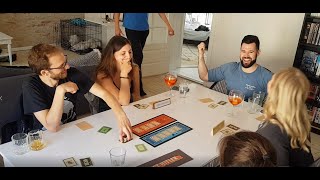
At its heart, Secret Hitler revolves around the tension between an informed minority and an uninformed majority. Players are secretly assigned as either liberals or fascists, with one fascist player being revealed as Secret Hitler. The fascists know each other's identities, while the liberals are left in the dark about who to trust. This asymmetry creates immediate paranoia and suspicion as players attempt to deduce who holds which allegiance through observation, accusation, and conversation rather than mechanical deduction.
Policy Selection and Voting Mechanics
Each round, the table votes to elect a president and chancellor. The president draws three policy cards and discards one, passing two to the chancellor who secretly selects which to enact. These policies come in two varieties: liberal policies that help the liberal faction and fascist policies that advance the fascist agenda. The brilliance lies in the uncertainty it generates. A liberal president might receive all fascist policies through random chance, forcing them to play fascist policies while trying to convince the table of their innocence, creating a rubber band effect where dramatic reversals keep the game perpetually tense.
The Secret Hitler Experience
Social Deduction Through Conversation and Bluffing
Secret Hitler demands more than just logical deduction. The game succeeds because players must read body language, listen to tone of voice, and assess the conviction with which others speak. Whether a player is genuinely defending themselves or skillfully lying becomes the central puzzle. Reviewers consistently noted that the game's magic emerges from the heated accusations, desperate denials, and moments when players realize they've been masterfully deceived by someone sitting across the table.
Narrative Drama and High Stakes
The game creates natural story beats. Early rounds feel uncertain and cautious. Mid-game becomes increasingly tense as fascist policies accumulate. Once three fascist policies are enacted, every subsequent chancellor vote becomes a potential endgame trigger, as Secret Hitler's election means instant victory for the fascists. This structural escalation means that the game almost always reaches a climactic finish, with victory often determined by a final, emotionally charged vote that leaves players discussing the pivotal decisions for hours afterward.
What Makes Secret Hitler Stand Out
Production Quality and Thematic Design
The production of Secret Hitler sets it apart visually and thematically from competitors. The component quality, card design, and overall aesthetic reinforce the political intrigue theme. Board Stupid's reviewers noted that the game's bold presentation, including its edgy 1930s Germany setting, contributes to player immersion. The physical act of voting, policy cards being revealed, and the dramatic moments when roles are exposed all feel intentional and meaningful rather than abstract.
Scalability to Large Player Counts
Unlike many social deduction games that only work well at specific player counts, Secret Hitler scales gracefully from five to ten players. At higher counts, the information uncertainty becomes more pronounced, creating richer deduction challenges. The voting mechanism ensures that players cannot be eliminated early, keeping everyone engaged throughout. This accessibility to larger groups makes it a go-to choice for parties and game nights where six or more friends are gathering.
Potential Drawbacks
Theme Concerns and Accessibility
The game's deliberately edgy political theme is not for everyone. The 1930s Germany setting with the explicit Hitler and fascism branding has led some potential players to avoid the game entirely. While alternative versions exist, these changes sometimes dilute the thematic impact that many feel makes the original experience distinctive. BigPasti specifically questioned whether the theme adds meaningful ludic value or whether it serves primarily as shock branding. The political nature means some groups may prefer to steer clear based on personal or cultural comfort levels.
Limited Mechanical Agency and Randomness
While Secret Hitler excels at generating drama, some experienced players have identified structural limitations. The policy deck includes a rubber-banding mechanic that automatically creates dramatic comebacks when one faction is winning too decisively. BigPasti argued that "you can't get good at Secret Hitler, and that's by design" because the game prioritizes sensational finishes over rewarding skilled deduction. The random distribution of cards means that skilled players cannot guarantee victory through superior play alone, as a bad hand of policies can doom a team through no fault of their own. Players seeking the deeper strategic layer of games like Avalon may find Secret Hitler's mechanical depth insufficient.
If You Enjoy Secret Hitler
Players drawn to Secret Hitler typically appreciate The Resistance and Avalon, which offer similar deduction mechanics but with mission-based gameplay. Blood on the Clocktower provides deeper social deduction with more complex role interactions for those seeking greater strategic depth. Feed the Kraken offers an evolution of Secret Hitler's core mechanics with additional strategic layers. Coup delivers faster-paced bluffing in a tighter package, while Spyfall takes the deduction format in a direction that emphasizes creative thinking. For those wanting similar dramatic tension with a cooperative twist, Dead of Winter combines hidden traitor mechanics with survival gameplay.
What Reviewers Are Saying
"Every time we got a party comes out okay, every single time, and it's a social deduction game and it's probably one of the most famous one, or it should be. It's super easy to get, it's very very thematic, the production of this game is one of the most delicious productions I ever seen."
— Board Stupid
"Secret Hitler is not a deep game. The game's central mechanic of an agenda deck is so rubber-bendy that even if a team is playing perfectly the game will automatically swing to the other side. This is by design as the game wants to reach a dramatic finish. You can't get good at Secret Hitler, and that's by design."
— BigPasti
"The theme's not for everyone, it's deliberately edgy, yeah, so you know there are alternatives to this game if you're not a fan of the super edgy theme. But the game itself it's a pretty freaking good social deduction game to be fair."
— Board Stupid