/pic5313636.png)












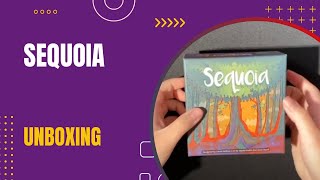




Sequoia Deep Dive
What the Community Thinks About Sequoia
Sequoia has quietly become a favorite among board gamers who value speed and simultaneous engagement. Channels like Rolls in the Family and Jamie of Tabletoptiktok highlight how it fills a niche many collections lack: a quick, accessible experience where everyone plays at the same time. What makes it resonate is that it works equally well as a filler at the end of game night or as the main event at a casual gathering.
Core Mechanics That Define Sequoia
Simultaneous Dice Placement with Strategic Assignment
Every turn in Sequoia follows the same elegant pattern. Players roll dice and form two pairs by adding the values, then use those totals to place pieces on the matching numbered trees arranged in a ring from 2 to 12. Everyone does this simultaneously, creating a moment of collective tension before the reveal. There is no downtime and no waiting for others to finish; the decision-making happens in real time for all players at once.
Competing for Randomized Scoring Trees
The genius of Sequoia lies in how it randomizes what each tree is worth each game. Some trees offer high point values for first place; others give modest rewards but easier access. This variable scoring creates a different strategic landscape every play. Do you focus on the high-value trees and compete head-to-head, or spread your pieces across lower-value trees hoping to claim several second-place finishes? The randomization ensures strategies must adapt from one game to the next.
The Sequoia Experience
Accessible Entry with Minimal Learning Curve
Sequoia teaches in roughly a minute. If you can roll dice and add two numbers, you can play. The rulebook is refreshingly brief, with no special card effects to memorize and no complex interactions to parse. Players new to modern board games are comfortable immediately, while experienced gamers appreciate how the simplicity creates space for psychological play. Someone playing for the first time is never overwhelmed.
Engaging Mind Games Over Heavy Analysis
The lack of a single right answer is what keeps Sequoia relaxing and fun. Players operate on intuition more than exhaustive calculation, reading the table and guessing where others will commit. Will everyone chase the obvious high-value tree, or will someone sneak onto a neglected one? The game rewards both bold reads and careful odds, and there is a real thrill in picking a tree no one else targeted and discovering you had read the room correctly.
What Makes Sequoia Stand Out
Group Energy and Simultaneous Play
In many turn-based games, players wait passively while others think. Sequoia eliminates that entirely. Every turn, every player is rolling, deciding, and participating. This continuous engagement builds group energy naturally, and the simultaneous reveal of placements generates excitement and laughter. People talk while they play rather than sitting silently, giving the game a party atmosphere without being a party game.
Plays Fast Without Sacrificing Replayability
A typical game of Sequoia runs around ten minutes. Setup is instant and cleanup negligible. The randomized scoring tokens mean no two games feel identical, even back-to-back, which makes it ideal for filling gaps in a night or playing multiple rounds in a row. Reviewers describe pulling it out repeatedly without tiring of it, because the next game could always surprise them. They also point to its flexibility as a strength: the short runtime and tiny footprint make it as comfortable in a coffee shop or on a small table as it is on game night, and the simultaneous play means a full table never drags the way a turn-by-turn filler can.
Potential Drawbacks
Luck Plays a Significant Role
Sequoia is ultimately driven by dice rolls. No amount of strategic brilliance overcomes consistently poor rolls, and a player who rolls weak combinations all game while an opponent rolls high will fall behind. For players who dislike relying on chance, or who want losses to feel earned through measurable mistakes, this can frustrate. The game rewards both smart reading of the table and simply getting lucky.
Limited Depth for Strategic Optimization
Because there is little hidden information beyond dice and simultaneous reveals, optimal play can eventually be solved. After many games, the decision tree becomes more predictable, and some players find the novelty of the quick rush fades after a couple dozen plays. Sequoia is not designed for deep strategic mastery, and experienced gamers seeking that dimension may find it eventually shallow.
If You Enjoy Sequoia
Players drawn to Sequoia often love other light, quick games where simultaneous action builds group energy. Kingdomino shares the relaxing simplicity and drafting feel, though it trades simultaneous play for individual puzzle-building. Qwixx delivers a similar fast, dice-driven decision rush in a roll-and-write package. Point Salad combines quick card selection with surprising depth of interaction. And Strike channels the same tangible, physical dice fun in under five minutes, ideal for groups that love Sequoia's accessible energy.
What Reviewers Are Saying
"You're kind of operating on vibes in this game. It's a lot of the mind game of, here, I'll expose my Sequoia strategy to the world: I try to go hard on one tree early, because then it intimidates people and they don't want to play on it, because the worst thing you can do in this game is get in a fight with someone, you're just wasting chips."
— Rolls in the Family
"You're trying to figure out, do I really want to build up on this six-point number, or do I want to go for a bunch of lower numbers? You're still figuring the odds a little bit. It's a really fun quick game. Taught it to my nephew this weekend, he loved it and immediately wanted to play again."
— Jamie, Tabletoptiktok
"The fact that it's simultaneous play is huge, because you're in it the whole time. That just builds the group energy. It's kind of a party feel, people are laughing, and when you reveal every round everyone goes, no, why did I go there."
— Rolls in the Family