/pic4348588.jpg)
Of Japanese origins, Shogi is played on a 9 by 9 board, and the object is to capture the opponent's king. There are two main differences with Western chess. First, not only pawns but almost every piece can promote if it reaches the opponents three last rows. Second and most distinctive characteristic is that captured pieces become property of the capturing player and during his turn he can "parachute" or "drop" them back to the board instead of performing a normal move. Because of this feature, similar to Bughouse, the game can last longer than a Chess game, the board generally stays fairly crowded and there is no simplification going into the endgame. However, the endgame is typically more rapid with many possibilities for attack and ways to achieve a checkmate, which also makes draws/ties very rare.
According to "A World of Chess" by Jean-Louis Cazaux & Rick Knowlton (2017, ISBN 978-0-7864-9427-9), Bishop, Rook and Drunk Elephant were introduced to the 9x9 Shogi creating Sho Shogi, the immediate predecessor of Shogi, in the middle of the 15th century. Modern Shogi where created with the introduction of the drop rule and the removal of the Drunk Elephant piece in Sho Shogi. This happened between 1567 and 1587 (earliest recording of modern Shogi). The latter date is based upon a picture in the diary of the samurai Matsudaira Ietada, dated 1587, which shows a game identical to the one of today.


Shaolia Tutorial Playthrough

- A lot of fun.
- Felt rushed due to time limits.
Mechanics (from transcript analysis)
Video topics + discussion points
Quotes (from this video)
- I've never had a worse convention.
- This is immersion in your gameplay.
- The one ring to rule them all.
- It's like Battleship where you have two players on two sides of like a screen and then each one is creating a dungeon for the other player to go through.
- I much more love Gen Con than Essence.
- Having a tornado. Having a tornado warning at the Gen Con was really interesting.
- This is the first time all day where we don't look around and are surrounded by people.
References (from this video)

- Does theme better than similar games
- Does really cool stuff
- Clever shared worker placement spots
- High on this one
- Running an Anime Studio
- Age of Comics
Mechanics (from transcript analysis)
- Trend Management — Involves playing on the trends in anime at a specific time.
- Worker Placement (Shared) — Features shared worker placement spots that work in a clever way.
Video topics + discussion points
Quotes (from this video)
- I was not granted a media badge, which means I have not gotten all of the emails from all the publishers about kind of what they have.
- Customs is a thing and customs is a nightmare.
- This is a game that I've said multiple times is the type of game that if I went to a booth and I did a demo of this, I would buy it right away.
- If you're flying, we all know how space work.
- I'm not leaving Gen Con without a Pookie Plushie.
- I'm going yoink and I'm taking one.
- If you come find me and you say, 'I'm hungry for promos,' I will give you a promo card of your choice.
References (from this video)
- 15th century variant on chess
- can put characters back onto the board (thematic)
Mechanics (from transcript analysis)
Video topics + discussion points
Quotes (from this video)
- do miniatures really enhance the board game experience
- chess is a culture untowards itself
- flgs mean
- well very simply flgs stands for friendly local game store
- if that person does not want to play any ball games don't force them
- all your games are more complicated than you think they are
- tailor that experience to that person is my suggestion
References (from this video)

Mechanics (from transcript analysis)
Video topics + discussion points
Quotes (from this video)
- Gotta shoot for shoot for the moon if you miss you'll wind up with the Stars
- I don't know man I mean it's just like when somebody wants to like get all up in my uh area and and and like and like I said I'm trying to give him empathy and saying I understand you know you have a shitty day a lot of people are like probably all up in your uh uh business about it
- It's just like instead of you could just come up with so many real reasons why why that guy's just an idiot and what's my what's my expression I don't know what's your you have enough ammunition stop trying to load a knife into the chamber
- The convention hall was just so so let me let me ask for I'll ask you how did Saturday feel I didn't I didn't really see it much
- My favorite part of John Conan was this year my hug
- I I love and hate you all in equal my favorite Jenna my favorite line that I've used that I stole from you and I've used it dozens of times is I used to have a friend that look just like you
- I don't know he's got he said he's got a fever and he's got sore throat hopefully he hopefully it's mild
- I was like you know what you know you know what really chaps my ass I'm just G to say this right now this really chapped my ass and I I I realize this is political and I apologize for it and and I'm willing to let people say say what they want to say but you know I think that Donald Trump Trump is a complete and total [ __ ] [ __ ] and I think that JD Vance guy is a complete and total [ __ ] [ __ ] as well and there is in a world where I would vote for either of them I wouldn't put them in charge of a 25 cent pay toilet
- It's like you know like wrestlers who come out and just say you know what I was driving into Minneapolis Minnesota that's where we're from yeah just like he said the name we're in the city we're in it's just it's just and so what it does then is that it gives the people that like are are are gonna vote for them it gives them all of the like ammunition in the world to say those idiots blah blah blah couch jokes you know it's just like instead of you could just come up with so many real reasons why why that guy's just an idiot
- I mean you guys pay attention to me but nobody else wrong again SC okay by the way also Twitter I hate that site
- I mean you guys told everybody to f off and they did and now you're suing them because they like what world is this now I don't know if anything they did is illegal not not a lawyer yeah but uh I suspect they probably didn't really do anything illegal in my just observations I don't know they're like oh so much has come to light I'm like huh really
- So Scott we we really need to do that well I forgot what you sent me the the lifetime VIP oh lifetime badge didn't we try to do a lifetime v no we just need we just need Gen Con hot games room VIPs for life bch
- There's a lot of games those see did anyone see the game it was there just demo I think um String Theory I saw it yeah that thing looks ridiculous it's basically there are it's they're hex tiles with these like spools on them I see it and you get actual string and you string together uh all these conspiracy theories
- I was like I'm not gonna play it probably so oh the big bucks yeah it was it was a definitely like i i i i i 50 bucks for a car I hesitate to say this it's a steep hill I hesitate to say this if if I had seen Ted there I would have tried tooo him first TR trade yeah and then I would have felt bad about like I don't know just you would have got over it
- I mean you know when I think about it the booth that was ridiculous for us from my my booth they had so many games at the end of the C they had to pack back up and take home
- I mean you know it's like oh yeah we you know we offered to pay more we offered this with that and just like yeah nothing you can do like you'd think there was only one convention in America it's crazy
- I mean you know it's like oh I I I I I I 50 bucks for a car I hesitate to say this it's a steep hill I hesitate to say this if if I had seen Ted there I would have tried tooo him first TR trade yeah and then I would have felt bad about like I don't know just you would have got over it
- People are still going to get really really sick from it and people are going to get really are going to you know die from it as well right but it is one of the nice things about viruses is that you know viruses are with us forever is that they do you know as they mutate and change and whatever you know our bodies adapt and and and grow more used to fighting it because you're just get exposed to it you get exposed to it you get exposed to it just except when long Co would hit you w you know you're believe everything you read
- they're hex tiles with these like spools on them
- you get actual string and you string together all these conspiracy theories
- sold out every day fairly quickly
- how's your hand he's like it really started to cramp up
- The Cat In The Box hat they had in the booth 50 bucks
- it's a really good game
- it's so good brilliant
- You're gonna be sad you passed on that
- perfect game for me
- it's a meaningful ending apparently
- and then you can start over with different characters different race different um class tons of classes tons of races tons of quests
- was landmarks one of the very few games I did play was things in ring
- if you don't advertise with me f off
- I will not be blackmailed with money but I will be blackmailed with chocolats
- there's a lot of dark chocolate
References (from this video)

- authentic Shogi feel with quality components
- two variants and mat options add variety
- strategic duel with captured piece rules subtly altered
- Traditional Japanese chess on a compact mat
- classic, precise, tactical
Mechanics (from transcript analysis)
- drop/capture mechanics — captured pieces can be reintroduced under the captor's control, increasing strategic depth
- Grid Movement — two players maneuver pieces on a grid to gain control and territory
- Grid-based movement — two players maneuver pieces on a grid to gain control and territory
Video topics + discussion points
Quotes (from this video)
- this is one of my favorite two-player games
- oh my gosh it is so cool and so inventive
- the components look so yummy
- this rogue agent I believe adds some new characters
References (from this video)
- deep strategic depth
- portable starter set tone and interest
- fascination with the mechanics and learning journey
- complex rules can be challenging for newcomers
- requires board and playing pieces
- strategy, abstract strategy game on a 9x9 board
- Japan; modern era with casual board gaming
- expository with personal discovery
Mechanics (from transcript analysis)
- Campaign — pieces can promote to more powerful forms when they reach certain zones
- drops — captured pieces can be returned to the board as the player's own pieces
- Grid Movement — players move pieces across a 9x9 grid with unique movement rules for each piece
- move pieces on board — players move pieces across a 9x9 grid with unique movement rules for each piece
- promotion — pieces can promote to more powerful forms when they reach certain zones
Video topics + discussion points
Quotes (from this video)
- Believe in yourself. Believe in the timing. And believe in your patience.
- We got him. You see that? You just gotta believe.
- This is the coolest thing.
- I absolutely love him.
- I love the sound design that went into it.
References (from this video)
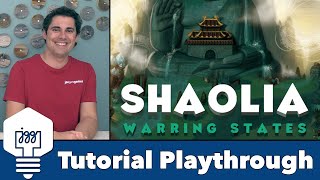
- Engaging engine-building with a strong emphasis on resource and dice management
- Clear 2-player focus with meaningful interaction via barricades, catapults, and palace actions
- Diverse card types (level 1/2 cards, leaders/characters, wonders) add strategic variety
- Interesting risk/reward decisions around purchasing, upgrading, and activating powerful cards
- Rule density can be intimidating for new players; many edge cases around tokens and palace actions
- Certain late-game cards (e.g., wonders) can swing the game markedly, potentially leading to analysis paralysis for some groups
- Lock tokens and prerequisites may slow early development and require careful planning
- Resource engine competition between two players, balancing culture growth with military damage to undermine the opponent
- Ancient China-inspired empire-building and warfare during the Warring States period, with a modular board and interlocking economy
- Instructional and demonstrative, with on-table example rounds to illustrate rules and tactics
Mechanics (from transcript analysis)
- card-based tableau and leveling — Players purchase level 1 and level 2 cards that sit in front of them, providing ongoing effects or immediate activations; some cards have prerequisites or unique activation rules
- combat and damage resolution — Damaging opponent cards or their palace can destroy buildings and shift momentum; destroying level 1/level 2 cards yields gold rewards
- Dice-driven actions — Each round, players roll a pool of dice and assign them to card actions; dice values determine what actions can be activated, with some cards requiring specific values or modifiers
- palace as a special action hub — A central board feature where certain actions can be taken multiple times per round, offering flexibility and strategic depth beyond normal card actions
- resource economy and turnover — Gold, minerals, and life/attack tokens function as currencies and modifiers, spent to buy cards, unlock slots, or activate powerful effects
- status tokens and lock tokens — Status tokens (attack, life, any) modify combat and activation; lock tokens prevent usage of a card until cleared, adding positional tension
- winning conditions and endgame — Two paths to victory: reach 18 culture before the opponent or inflict 12 damage on the opponent's palace, driving tactical tradeoffs between culture and aggression
Video topics + discussion points
Quotes (from this video)
- the goal of the game is to try and either gather 18 culture before our opponent or to destroy our opponent's castle by dealing 12 damage to it
- we will be playing with the warring states game mode
- the palace has three actions and you can perform each one of them only once per round but you are allowed to perform multiple actions at the palace within a given round if you want to
- any in the middle which means you can put any die down onto that spot regardless of what you rolled
- the mansion is a level two card that does not have a prerequisite
- the catapult can deal one damage to all of your opponent's front row cards and their palace