/pic2552981.jpg)
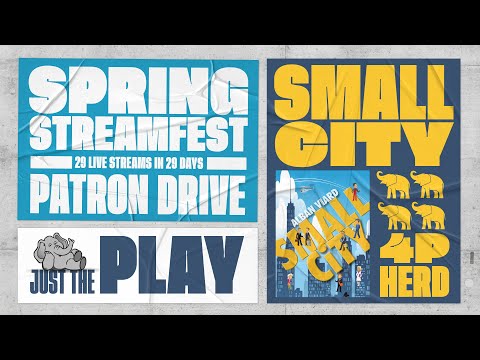
You are the mayor of one borough of Small City, and you have eight turns to secure enough votes to be re-elected. To do this, you have to attract more citizens, encourage the growth of residential areas for them to live in, and aid the expansion of both the commercial and industrial sectors – though the latter sector also brings pollution with it, and you need to deal with that, too, as high pollution levels will have a negative effect on your score at the end of the game.
If you build suitable infrastructure, your citizens will undoubtedly vote for your re-election, but beware of false promises! Votes can be earned over the course of the game by placing citizens in the residential spaces, by erecting cultural buildings, by keeping commercial buildings in suitable areas, and also by making good on the promises that you made to the citizens at the beginning of the game.
The player with the most votes (i.e., victory points) after eight turns wins.


- Deluxe edition available.
- Players have agency in building their city.
- Joy in building a cohesive aesthetic city.
- Expansion and upcoming additions add new content.
- Can be repetitive if focusing solely on aesthetics without earning points.
- Hard lessons learned in the first couple of games.
- Rules overhead.
- Adjacency rules are a core part of the game.
- Building a city, managing pollution, parks, citizens, and tourists.
- A city
- Sim City
Mechanics (from transcript analysis)
- city building — Building a city similar to the video game Sim City.
- player interaction — Sending citizens as tourists to other player cities to block key buildings.
- Resource Management — Managing money and following adjacency rules.
- simulation — Pulling a lever to run the simulation and see how well you built things.
- Tile Placement — Placing residential, commercial, and industrial buildings.
Video topics + discussion points
Quotes (from this video)
- There's something so satisfying about fitting the pieces in together and filling in this space
- It feels like Tetris but a board game but it's Unique
- that's half the fun of you know castles of mading lug is I think it'll fit there does it oh it doesn't oh you know that kind of thing
- it is a dry dark black Euro
- easy to learn and hard to master
- It just has the basic Tetris like pie love
- I just love the Wild West theme in general
- there's just so many things to do here
- Patchwork can be a really Cutthroat game of trying to deny the other player the pieces they need while also trying to get the pieces that you need
- it is actually kind of fun to debate where things in your vacation took place
- it's a rare polyomino game that has a theme and the theme actually works
- that game is going to be miabi it is a polyomino game where you are drafting polyomino tiles and creating your own zen garden
References (from this video)
- Deep, crunchy decision space with meaningful strategic choices
- Strong interaction and planning across players
- Charming production quality
- Heavy weight may deter casual players
- Initial learning curve is steep
- Urban planning with resource management and civic policy
- City-building with mayoral authority and population dynamics
- Strategic, heavy Euro with thematic flourishes around population and pollution
- Feast for Odin
- Small City stands apart in heaviness but offers different puzzle geometry
Mechanics (from transcript analysis)
- Population management and movement — Move citizens to activate buildings; citizens can relocate to other boards for scoring or punishment effects.
- Worker/Disc placement with city-building actions — Place discs to build or activate actions, influencing city growth and scoring.
Video topics + discussion points
Quotes (from this video)
- The art style combined with the mechanics I think just really pops.
- It's also taken us to packs unplugged and beyond—polyomino month is growing.
- There is a tug and pull between when to take advantage of more turns, and when to wait for better discounts.
- Not only are you drafting tiles, you're drafting the future of your park.
References (from this video)
- It's just punishing right off the bat.
- You need to be first of all okay with it being punishing.
- You will say oh no I shouldn't have done that multiple times.
Mechanics (from transcript analysis)
- Decision making — You need to make the right decisions or else you might not have a good time.
- Resource Management — It is a tight resource management that game where like you end up right off the bat needing to make like very key decisions.
Video topics + discussion points
Quotes (from this video)
- A Feast for Odin was a close second of mine actually for this category
- The Magnificent now the reason I chose this one for strategy is because every turn matters so much but not in a punishing way I found like you can still make do and have a lot of various things of strategy of what you can do so it feels good every turn but it feels extra good when you make things work the way that you need them to work or the where the star is align and you have that perfect turn
- what absolutely won this one over for me actually won not huge into the the wild west wild west is definitely not a theme I gravitate towards not at all uh but I think the animals made this one tolerable
- the thing that absolutely won this game won the best them for in this game for me is is the bullets turning into tombstones yeah I think that is such a whoever came up with that genius because it's so funny too of like you go bang bang and then the bullets fly and then they are Tombstone yeah yeah and then they just flip up it as a tombstone and it feels so thematic
- My game with the best theme is actually in the Hall of the Mountain King
- I feel like a lot of polyomino games are not very fantasy themed a lot of them are very like practical that's true maybe that's what it was and I think this one does really stand out in that cuz it does it feels really different than a lot of the rest
References (from this video)
- Publisher has a strong track record and community support
- Nightmarish post-apocalyptic setting
- High production quality
- Unique heroes and enemies
- High replayability
- Survival, fighting creatures, gaining resources
- A trapped and closed space, a city in a post-apocalyptic setting
- 13 scenario campaign
- Catharsis
Mechanics (from transcript analysis)
- Asymmetrical play — Has "a lot of asymmetry".
- Card Mechanics — Includes "really cool card mechanics when it comes to the hero powers and abilities and when it comes to the bosses that you're fighting".
- Dice Rolling — It's a "Yatzi style dice roller".
- replayability — Offers "a ton of replayability".
- Resource Management — Players are "gaining resources".
- scenario-based campaign — It's a "13 scenario campaign game".
- Survival — Players are "surviving All Along The Journey".
- Unique Enemies — Features "unique enemies that you're going to be facing".
- Unique Heroes — Features "unique Heroes".
Video topics + discussion points
Quotes (from this video)
- this is a game all about exploration, survival Big Boss creature fighting and hunting
- the mechanics look really interesting
- what you're trying to do in terms of the objectives that you have change from chapter to chapter from Scenario to scenario and so you're always going to have a new puzzle to solve a new challenge to overcome
- this publisher keeps putting out amazing products for me
- I love the art and style
- it's a worker placement engine building game
- I cannot wait to see the adventure we're going to be going on when we dive into this game
References (from this video)
- Very interactive city-building
- Crunchy and complex decisions
- Great game
- Can be mentally exhausting
- Limited tile availability
- City building
Mechanics (from transcript analysis)
- action selection — Players manage actions, including dealing with the 'mayor' who can influence building.
- Resource Management — Limited number of specific tiles available for building.
- Tile Placement — Players place tiles with adjacency requirements to optimize building placement.
Video topics + discussion points
Quotes (from this video)
- everything you do is horrible everything you do is very interactive
- if you are like not looking out for the other players someone going to be like Oh I'm just going to make the same Factory and sell things a little bit cheaper so you don't have to sell sell your things and then you're going to have a big problem because now you have to pay those workers and don't have money so they will stop working for you
- you have so many options of upgrading getting different abilities doing all these things to make your strategy the way that you want to make it and have a fantastic time
- I want to play it more
- it's too much work
- my brain hurts too much
- it was so much fun to do a top 10 list again we haven't done one in a while
- please let us know what is your favorite heavy games
- subscribe because you can it's very simple it's not that heavy we believe in you you just click that button and you are a subscriber
References (from this video)
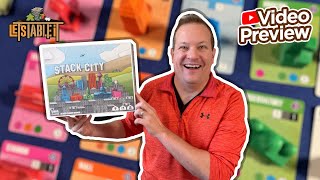
- 3D plastic buildings add visual and tactile appeal with height variety.
- Asymmetric starts provide distinct early paths and strategic options.
- Tableau-building with escalating decisions as the game progresses.
- Color/resource system supports multiple viable strategies and synergy with Enterprises.
- Action cards can be highly luck-based and punishing at times.
- Some trades or deals can be lopsided depending on draws and goals.
- Endgame length/pace can be sudden for new players or depend on rule familiarity.
- Growth through layered building and resource management
- City-building tableau on a modular grid with stacked buildings
- instructional/analytical explanation during play
Mechanics (from transcript analysis)
- Action cards and timing — Gain action cards that can be used later for effects; some cards influence endgame scoring.
- Color-coded permits — Collect permits by color to satisfy building requirements and enable placement.
- Endgame trigger and scoring — End when a player reaches track position 32 or all buildings are placed; score economy points, purple Diamond points, and remaining resources.
- Limited Points — End when a player reaches track position 32 or all buildings are placed; score economy points, purple Diamond points, and remaining resources.
- Player interaction and trading — Certain cards allow impacting other players’ pieces or trades, affecting strategy.
- Resource Management — Manage money, permits, and action cards to fuel building and growth.
- Tableau Building — Build buildings on top of gray foundations and then on the outer black track; stack colored blocks to create vertical complexity.
Video topics + discussion points
Quotes (from this video)
- This is a Tableau Builder which means that you start slow and easy and then with time you build your resources up to gain more and more stuff.
- Stack City a city building Tableau game where you have these plastic blocks here that are great.
- The game starts off slow and easy but as turns get more strategic you have more decisions.
References (from this video)

Mechanics (from transcript analysis)
Video topics + discussion points
Quotes (from this video)
- now starting off number 10 is four it's lost in the middle it's not prime just two doubled hash unoriginal and and In some cultures unlucky you're lucky you make the list for
- eight number 10 couldn't be a dozen but also thinks it's Big Man on Campus on this list got to keep it humble looking at you 10
- seven pie 3.14 pie Jess and I went to this place called the Red Arrow Diner the other day and it had an entire display case full of pie and it was fabulous she got a death by chocolate cream pie it was it was everything that you thought it pie
- six is three and why three here in number six because in numerology people with a life path aligned with three have some significant strengths and weaknesses such as they're creative they have a strong imagination come up with ideas quickly they're communicative they're great at writing speaking artistic expression they're social they enjoy socializing have a large usually a large circle of friends tend to be optimistic they have an infectious enthusiasm that draws others to them they they excel in problem solving they think of new ways to solve problems quickly and creatively however there are some kind of drawbacks to those on the life path or the the life path aligned with the number number three and those weaknesses can include scattered energy they may they may have time trouble focusing and may make hasty decisions
- five I mean I feel like this is probably the biggest no-brainer of the entire list it's the golden ratio of 1.68 I mean symmetry duh the middle yall saw that coming right like you knew all right I I'm going to give you all the benefit of doubt that that's the case
- four arguably could be considered my favorite but only at number four and it's ul's number now I realize so for those that don't know it's uh 27182 also known as e now I realized that some people mispronounce it Oilers rule or law or number or whatever um this is heavy cardboard this is my channel so therefore nepotism is ul's number plus screw Edmonton if you know you know
- three going to be a bit of a surprise to a lot of y'all is seven cuz everybody is going to put seven higher I mean seriously it is the most common lucky number out there so everybody who is going to put this higher I ain't basic
- two number two is two it's the silver medal it's almost as good as as one it's second best always on the podium got to give props to number two
- finally number one 249 it just flows off the tongue 249 you see that and you're like wow that's not much money that's that's a good deal almost anything that you see for 249 is great so 249 and and if you double oh moment hold H if you double 249 that get you our absolute best number of all time number zero 498 say it with me 498 man that's a great number so there you have it my top 10 numbers 1- 10 hopefully yall enjoyed that
- now this is what happens when you get a little punch drunk uh so uh shout out to Kyle Ken and Greg after our our stream the other night we got to talking about this and thought we would have a lot of fun
- Railways of Los Atlas so that is looking forward to that it is a build your own customizable map which I thought was not going to be good I was flat out wrong
- This has been threatened to be on the channel for years and as a solid I'm finally breaking this out Rob has requested it and so Rob this one's for you uh hko and Stein is going to be on the show on Sunday
- a lot of people been asking for old school splatter we haven't done Antiquity in a very long time plus it is a phenomenal game so Antiquity is definitely on the docket
- stress btics Odyssey we're going to be replaying that again we've played a partial game of it once we've played the base game a number of times we stream that publicly and we're going to be doing a sponsored stream later on possibly as soon as two weeks from now but for the patrons on Sunday about 4:30 or so we're going to do probably another partial game of stress bs Odyssey
- small City deluxe edition a lot of s this one can't surprise the heck out of me a lot of people have been asking for this so you know what we're busting this bad boy out again tomorrow
- oath I mean how can we not bust out more oath right
- and uh Atlantic chase this is one my most anticipated war games that I desperately want to get played um so Atlantic Chase is definitely going to make it before the end of the patron stream so super super stoked for that
- we have gained 45 new patrons and we've only lost one that is ridiculously aming amazing I am so grateful for that
- speaking of so far in the patron drive so here we go what have we done I mean this and more right the the arcs campaign has continued uh uh we've had a game about oranges and lemons that has a killer action selection mechanism if you all haven't heard about it I would recommend go check out that stream I thought it was great I think it's a really good game I think you all would enjoy that
- James Ken and oath need I say more if you haven't watched our latest stream of oath and you enjoy watching board game content I think I can unequivocally say you should watch that
- The NeverEnding game of ofle come Ross that was that I I was entertained the ridiculous ending of Cribbage in our traditional card game stream we did cribbage Rook Spades and hearts I mean all you need is a deck of cards right
- all three of them not me but the other three solid really solid I was impressed
- it has been brought to my attention that some of y'all watched how oath ended and thought that doesn't look good rest assured that I we have been blessed with a very very good group that no one takes anything too seriously the games are just the games there is no uh serious hurt feelings there there can be grudges but they're friendly grudges like I still hate shy because of something he did an Intrigue like five years ago it's okay I still invite him back he and I are still friends mostly so I imagine James and kenel it'll continue but it'll be entertaining and it's mostly friendly they actually hugged it out afterwards so it's all good
- James from Dad's on a map is going to be joining me Thursday night we're going to enjoy a couple of adult beverages and and chew the fat about their tournament as well as just games that we've been playing and and stuff so that should be a good time
References (from this video)

- Fantastic game
- A specific play session felt like it let the game down by not showing how good it can be.
- city building
Mechanics (from transcript analysis)
Video topics + discussion points
Quotes (from this video)
- I love half the that game I think half that game is as good as anything in the hobby period and the merger mechanism I actually had this conversation with Yun back at uh the Gathering of friends I think it was last year and I was like how has nobody taken that merger mechanism in Indonesia and then used it in their game he goes it surprises me and yours all the time that nobody has blows me away no idea
- Bonanza is my number 10 game of all time
- The juice the juice wasn't worth the squeeze
- F James you know he's not getting it he's not doing anything to the point where it was just I was like why don't you just bring your your hat
- I think the game the manual even says like don't go too close to each other on setup and we were all just like oh that looks like a really good spot it's like yeah that does look like a really good spot I'm going there too
References (from this video)

- Deluxe edition box is too big
Mechanics (from transcript analysis)
Video topics + discussion points
Quotes (from this video)
- the colonist and I feel so bad for whoever had to sort that afterwards
- Yakob this is how you should store your games you're never going to play them more than once
- ah World War II war game number 567
- this is Atlantic Chase
- we're going to be getting started late just so you know it's probably going to be 7:30 but um this is this is what I'm streaming here in about an hour and a half realistically cuz uh uh stress btic Odyssey is still set up on the table
- stress btic Odyssey is still set up on the table
- it's going to take me a solid 40 minutes to put up stress spct Odyssey
- this feels like a a worthy game for a giveaway
- this is Weather Machine from VTO lerta
- what's your best piece of corrective criticism what what's something that we could do better here on heavy cardboard
- I'd like to hear that as well that's that's actually a really great idea
- the community is really amazing uh inclusive welcoming Comm Community
- if you are watching this and not a patreon I'll see you tomorrow night for laav otherwise if you're a patreon I'll see you in about 90 minutes
References (from this video)

- Very deserving of a second edition
- Very thematic city-builder puzzle
- Great game
- Interactive
- Frustrating moments
- Best at doing these things
- Mayor can be annoying and block plans
- People around the table didn't understand anything the first time
- City building
- Suburbia
- Electropolis
Mechanics (from transcript analysis)
- city building — Players develop their city by placing buildings.
- Drafting — Drafting people with special abilities and buildings.
- Hidden Information — Player cities are hidden behind shields.
- player interaction — Players influence each other through building placement and mayor movement.
- Spatial Puzzle — Balancing building types, their effects on each other, and city expansion.
Video topics + discussion points
Quotes (from this video)
- So, the fewer things you're saying you're going to do this turn, the earlier you will be in the turn order and that it seems so crucial.
- But it is one of those where it's it's as you said like it's it's pretty simple. It's a lightish game but with a lot of great decisions and a lot of fun.
- So it's a very I would say um tactical game. We're trying to see opportunities like oh now you opened up that opportunity. I should probably capitalize on that but that was not my plan to stop there.
- It has frustrating moments.
- And the mayor is always there. If you're a first player, you're going to get that mayor plunk down your city and he's not going to move. He's just going to be looking at your buildings and standing in the way of your building plans because all the other people decide where the mayor goes.
- I recommend if you are into heavy games. If you're not into heavy games, go away. I mean, stay away from the game.
References (from this video)
- Great game
- Interactive
- Frustrating moments add to the experience
- Good for heavy game enthusiasts
- Not for players who are not into heavy games
- City Building
Mechanics (from transcript analysis)
- Drafting — Players draft people with abilities to help them build.
- player interaction — Other players' actions influence the game, specifically the placement of the mayor.
- Tile Placement — Players build buildings in their city.
- Worker Placement — Implied through drafting people with abilities and interacting with a central 'mayor' figure.
Video topics + discussion points
Quotes (from this video)
- So, the fewer things you're saying you're going to do this turn, the earlier you will be in the turn order and that it seems so crucial.
- But it is one of those where it's it's as you said like it's it's pretty simple. It's a lightish game but with a lot of great decisions and a lot of fun.
- So it's a very I would say um tactical game. We're trying to see opportunities like oh now you opened up that opportunity. I should probably capitalize on that but that was not my plan to stop there.
- It has frustrating moments.
- And the mayor is always there. If you're a first player, you're going to get that mayor plunk down your city and he's not going to move. He's just going to be looking at your buildings and standing in the way of your building plans because all the other people decide where the mayor goes.
- I recommend if you are into heavy games. If you're not into heavy games, go away. I mean, stay away from the game.
References (from this video)
- Backed without a clear reason.
- Not a good price point.
- Had no real interest in the game itself.
- Convinced self into wanting it.
- Never played it and eventually got rid of it.
Mechanics (from transcript analysis)
Video topics + discussion points
Quotes (from this video)
- This has everything to do with should I have known better at the time? Should I have known better at the time and not backed it?
- I regret backing them more if the more they cost.
- I backed it not because I was interested in the game. I backed it because there was a really good price on the game. That's why I backed it.
- I convinced myself into wanting the things.
- I cannot believe for the life of me that I spent $130 on a bunch of metal cubes for a game system that I didn't know I love.
- It makes no sense to have done so.
- I back basically every Sean campaign. I can't skip one of them. Doesn't make sense that I'd skip one.
- After the experience I had with Casting Shadows, after knowing that I spent $400 on a game that I never really played and a bunch of plushies that made no sense, uh, Twisted Crypteds was a leaping down that same exact rabbit hole.
- The most money spent, the most money wasted.
- Regret should be saved for those things where you should have known better with the knowledge you had.
References (from this video)

- Satisfying spatial puzzle
- High player interaction
- Good thematic integration
- Rewarding city growth mechanics
- Can be complex and difficult to learn
- Requires significant planning and foresight
- Player interaction can be highly confrontational
- City building and development
- Clinic
- Princess of Florence
Mechanics (from transcript analysis)
- area influence — Placing buildings and cultural structures influences adjacent tiles, enabling higher-level buildings and strategic advantages.
- Hand Management — Managing action selection cards and promise cards is important for achieving personal objectives and scoring points.
- Pollution — Building certain types of structures generates pollution, which negatively impacts scores if it reaches certain thresholds.
- Set Collection — Players aim to collect specific sets of buildings or achieve certain configurations to meet end-game goals and gain victory points.
- Tile Placement — Placing building tiles on a personal player board is central to the game, with adjacency rules affecting expansion and scoring.
- Worker Placement — Players use worker meeples to select actions, with costs often varying based on turn order and previous selections.
Video topics + discussion points
Quotes (from this video)
- My 18 was get all of your dudes and I was like, wow, it doesn't seem like money's very easy to do in this game.
- My pollution gets subtracted from my score at the end of the game.
- I enjoy this more than Clinic... but I enjoy Clinic because I had only played Clinic so I played Clinic like seven times. I haven't played enough.
- This is like playing clinic but with the 3X3 instead.
- The puzzle is rough. I mean, I knew it was going to be rough, but it's rough rough.
References (from this video)
- Makes sense thematically and mechanically
- Engaging player interaction
- Strategic depth
- Rewarding to play well
- Incredibly complex and convoluted building phase
- Pollution management can be challenging
- Building a city
- small City
Mechanics (from transcript analysis)
- action selection — Players choose action cards that have associated costs and effects.
- area influence — Placement of buildings is influenced by adjacency rules, particularly for cultural buildings and residential zones.
- End-game scoring — The game includes endgame goals and scoring based on residential buildings and potentially other factors.
- mayor mechanic — The mayor's placement affects adjacent spaces and player options, acting as a disruptive element.
- Pollution track — Certain actions and building types generate pollution, which negatively impacts players if it reaches certain thresholds.
- Resource Management — Players collect and spend resources (wood, stone, iron) and money.
- Set Collection — There's an implication of collecting sets of buildings or achieving certain configurations for scoring.
- Tile Placement — Players place various building tiles (residential, commercial, industrial, parks, etc.) onto their player boards.
- Variable player powers — The game appears to have unique player starting conditions or bonuses, though not explicitly detailed.
- Worker Placement — Citizens (workers) are moved to different locations on the board to perform actions or generate income.
Video topics + discussion points
Quotes (from this video)
- this is the meat of the game this is the building phase and it is incredibly complex and convoluted but it makes a lot of sense both thematically as well as mechanically but there's a lot
- I hate it but all right
- I love clinics I don't know about this game yet oh this is I think this is a better well we'll play it and then I'll knowon I'll have an opinion after I play it's yeah I hate it but all right
- I love small City and I'm fine with clinic similar to George yeah I I like both
- this city is a mess City's a mess it's a freaking mess
References (from this video)
- It's a really good puzzle.
- The variants make the game better.
- Component quality is fine.
- Colors are good and clear.
- The box size is way better in the deluxe version.
- The puzzle is rough.
- The advanced board makes it way harder.
- It is difficult to visualize the 3D aspect of it.
- It feels more limiting than Clinic.
- city building
- urban
- Clinic
- Princes of Florence
- Age of Steam
Mechanics (from transcript analysis)
- Engine Building — Referenced in the context of building a 'small engine'.
- Set Collection — Implied through the goal of collecting specific tiles or achieving certain configurations.
- Tile Placement — Discussed in relation to spatial challenges and how expansion works.
- Worker Placement — Mentioned in the context of using workers for park upgrades.
Video topics + discussion points
Quotes (from this video)
- The puzzle is rough. I mean, I knew it was going to be rough, but it's rough.
- I love Clinic. It's one of my favorite games.
- It's a really good puzzle, but it's a lot of work in a good way.
- The 3D aspect of it is what's difficult for me to visualize. But I feel like this is harder than clinic.
- The variants are recommended and are seen as making the game better.
References (from this video)

- thematic and mechanically satisfying
- encourages strategic planning
- weighty for lighter audiences
- urban development with interactions between cities
- city-building
- Cascadia
- Architecture-related city-builders
Mechanics (from transcript analysis)
- city-building / resource interaction — players build a city with interactive scoring and placement choices.
Video topics + discussion points
Quotes (from this video)
- it's so simple but it's so clever
- one of the best experiences
- go check it out on Kickstarter
- it's a fantastic experience sadly like the other things that came after it hasn't been that good
- I would love to play it more
- this is a game that can have an abrupt ending if you do poorly
References (from this video)
- sustainability
Mechanics (from transcript analysis)
Video topics + discussion points
Quotes (from this video)
- I am just a huge fan of this kind of time loop sort of thing
- The more people respond, the better this system is going to be
- Spoiler alert for a game that's I'll be covering soon on the channel