/pic428828.jpg)
/pic979889.jpg)
/pic5643225.png)
/pic428828.jpg)




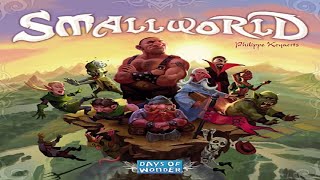

















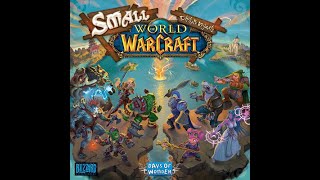






Small World Deep Dive
What the Community Thinks About Small World
Small World generates strong, divided opinions among board gamers. For some, the 2009 Days of Wonder release is a masterclass in area control with personality. For others, it’s a frustrating, ganging-up simulator that only works with the right social group. What unites reviewers is admiration for its core design: the race and power pairing system creates endless replayability, and the decline mechanic introduces a genuinely dynamic twist to conquest-based gameplay.
Core Mechanics That Define Small World
Area Control with Decline
At its heart, Small World is territorial conquest. Players expand empires across a map, control regions, and score coins based on what they hold. The genius lies in the decline mechanic. As your faction weakens or overextends, you can retire it and take a fresh race-power combo onto the board, keeping both in play for points. This transforms the game from static positioning into a rolling cycle of rise and fall. Reviewers consistently highlight this as the game’s best feature: a decision point that creates drama and resets the strategic landscape every few turns.
Token Pairing and Combo Variability
Before each player’s first turn, they bid for one of five available race-power pairings using starting coins. Dragons paired with Ratmen, Skeleton Diplomats, Flying Trolls, the combinations are randomized and varied. Each pairing brings unique abilities: some races generate extra tokens, others control water, some move faster or collect coins from specific terrain. With 14 races and 20 powers in the base box, the possible combos run into the hundreds. Expansions multiply this dramatically. This variability ensures no two games feel identical, and the selection draft creates early tension and table discussion.
The Small World Experience
Whimsical Chaos and Confrontation
Small World wraps cutthroat area control in a pastel, fantasy coat. The board is colorful, the token art is charming, and the tone feels playful. Yet gameplay is brutally confrontational. Players constantly attack one another, seize territories, and force opponents into decline. One reviewer described it as a “knife fight in a phone booth”, a small map, constant pressure, and nowhere to hide. This juxtaposition is deliberate. The whimsical presentation masks how vicious the conflict becomes, which some groups love and others resent.
Dynamic and Surprising
Because the decline mechanic lets players cycle through factions, the board state shifts constantly. A player who seemed dominant last turn enters decline and gives up their territory. A rival emerges with a fresh, powerful race. This creates a roller-coaster feeling: empires rise and crumble in rapid succession. Reviewers praise the in-decline system for keeping every turn meaningful and unpredictable, avoiding the grinding stalemates common in static area-control games.
What Makes Small World Stand Out
The Race-Power Selection Draft
Few games make combo selection itself the highlight. Small World does. The bidding system, free for the top combo, one coin per skip for others, forces hard choices. Skip a tempting pairing to save coins? Overpay for that powerful combo? Let an opponent snag it? This pre-game jockeying sets tone and strategy before a single token touches the map. Reviewers consistently note this as the most exciting phase for many groups.
Endless Expansion Hooks
Small World has spawned numerous expansions with new races, powers, and special rules. Some combos defy standard rules entirely, Ghouls can attack while in decline, Spirits can have two decline races simultaneously. For players who love tweaking combos and discovering broken interactions, expansions provide years of experimentation. However, reviewers also note this creates a burden: with expansions, you must reference rules constantly, breaking the flow for new players.
Potential Drawbacks
Social Dynamics Can Ruin the Game
Because Small World incentivizes direct attacks and territorial takeover, one player bullying another is always a threat. Unlike games with penalty mechanics for kingmaking, Small World has no built-in catch-up. If one player gets ganged up on, or if a player attacks another out of spite, the experience sours fast. Reviewers emphasize: this game works only with groups that can handle confrontation and play strategically, not vindictively. In the wrong group, beautiful mechanics become an exercise in frustration.
Determinism Outside the Dice Roll
Once a player selects their race and power, conquest is largely deterministic. You know exactly how many tokens you need to take a region (two, plus one per defender or mountain). There’s no uncertainty except the final conquest die roll, which feels thin for a combat-heavy game. Reviewers who prefer exciting, swingy moments or heavy bluffing note that Small World can feel like math, calculating optimal attacks rather than experiencing thrilling combat. The real excitement comes from choosing which race to take and deciding when to decline, not from the conquest itself.
If You Enjoy Small World
Small World fans often gravitate toward games that blend light rules with tactical depth. Carcassonne and Ticket to Ride share the approachable-yet-strategic vibe. For more direct confrontation, Catan and Risk Legacy deliver area control with variable factions. Cosmic Encounter offers alien powers and chaos in a similar spirit. If you want pure area control without the whimsy, Kemet tightens the conquest mechanics and reduces luck. For those drawn to the combo variability, Cosmic Encounter delivers endless power combinations in a chaotic space setting. And if you love the decline arc of managing overlapping factions, Bohnanza offers a lighter, card-based take on pushing-your-luck and transition mechanics.
What Reviewers Are Saying
"Small world is an incredibly brutal and cutthroat game of empires rising and falling in a dramatic way, and you really need to be fine with the idea of bowling over your friends kingdoms and having all your stuff burned to the ground too."
— 3 Minute Board Games
"The best thing about this game is the in-decline mechanic, having new forces sweep across the map is really dynamic. However if confrontation is not your thing, small world is not your game."
— 3 Minute Board Games
"It's got the whole thing where you're like producing resources but they're governed like you have to protect them, which is interesting but also can be kind of brutal. One of the fun things is getting a new race and picking which one do I want to go for, that only happens a few times a game."
— Rolls in the Family