/pic8548331.png)
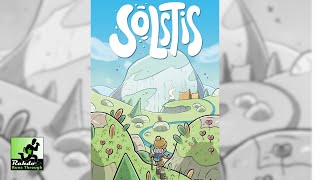
PROVE YOUR WORTH AND EARN THE MOST ⭐️ POSSIBLE by traveling the mountain and assembling as many landscape tiles as possible, meeting the forest spirits and lighting fires on the peaks creating a path through the valley.
The tile capture mechanics are taken from the hanafuda mechanics. Collect a tile according to the column or row then place them in your landscape. The goal of the game will be to reconstruct a landscape by combining its tiles to score as many points as possible. You will have to be careful not to leave tiles to your opponent while optimizing your landscape according to your opponent's choices. Also, create tile squares to collect spirits that will help you during or at the end of the game.
The experience is... zen and very quick to set up! For adults and children!
—description from the publisher



- Neat choices to make on the way up.
- Picking a tile that helps your rival may be a better long-term tactic sometimes.
- Capturing tiles and building panoramas inspired by classic Japanese playing cards.
- Colorado
- Zooloretto
- Railway Tiles
Mechanics (from transcript analysis)
- network building — Creating linked paths and roads.
- Set Collection — Players take tiles that match the color or numbers in their hands.
- Tile Placement — Players attempt to assemble landscape tiles.
Video topics + discussion points
Quotes (from this video)
- World Order is great. And if you enjoy economic strategy, well, this game is definitely worth your time.
- Dune can come across as more of a sandworm fight in a shoe box, which is also full of sand. It's just a lot of sand.
- Ultimately, Dinogenics is a mid-weight worker placement eurogame that's all about making the right move at the right time to build the most lucrative theme park that doesn't also get everybody killed.
- This particular recommendation is based more on the feel of Sanctuary than its gameplay. Turns out, this is a thing that we can do now. We can make recommendations based on feel.
References (from this video)
- solo puzzle
- familiar mechanic
- not described in depth in the transcript
- card solitaire
- solo puzzle
- instructional
Mechanics (from transcript analysis)
- not specified in transcript — Mentioned as a prior completed game; mechanics not described in detail.
Video topics + discussion points
Quotes (from this video)
- start by building the bottom row using low numbers each row must add up to equal the same number
- they'll add up to the same same number on each row
- roll as many eights as you can
- one of my alltime favorite family card games
- record the number and it's higher than the card
References (from this video)

- Building a landscape
Mechanics (from transcript analysis)
- Drafting — A neat little drafting game where if you match color, match number, you have to take.
- Push Your Luck — There's a way to get rainbows and push your luck and that's fun.
- Tile Placement — Players build out a beautiful panorama with wooden tiles.
Video topics + discussion points
Quotes (from this video)
- This game is literally you draw a card it's kind of like twister with your hands it is it's not kind of like twister with your hands it's twisted with your hands and sticks yeah
- Combo is a good way to understand rankings of poker hands or of hands in general
- The Gang was a game that came out and there are some really memorable hands and I feel like that game just always makes me filled with joy
- it's important now that we're especially now that we're working in the hobby that we take some time to enjoy the hobby because we never want that fire to burn or the fire to continue to burn we don't want it to dim
- Do you want to see me and Tyler go head-to-head in yellow house do you want a how to playay video of Cascadia Jr do you want to see a tether competition
References (from this video)
- Light and plays quickly.
- Spirits provide bonus points and abilities.
- Ascending a mountain as an initiated rite of passage.
- A mountain.
Mechanics (from transcript analysis)
- Pattern Building — Creating 2x2 grids to gain spirits.
- Set Collection — Scoring points for non-rainbow tiles, connected tiles, and spirits.
- tile drafting — Drawing tiles from a pile and selecting from a display.
- Tile Placement — Placing tiles onto a personal board to create contiguous groups.
Video topics + discussion points
Quotes (from this video)
- If you've ever wanted to be an anthropomorphic animal that makes weapons and armor this is your way to do it.
- The main new mechanic that it brings is a type of card called shrubs and these function like trees you can put them down and then place your animals on them but they are not trees so they don't count as trees for anything that would score trees but each shrub gives you an ongoing benefit when you play certain sorts of things
- It is a very simple scoring mechanism and game that is just a two player plays in about 10 minutes
- How good would they be at a hot dog eating contest
- Lying while playing Mafia
References (from this video)

Mechanics (from transcript analysis)
Video topics + discussion points
Quotes (from this video)
- This has debuted last year at Essence, so it's making its way through to North America.
- This is a great game. Uh definitely suggest that you pick this one up if you have the space for it because it is quite a large game.
- Drag queen at their booth.
- stay safe, and we'll see you next time.
References (from this video)
- Fun, sharp, fast little game
- Less than 15 minutes playtime
- Great for restaurant-style play
- Adorable tiles with charming art
- A lot of strategy involved
- Sharp design
- Good solo game
- Good two-player game
- Jen said 'Set it up. We're playing again right now.'
- Unfortunate 'mean' elements like stealing tiles and the evil spirit mechanic
- The 'evil spirit' tile is recommended to be left out if not desired
- Personal growth and meditation, spirit quest
- Mountain exploration
- Novices go on a spirit quest to explore the mountain and take their place as adults in their tribe.
- Lost Cities
Mechanics (from transcript analysis)
- Drafting — Players draft tiles from a public display or from their hand.
- Pattern Building — Players aim to create specific arrangements of tiles, such as 2x2 grids.
- Set Collection — Players collect animal spirit tiles for scoring opportunities or bonuses.
- Take That — Some elements allow players to directly impact opponents negatively (e.g., stealing tiles).
- tile laying — Players play tiles to build a contiguous grouping representing the mountain.
Video topics + discussion points
Quotes (from this video)
- This is a very very fast playing sharp game. um worker placement that you use to draft tiles or not tiles, cards uh to basically build the Hanging Gardens of Babylon.
- This is a very simple, elegant, fast playing game. And um but it is crunchy uh and you are really delused with tough decisions to make.
- I liken this game to kind of a mix between a um a deck building game and a slot machine because I mean deck builders are all kind of slot machines because you know every round you you pull on the handle and your deck spits out some stuff and then you try to make do with it.
- This deck builder has a bigger focus on um deck thinning than any other deck builder I've seen.
- great to have designer Phil Dubberry back. Uh, you know, one of the uh one of the, you know, one of the greats from now, seven or eight years ago, and you know, he we he's been um he's been on the down low for a while. haven't seen much from him, but now he's making a roaring and triumphant return to make one of the best um tableau engine building card games of recent years.
- The variety is really satisfying. Another great thing about it, it's one of those games where you follow that if somebody else does a really cool special power because they've got a lot of a faction and I've got some of that faction as well, even though it's not my turn, I can activate them. So, you're really intertwined.
- This is a uh game where we are running a uh a cinniplex, a movie theater and trying to invest getting more screens so we can show show more movies but also invest in the right movies that will tickle the fancies of the movie going public.
- Flip Town was phenomenal. I'm here to tell you right now, folks, Flip Voyage is even better.
- designer Steven Armen's um masterpiece as far as I'm concerned.
References (from this video)

- Sanusi
Mechanics (from transcript analysis)
- Drafting — A unique drafting system to fit things together.
- Tile Placement — Building up a big kind of panorama picture or panoramic picture where everything has its own place.
Video topics + discussion points
Quotes (from this video)
- So, I'm not going to share much more.
- Again, I'm I'm actually really optimistic about it.
- I've not played it yet.
- It could be good when it's got the uh the good doctor's name on the box.
- It sounds like it's flimsy to say the least, but hey, it could be fun for one or two plays.
- I think it's absolutely fantastic.
- Um, but intrigued to see what this one has to offer.
- Uh, and if it's as good as people say it is.
- Fascinating design.
- So, you got to be quite careful with that.
- And probably I think well spoiler alert it's probably going to be one of the big hits of the year.
References (from this video)
- Works for the reviewer despite designer's usual clash with taste
- Very charming and pleasant to play
- Every tile is unique and has its own distinct place
- Very free flowing and smooth
- Can settle into and enjoy the process
- Not a grandios strategy game, but fun
- Lovely cartoony aesthetic
- Streamlined and smooth execution of a unique concept
- Backup plans with wild tiles
- Always a plan B
- No mean edge
- Really good option for a passive, couples friendly two-player game
- Plays lightning fast
- Not a ton of depth
- Restrictions can come into play when fewer tiles are available
- Wild rainbow tiles don't count towards biggest clusters for scoring
- Building a mountainscape by placing unique tiles.
- Sansusi
Mechanics (from transcript analysis)
- Drafting — A drafting system where players play a tile and can take matching tiles from a central display.
- Pattern Building — Building squares of tiles to unlock bonus tokens.
- Route Building — Tracing a route from the base to bonfires for additional points.
- Set Collection — Building the biggest group of tiles without breakages.
- Tile Placement — Players build a mountainscape by placing unique tiles.
Video topics + discussion points
Quotes (from this video)
- This is where I take a look at the last five new to me board games that I've played and I rank and review them in order of preference.
- So, this is a gateway level resource management contract fulfillment game where you are collecting resources um and then trading them in against these dog cards.
- So, very simple word association style game, which is a genre I tend to enjoy, but I understand there's not exactly a huge demand for them, especially when it comes to YouTube content.
- Now, this is a tile placement game, but it's a a multiple tier tile placement game where you're placing tiles on top of other tiles.
- So, it's quite rare for me to rank a Bruno Cathala game so high because his style normally clashes with my own taste, but there's something about Solstice that works for me.
- So, um maybe if you like these styles of games, it'll do it for you, but for me, it's just other things I'm looking for at this time.
- So that is fountains at number two.
- So that is Solstice at number one.
References (from this video)
- Interesting puzzly theme where you build a picture
- Thinky gameplay
- Variety of scoring methods
- Players will never be able to build the full panorama, leading to holes.
- Players compete to fulfill a great vision, implying potential frustration if the vision is constantly blocked.
- Ascending a mountain, building a panorama
- Mountainous landscape
Mechanics (from transcript analysis)
- Drafting — Acquiring tiles from a market by playing a tile from hand.
- Pattern Building — Creating specific formations like 2x2 sections with spirits for scoring.
- Set Collection — Collecting tiles of specific numbers and colors to acquire other tiles from the market.
- Tile Placement — Players place tiles to build a panorama, aiming to connect fire icons to red tiles and create 2x2 clusters.
- Variable player powers — Blue spirits grant endgame scoring abilities, brown spirits grant ongoing abilities.
Video topics + discussion points
Quotes (from this video)
- Are you looking for a two-player board game to play with your significant other or even your bestie?
- This is one of those puzzles where a two-player level, it's all about kind of readjusting how things are configured and worked together.
- When it comes to board games, shelf space is really important to me.
- Otherwise, I can't wait to bring you the part two version of this video, which is the top five games.
- Otherwise, I hope your next board game experience is a fun one.
References (from this video)

Mechanics (from transcript analysis)
Video topics + discussion points
Quotes (from this video)
- Duck & Cover is a fantastic filler family game.
- Pentago is one of the best abstract games of all time.
- What is this in the middle of all the board games on BoardGameGeek?
- This game truly is mid.
References (from this video)

- highly addictive core loop with satisfying geometry
- balanced mix of luck and strategy
- seems to reward careful planning and patience
- descriptions mention some learning curve and rule complexity
- two-player panorama building
Mechanics (from transcript analysis)
- tile value management and opponent pressure — Important tiles are contested; what you take affects what remains for your opponent.
- tile-drafting / pattern-building — Two players draw from a market and place tiles to form a connected panorama; every decision affects future options.
Video topics + discussion points
Quotes (from this video)
- Eternal Decks is a troubled genius.
- I hate setting this game up.
- This isn't a silent game.
- It's a masterpiece of simplicity.
- Hot Streak is exactly what it wants to be, silly, funny gambling.
- I wish it had been put in the hands of an editor who could pair down the noise.
- The personal goals are more rewarding.
References (from this video)
- Enjoyable building aspect
- Good for planning and adapting
- Thick, deluxe tiles
- Nice artwork
- Can feel like it relies on luck of the draw
- Mandala
Mechanics (from transcript analysis)
- Drafting — Tiles come out and you hope the right one comes out.
- Hand Management — Managing your hand to get the right tiles.
- Set Collection — Getting four of a specific item to get a special animal, or getting rainbows to finish.
- Tile Placement — Building your mountain by placing tiles.
Video topics + discussion points
Quotes (from this video)
- The problem with two-player games is there's so many of them.
- This is a great game. It really is.
- It feels more strategic than it is.
- It's a simple game, but it's beautiful.
- This is just absolute comfort food kind of a game that still has a lot of player interaction.
- You got to play to the middle to draw new cards. It's brilliant.
- It kind of feels like cornhole but for indoors.
References (from this video)
- Incredibly puzzlier than it looks
- A definite keeper
- Creating a panoramic view
Mechanics (from transcript analysis)
- Bonfire lighting — Players light bonfires by connecting the top to the bottom of their display.
- Pattern Building — Players try to create a connected picture and specific regions (e.g., 2x2).
- Set Collection — Players capture tiles based on matching number or color.
- tile drafting — Players capture tiles from a display.
Video topics + discussion points
Quotes (from this video)
- More recently, I really been enjoying these small box games.
- I found this to be incredibly puzzlier than it looks, and it's a definite keeper. I love it.
References (from this video)

- compact two-player experience
- online play on BGA
- grid-building with competitive stealing
Mechanics (from transcript analysis)
- grid-building — both players build on the same grid
- Interactions — you steal from each other as part of the play
Video topics + discussion points
Quotes (from this video)
- it's chaotic there's definitely some Randomness to it but definitely there is some planning and mitigation you can do to do the best that you can do it's so much fun
- it's solitaire but you also have to be aware of what everybody else is doing
- the table Pres is gorgeous the way the board really rolls out is fantastic
- Isle of cats duel is on there
- I really like the deck building aspect of it and like creating the uniqueness that your characters can become so that that was really fun
- I can't wait to play it again
References (from this video)
- Fun, sharp, fast little game
- Great as a solo or two-player game
- Adorable and charming tile art
- Clever twists on tiling mechanics
- Strategic depth
- Good filler game, playable in under 15 minutes
- High replayability, as evidenced by Jen wanting to play again immediately
- Some animal spirits have a 'tiny bit of take up'
- The 'evil spirit' can be too confrontational and can be optionally removed
- Minor 'go fish' or tile stealing mechanics
- personal growth and meditation
- mountain
- Lost Cities
Mechanics (from transcript analysis)
- Drafting — Players select tiles from a public display and can sometimes draft additional tiles based on matches.
- Pattern Building — Forming 2x2 grids is a key mechanic to gain animal spirit tiles.
- Set Collection — Players aim to create contiguous groups of tiles of the same color (row) or number (column) for scoring.
- Take That — Some animal spirits and mechanics allow players to steal tiles or negatively impact opponents.
- Tile Placement — Players draw and play tiles to build their representation of the mountain, aiming for contiguous groups.
- Wildcard — Rainbow tiles act as wilds, offering flexibility in placement.
Video topics + discussion points
Quotes (from this video)
- Hey everybody, the following is an excerpt from the monthly roto rounds up.
- And with out of the way, let's talk about Solstice.
- Uh, Bruno Cathala, why do you make such brilliant fun little designs, but then just throw in those little bits of things where we can stab each other.
- Honestly, folks, that's my only complaint about this game.
- Number nine of the month is solstice.
- If you enjoyed it, please like and subscribe. It makes a huge difference, believe me.
References (from this video)
- compact and portable
- fast-paced
- puzzle-tiled landscape
- color/number matching market drafting
- compact puzzle for solo/multiplayer
Mechanics (from transcript analysis)
- Pattern Building — play tiles to match color or number with market drafting; complete landscape puzzle.
- tile/color matching — play tiles to match color or number with market drafting; complete landscape puzzle.
Video topics + discussion points
Quotes (from this video)
- Railroad Tiles is a game from Horrible Guild and this is a tile placement version of Railroad Ink.
- Huton Life in the Rainforest is absolutely wonderful and it is definitely one that I recommend.
- Pergola is such a beautiful game and the base gameplay is straightforward.
- The Anarchy is Hrien's Wall but different and just so good.
- For the Emperor is a fun, easy two-player game that's great as a stocking stuffer.
- A Nice Cupa has been really, really fun and one that I recommend for a stocking stuffer.
References (from this video)
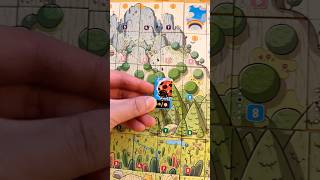
- Beautiful components and artwork
- Elegant two-player tug-of-war mechanic
- Engaging panorama-building objective
- Limited to two players
- Some randomness via draw tile can affect pacing
- Enlightenment through competition with spirits and nature
- A mountain during a summer initiation ritual where players build a panorama and light bonfires
- mythic/folkloric with a communal goal
Mechanics (from transcript analysis)
- connection/lighting bonfires — Tiles must be connected from the top of the mountain down to the bottom to light bonfires along the panorama.
- panorama building / set collection — Players assemble tiles to complete as much of a single panorama image as possible.
- rainbow tile — A wildcard tile that helps fill gaps in the panorama.
- random tile draw consequence — If you cannot capture an eligible tile, you draw a random tile from the top of the land draw pile to attempt a capture.
- tile drafting — On your turn, select a tile from your hand and capture a tile from the display that matches color or number.
- Tug of War — A direct competition where both players strive to complete the panorama first, creating a tug-of-war dynamic.
- two-player tug-of-war — A direct competition where both players strive to complete the panorama first, creating a tug-of-war dynamic.
Video topics + discussion points
Quotes (from this video)
- Solstice is a two-player only game where players are going to be exploring the mountain by assembling as many tiles as they can into the biggest group, encountering spirits in your player built panorama and lighting bonfires by connecting tiles at the top of the mountain all the way to the bottom.
- This game is a two-player tug of war.
- It's a beautiful game and I love
- there's only one panorama image, so you're both competing to complete as much of it first.
References (from this video)
- very accessible solo activity
- great for killing time
- can require explicit rules for variants
- Streets and Alleys
Mechanics (from transcript analysis)
- foundations and tableau — Cards are dealt face-up into columns; goal is to build foundations by suit, often via alternating color moves and orderly sequences.
Video topics + discussion points
Quotes (from this video)
- I love playing cards card games I feel like are what got me into modern board gaming
- there are so many different games that you can play with just a simple deck of cards
- get your cards out get some games played
- there were so many different variants of rules I got really confused
- this is board game Brody I hope you enjoyed this video
References (from this video)
- fast to teach and play
- beautiful production
- luck-based draws can influence outcomes
- tile drafting and spatial planning
- mountain exploration and path building
- abstract puzzle with thematic flair
Mechanics (from transcript analysis)
- Pattern Building — arrange tiles to create scoring opportunities
- pattern-building / spatial drafting — arrange tiles to create scoring opportunities
- Set Collection — collect tiles to complete climbing paths and earn points
- Set collection / path building — collect tiles to complete climbing paths and earn points
- tile drafting — draft tiles to form a mountain and scoring pathways
Video topics + discussion points
Quotes (from this video)
- this is definitely a simplified version of the fuller game, and it is a version of the game that plays a lot quicker.
- I would probably rather carve out an extra hour and play the full game.
- I liked it. I think it was an interesting drafting game. It plays super fast, y'all. 15-20 minutes.
- The graphic design is amazing.
- I'm excited for Race to Berlin.
References (from this video)

- Quick gameplay
- Interesting strategic depth
- Unique tile placement mechanics
- Potentially unsatisfying tile completion
- Complex rule explanation
- Requires multiple plays to understand
- Spiritual mountain ascent
- Mountain climbing journey
- Panoramic tile placement
Mechanics (from transcript analysis)
- Set Collection — Players aim to create largest tile clusters and collect spirit tokens
- tile drafting — Players collect and place tiles to build a mountain panorama
Video topics + discussion points
Quotes (from this video)
- Two-player players are eating really well right now.
- We play a ton of Uwe Rosenberg games.
- We were happy to play four solid games back to back.
References (from this video)

- Cozy game for partner play
- Taps into desire to complete things
- Beautiful rainbow tiles for gap filling
- Engaging spirit tile chasing
- Expansion adds tension
- Opponent takes half the tiles, making completion tricky
- Tile placement and jigsaw-like puzzle completion
- Panorama landscape completion
- Competitive puzzle solving
Mechanics (from transcript analysis)
- Jigsaw Placement — Tiles have specific placement spots in panorama, like jigsaw puzzle
- scoring — Points awarded for largest connected group of tiles
- Spirit Tiles — Special tiles that provide more tiles or new scoring ways
- Tile Winning — Players win tiles to add to their panorama
Video topics + discussion points
Quotes (from this video)
- It isn't Christmas without some board games.
- It's you that will be playing it with them.
- It's such a simple idea, but it just works.
- These are the Ferrari of board game accessories.
- We are a species of gamers.
- Board games are beautiful.
- If you want to buy a present for a board gamer, you can't buy them a game.