/pic3875779.jpg)

















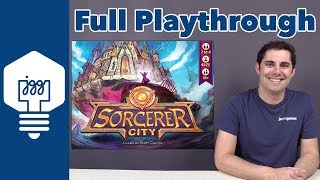









Sorcerer City Deep Dive
What the Community Thinks About Sorcerer City
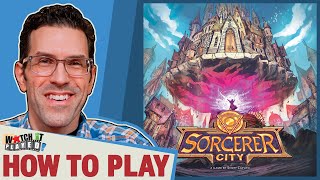
Sorcerer City arrives as a rare hybrid that combines three beloved mechanics into something players had never quite experienced before. Reviewers like Watch It Played and Pair Of Dice Paradise consistently marvel at how the design weaves bag building, tile placement, and real-time pressure into a cohesive city-building experience. The game has earned respect for its thematic consistency and mechanical elegance across a diverse set of gaming communities.
Core Mechanics That Define Sorcerer City
Real-Time Tile Placement Under Pressure
Every round, players build their city districts under a strict time limit while a timer counts down. As tiles emerge from your personal bag, you place them adjacent to existing tiles to form your city, rotating and arranging them as you see fit. The moment time expires, everyone must stop. This real-time component creates a frenzy that forces players to balance thoughtful planning with speed, making every decision feel consequential without grinding the game to a halt. Published by Druid City Games, it turns a normally contemplative tile puzzle into a race against the clock.
Bag Building and Deck Development
Between rounds, players purchase new tiles from the market to enhance their bags for future rounds. These purchases are the lever by which you gain power, acquire better resources, and improve your scoring potential. Each tile you buy shapes your future draws, and the randomness of what you pull from your bag forces adaptation and creative problem-solving with whatever comes out first. This deck-building layer gives the frantic placement a longer-term strategic spine.
The Sorcerer City Experience
Escalating Chaos and Fun
The game spans several years of increasingly frantic city building. Early on, you have few tiles and plenty of time, so the pace feels manageable. As the years progress, your bag overflows with options, the timer feels cruelly short, and you find yourself in delightful panic, dropping pieces and hoping they land in a valid arrangement. The progression from comfortable to chaotic creates natural tension and builds engagement round by round.
Theme That Actually Makes Sense
Sorcerer City justifies its rebuild cycle through a coherent fantasy premise: you are rival wizard architects repeatedly renovating the same city district while monsters continually invade and destroy your work. Unlike many thematic games, the rules and theme reinforce each other rather than fighting. The rebuild-after-destruction structure is not arbitrary; it flows naturally from the setting, which reviewers single out as a real strength.
What Makes Sorcerer City Stand Out
Accessibility Wrapped in Depth
The core concept is immediately graspable: draw tiles, place them adjacent to existing tiles, work against a timer. Newcomers can play competitively in their first game. Yet beneath that simple surface lies tactical depth in how you arrange your city, which tiles to purchase, and how to time your acquisitions so that powerful tiles show up when you need them.
A Game That Demands Creativity Within Constraints
Tile placement in Sorcerer City involves constant spatial puzzle-solving. You cannot simply place tiles wherever you wish; they must form a connected city. Shields on tiles activate scoring bonuses only when surrounded by specific colors or formations. Players who master the shield goals and plan their layouts around future scoring discover that success flows from both chaos management and architectural vision. Every district tells a unique story based on its builder's choices. Reviewers note that part of the appeal is how the same handful of tiles can be arranged into wildly different cities, so two players drawing similar pieces still end up with boards that score in completely different ways. That tension between the luck of the draw and the skill of the layout is what keeps experienced players coming back.
Potential Drawbacks
Real-Time Stress Is Not for Everyone
Some players find the timer and simultaneous building genuinely stressful rather than fun. If you prefer thoughtful, turn-based games where you can plan each move in silence, Sorcerer City will provoke anxiety rather than joy. The timer can be adjusted for difficulty, but the core real-time structure cannot be removed without fundamentally changing the game.
Limited Player Interaction During Builds
While the game is competitive, you largely build in isolation. Monsters can disrupt your district, but most of your conflict is against the clock and your own tile randomness, not against opponents' actions. If you crave direct confrontation and constant interaction, you may find the experience less interactive than games like Clank or Spirit Island.
If You Enjoy Sorcerer City
If Sorcerer City resonates with you, you will find reward in Carcassonne, which shares its tile-placement elegance and spatial puzzle satisfaction without the real-time pressure. Dominion offers the bag-building and deck-development arc you love in a more reflective setting. For players who crave real-time chaos mixed with strategy, Galaxy Trucker delivers similar thrills, and Clank! merges deck building with the press-your-luck tension that makes Sorcerer City thrilling.
What Reviewers Are Saying
"It's a real-time deck-building game with tiles. You build a deck of tiles, then you draw those tiles from your deck in real time and build a city out of it one tile at a time, but you only have sixty seconds to do it."
— Board Game Coffee
"Sorcerer City is the only game of its kind, I feel like. I have not played anything like this. It's like the only game I've ever played where it was an actual objective-based game, so you are building your character like you are looking at an adventure."
— Foster the Meeple
"Imagine if Carcassonne, Dominion, and Galaxy Trucker were combined into a fantasy strategy game where sly sorcerers compete to untangle urban architecture, saving their city while gaining fame and prestige. Sorcerer City combines real-time bag building and tile placement for a unique city-building experience."
— Pair Of Dice Paradise