/pic7568929.jpg)













SpellBook Deep Dive
What the Community Thinks About SpellBook
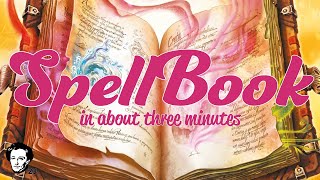
SpellBook has generated considerable enthusiasm across the board gaming community. Reviewers consistently praise its elegant design, beautiful artwork, and satisfying core mechanics. The game strikes a balance between accessibility for newer players and depth for experienced gamers seeking engine-building challenges. Multiple reviewers highlight its engaging spell combination system and the way different spell selections create genuinely different play experiences. The consensus emphasizes SpellBook as a polished, rewarding experience that delivers on both thematic promise and mechanical satisfaction.
Core Mechanics That Define SpellBook
Set Collection and Resource Management
SpellBook centers on collecting and managing Materia, colorful tokens featuring both color values and rune symbols. Players gather these resources through a morning action phase, choosing between taking a single token from the central altar display or drawing two blind tokens from the bag. This push-your-luck element creates tension from turn one as players balance information and reward. The token economy enforces a maximum hand size of nine Materia, forcing strategic discard decisions. What makes this particularly elegant is the rune system, three tokens sharing the same rune symbol can combine as a wild card, enabling flexible spell payment while maintaining meaningful choices about resource allocation.
Engine Building Through Spell Progression
The heart of SpellBook's decision-making revolves around learning spells. Each of seven spells offers three possible power levels, and choosing which level to learn determines the spell's effect and end-game victory point value. Once learned, a spell cannot be upgraded through the standard action; instead, the green spell provides the only pathway to boost another spell's level by one. This creates an interesting tension where early engine-building spells provide modest bonuses, but waiting risks opponents completing their grimoires first. Spells grant access to additional actions in their respective phases, morning, midday, and evening, enabling players to break free from base actions like simple material gathering into specialized plays that compound as the engine develops.
The SpellBook Experience
A Quick Teaching Arc with Scaling Complexity
SpellBook wins praise for being deceptively simple to teach. The three-phase turn structure and straightforward action options make explaining the base game trivial, yet the decision space expands dramatically as spells enter play. Reviewers note that players grasp the fundamentals immediately, allowing games to move briskly despite the complexity lurking beneath. The forty-five-minute playtime proves attainable even with analysis, a achievement many engine-building games cannot claim. The progression feels natural: early turns focus on resource gathering and modest spell acquisition, while mid-game transitions into synergy chasing, and the endgame becomes a race to complete objectives before opponents snowball.
Thematic Immersion and Beautiful Production
SpellBook excels at bringing its wizarding fantasy theme to life without sacrificing mechanical clarity. The Materia tokens, described as wonderful components, feel tactile and satisfying to manipulate. The familiar boards provide tangible progress toward victory, with visible filled spaces creating a sense of accomplishment. Art consistently rated as "really lovely" and "evocative" enhances every interaction, making even basic turns feel thematic. The game avoids thematic overreach; mechanics serve the theme naturally rather than forcing flavor onto abstract systems. Players report enjoying the flavor of feeding familiars and casting spells, the fantasy framework feels earned rather than window dressing.
What Makes SpellBook Stand Out
Spell Variety Drives Replayability
With three versions of each seven-color spell and the possibility of mixing and matching across sets, SpellBook boasts remarkable variability in available combinations. Every game presents a different constellation of possible spells, making strategy planning a core activity. Reviewers praise the way spell selection forces distinct strategic paths. Some spell combinations enable rapid resource accumulation, others focus on direct familiar board progression, and some emphasize leveraging end-game bonus scoring. This variability prevents the game from settling into solved patterns while ensuring every decision during spell selection carries meaningful weight. The shared spell availability, all players use the same selected spells, creates compelling interaction as players race to lock in the combinations they need.
Quick Acceleration and Satisfying Moment-to-Moment Play
SpellBook accelerates beautifully as engines come online. Early turns involve methodical resource gathering and incremental spell learning, but once players unlock powerful spell effects, turns become more dynamic. The "snowball" effect reviewers mention isn't negative but rather the payoff for good spell sequencing. A player who unlocked a spell allowing them to take additional Materia of specific types from the altar experiences visible acceleration, suddenly they have more options and greater flexibility. This acceleration rewards foresight without punishing slower players too harshly, as the game's relatively short playtime prevents runaway leaders from dominating extended playing windows. The rune-as-wild mechanic provides consistent mitigation, preventing luck swinges from completely derailing strategic plans.
Potential Drawbacks
Luck Dependency in the Tile Deck
Several reviewers identify luck as a meaningful factor in SpellBook's outcome. The random pull of Materia from the bag introduces volatility that strategic planning can only partially mitigate. A player hoping to build engines around specific rune symbols must hope those symbols appear frequently enough; conversely, an unlucky draw sequence can force suboptimal decisions. While the rune-as-wild system provides flexibility, relying too heavily on bag luck rather than altar selection creates a dependency some strategy-focused gamers find frustrating. The game handles this better than many push-your-luck designs, but players seeking deterministic engine building may find the randomness in resource availability occasionally undermines their planning.
Opening Decisions and Decision Paralysis
Early turns present a false decision point that can confuse newer players. The choice between taking one Materia from the altar or two from the bag seems meaningful initially, two is obviously more, but the rune flexibility systems eliminate this tension quickly. Reviewers note that players rarely choose the single altar token, making the action feel vestigial. Additionally, the multiple spell-level options and variable spell effects can trigger analysis paralysis in multiplayer settings. While faster games avoid this, groups inclined toward thoughtful play may find decision points around which spell level to learn consume more time than the mechanics justify, though this reflects player preference rather than design flaw.
If You Enjoy SpellBook
Players fond of SpellBook typically gravitate toward engine-building experiences where resource constraints drive interesting choices. Splendor delivers a similar satisfaction in a shorter, lighter form. Century: Golem Edition and Gizmos offer comparable gameplay with different mechanical spins. Baron Park brings polka-mino satisfaction to engine building. Great Western Trail provides a more complex rondelle with deeper strategy. Quacks of Quedlinburg embraces push-your-luck more aggressively, while games like Sushi Go and It's a Wonderful World feature the simultaneous phase selection that SpellBook shares. For those seeking slightly heavier engines, Terraforming Mars or Brass lean into the planning depth. SpellBook occupies an optimal middle ground: accessible enough for casual play yet offering satisfying choices for strategists seeking engine-building payoff.
What Reviewers Are Saying
"The art is really lovely with all 21 spell cards having evocative images all while being easily parseble as what color spell they are and the different combinations of spells do shake the game up a little bit."
— 3 Minute Board Games
"The game accelerates towards the end as more of your unique powers come online... it's a very quick it can be a very quick playing game because of that as soon as you start casting those spells things start to snowball."
— Before You Play
"I really enjoy this one. This is like straight engine building and it's just beautiful and fun... no matter which strategy you play, you always feel like you're behind in this game, which creates a different tension to each strategy."
— The Dice Tower