








Spirits of the Forest Deep Dive
What the Community Thinks About Spirits of the Forest
Reviewers tend to treat Spirits of the Forest, published by Thunder Griff Games, as a charming and approachable tile-drafting game rather than a standout title. The verdict is warm but restrained. cardboardrhino describes it as a set collection game that can be learned in about five minutes and played solo or with up to four players. Chairman of the Board ranks it last of five newly played games in one video, yet concedes that it is a perfectly fine game that is nice and charming. The same reviewer adds that it feels a little bit lost in the shuffle and a little bit generic at this point, making it the most skeptical take in this set.
Agreement is strongest on accessibility and presentation. Jenna, The Board Game Garden plays it as a solo coffee table game and says a session takes roughly ten minutes. Getting Games played a two-player game at a convention, called it a light game of set collection, and said it was worth playing again. Disagreement centers on depth. The same Board Game Garden host called the solo opponent a little more simplistic in one video and a pretty difficult solo game in another, so the challenge of the bot appears to depend on the player.
Core Mechanics That Define Spirits of the Forest
Tile Drafting From the Ends of Each Row
Every reviewer who explains the game begins with its drafting. Tiles are laid out in several rows, and a player may take only from the furthest left or furthest right end of a row. Chairman of the Board explains that a turn lets you take one tile with two symbols on it or two tiles with one symbol each, so pacing matters: you must open the tiles you want while avoiding giving opponents what they need. Because the rows deplete at different rates, the available options shift from turn to turn. Chairman notes that this extremity restriction has appeared in other games, but says it works well here. Tactical blockers add another layer. Chairman describes placing blocker tokens on locations so an opponent cannot take that tile, then moving them on later turns. Getting Games describes claim stones that reserve spots, which an opponent can knock off only by losing one of their own claim tokens in the process.
Majority Set Collection Across Nine Spirits
Scoring is built around majorities. Players compete for the largest share of each of the game's nine spirit symbols, and the majority in each spirit determines the nature points awarded. Chairman summarizes the scoring as just having the most of a certain set and scoring those points, and adds that players also need at least one of each symbol or they lose points for each one missing. Jenna's solo play shows how unforgiving the majority rule can be. Jenna matched or exceeded the bot in every spirit but one and still lost the game. Getting Games framed the goal the same way, as a fight for the majorities in each spirit.
The Spirits of the Forest Experience
A Quick, Gateway-Friendly Filler
The dominant feeling is a light, quick session. Cardboardrhino says the game is suitable for any types of gamers and experience levels, and Chairman calls it an entry-level filler game, expecting it to appeal most to players on the fringes of the hobby because it is very easy to understand, while still asking for some tough decisions. Reported session lengths are short. Jenna's solo game took about ten minutes, and Getting Games estimated roughly 25 to 30 minutes for a two-player game at a convention.
A Calm, Abstract Puzzle
Several reviewers describe the play as calm and low pressure. Jenna values it as something to set up on the table and draft tiles back and forth with while sitting on the couch, treating the solo mode as a quiet puzzle. Cardboardrhino's abstract-like label fits this feel: the theme is light, and the decisions are about patterns and timing rather than story. Getting Games describes it as a light game of set collection with some spatial elements, and says it will work for a lot of people.
What Makes Spirits of the Forest Stand Out
Art and Packaging
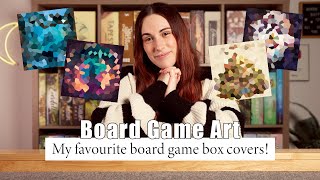
The art draws the most consistent praise. Chairman describes a lovely art style that looks very nice on the table. Jenna devoted a box-art video to the cover, calling it absolutely gorgeous and singling out its sketched, organic look as a favorite kind of illustration.
Open Information and Tactical Pacing
Reviewers like that the game hides almost nothing. Chairman points out that all the information is available in front of you, so every choice is a matter of reading the board rather than guessing at hidden cards, describing the obligation to take at least one tile each turn as a source of hard choices and praising the way the rows empty at different rates. Those features give the game a light but genuine tactical feel, and Jenna plans to take it along while traveling.
Potential Drawbacks
A Sense of Familiarity
The most frequent reservation is that the game feels familiar. Chairman admits to a sense of having seen everything before, never turning the game down when offered but not pushing to play it, and judges that the game feels a little bit lost in the shuffle. Getting Games was more upbeat, saying it would play the game again for sure, while adding that the reviewer was not planning to hunt a copy down.
Two-Player Play Feels Zero-Sum
Getting Games found the two-player version the weakest format. With one opponent across the table, the majority contests were very zero-sum, since the standings were always easy to read. The reviewer believed a third player would make the majority fights less clear-cut and more engaging.
If You Enjoy Spirits of the Forest
Sagrada is the recommended comparison for readers who like light, pattern-driven drafting. Its colorful patterns and approachable turns offer a logical next step for players who enjoy the quick sessions and open information of Spirits of the Forest. Readers who want a similarly short, low-downtime filler with a clear scoring goal are likely to find the same kind of relaxed pace that reviewers praise here.
What Reviewers Are Saying
"Spirits of the Forest, which is a very charming set collection abstract like game. You can learn it in five minutes and play solo or with up to four players."
— cardboardrhino
"So, a good game, but certainly nothing great and nothing to write home about."
— Chairman of the Board
"It's a simple thing I can just set up on the table and kind of draft these tiles back and forth. It is very very quick."
— Jenna, The Board Game Garden