




































Spots Deep Dive
What the Community Thinks About Spots
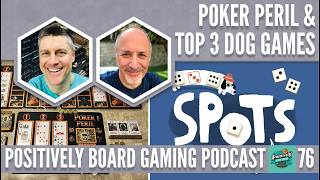
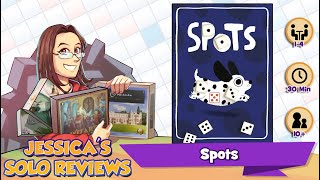
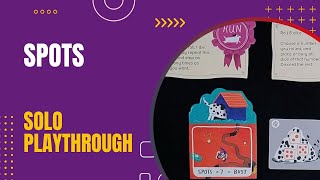
Spots has captured the hearts of board gaming communities with its charming premise and engaging push-your-luck mechanics. The game presents a deceptively simple concept: players take on the role of dog trainers rolling dice to fill in spotted dog cards, yet beneath this accessible exterior lies compelling decisions about risk and reward. The dice-rolling loop proves surprisingly satisfying, with reviewers consistently praising how the game delivers quick thrills and moments of genuine tension in compact gameplay.
The aesthetic excellence resonates across channels. Reviewers highlight the beautifully illustrated dog cards, colorful components, and the psychedelic visual design of the board. The personality of each dog character adds whimsy to every decision, making failure feel less punishing and victory more celebratory. This combination of solid mechanics wrapped in warm presentation has made Spots a frequent request at game nights and a standout in collections focused on lighter fare.
Core Mechanics That Define Spots
Push-Your-Luck Dice Rolling
The foundation of Spots rests on elegant push-your-luck decisions. On each turn, players select one of six available tricks, each offering different dice-rolling opportunities. Some tricks let players roll a modest three dice and optionally roll additional dice one at a time. Others invite players to roll eight dice and select a single number to place. The tension escalates as players accumulate dice values in their yard. Exceed seven total pips and the bust mechanic wipes all progress on incomplete dogs, resetting the turn to zero and forcing players to weigh immediate gains against catastrophic loss. This risk calculus creates the game's emotional core: knowing when to push and when to hold steady.
Dice Placement and Resource Management
Beyond rolling, placement strategy shapes each turn. Dice matching dog card numbers advance progress toward completion, while unplaceable dice must be buried in the yard, steadily accumulating toward the bust threshold. Players can complete individual dogs by spending a full turn, or gamble by attempting to finish multiple dogs simultaneously in one action to bypass the turn cost entirely. Treats serve as the economy of flexibility, letting players reroll unfavorable results or access otherwise blocked tricks. Managing this limited resource and deciding when to cash in completed dogs for fresh cards creates secondary layers of decision-making beneath the primary roll-and-place loop.
The Spots Experience
Lighthearted and Accessible Fun
Spots prioritizes enjoyment over complexity. Reviewers consistently describe the game as fun, quick, and perfect for introducing new players to modern board gaming. The rules fit on a single page of explanation, yet the variety of tricks ensures gameplay never feels repetitive. The game maintains a cheerful, low-pressure atmosphere where dice volatility produces surprising swings rather than crushing defeats. Families report it becoming an immediate favorite, with the charming dog illustrations and simple loop encouraging repeated plays. This accessibility extends beyond mechanics into the social experience, turns move quickly, downtime remains minimal, and the game feels inclusive rather than gatekeeping.
Swingy, Surprising Outcomes
Fortune dominates each session more than strategy, yet reviewers celebrate this aspect rather than critique it. A string of lucky rolls can propel a player toward victory while others struggle, but the 30-minute runtime means no one suffers long waits for turnarounds. Bust moments produce audible groans and laughter. Improbable comebacks create memorable stories. The push-your-luck structure generates constant tension punctuated by relief or disappointment, satisfying the itch for dice-driven excitement. This volatility means different outcomes emerge with each play despite identical starting conditions, sustaining long-term engagement.
What Makes Spots Stand Out
Elegant Trick System
The six available tricks create mechanical variety without overwhelming players. One trick lets players roll and reroll their buried dice, effectively a second chance at partially committed positions. Another forces selection of a single number from eight rolled dice, demanding quick visual parsing and encouraging calculated risk. The rotating availability of tricks, flipped face-down after selection until all are used, creates subtle timing pressure. Players must anticipate which tricks remain available for later turns, adding a layer of planning to what might otherwise be pure reaction. This system remains the same across all plays yet prevents the game from becoming solved or predictable.
Exceptional Replay Value
The game includes far more dog cards than used in any single play. Multiple recommended setups guide new players, while variants encourage experimenting with different combinations. The random order of dog draws means players build different hands across sessions. Some dog cards feature special paw symbols offering conditional bonuses. This variability, combined with the inherent luck of dice rolling, ensures that Spots rarely plays the same way twice. Reviewers report immediately wanting to reset and play again, a mark of genuine engagement.
Potential Drawbacks
Limited Strategic Depth
The game's accessibility comes with a tradeoff: minimal strategic complexity. Lucky rolls matter far more than skilled decision-making. Reviewers acknowledge this honestly, noting that Spots is fundamentally a luck-driven experience rather than a tactics game. While the push-your-luck decisions create meaningful choices, optimization cannot overcome bad dice over enough plays. Players seeking deep strategic gameplay or tight mechanical systems may find Spots lacks the challenge they pursue. The rule variations attempt to address this through puzzle-like solo and team modes, yet the core experience remains dice-centric.
Scaling Issues at Higher Player Counts
Spots excels with two to four players but struggles beyond that range. With five or six players, downtime increases significantly as each turn remains relatively fast while the waiting periods between turns lengthen considerably. The game offers no meaningful interaction during opponents' turns beyond watching them roll and occasionally celebrating or commiserating with results. This means expanding player count extends playtime without adding engagement for waiting players. A runaway leader can also emerge in larger groups, creating a sense of futility for trailing players watching completion happen without the chance to mount a realistic comeback.
If You Enjoy Spots
Players drawn to Spots often gravitate toward other push-your-luck dice games and racing-themed titles. Those appreciating the risk-reward tension should explore Heat, which offers a more tactical racing experience grounded in similar decision-making. Automobiles provides deeper strategic play while maintaining accessible rules and quick gameplay. Downforce combines racing theme with card play and wagering for players wanting more control than pure dice. El Dorado offers another streamlined race game for groups seeking something slightly meatier. For lighter dice fun without racing, Dragon Farle and Farkle variants satisfy the push-your-luck appetite with different thematics.
What Reviewers Are Saying
"It's a push your luck dice game, and it's been around for ages and they've reskinned it in many ways. It's really fun, really accessible, and you can teach it to people without them having a teacher. It's a game that gets brought out frequently, it's just great fun. It's small, fast, and easy to play and my family are always wanting to get this on the table."
— Stonemaier Games
"It does the job. You know, it is very simple to learn, very easy to teach. It is quick to play. I mean, it can drag a bit with five or six players, but four or less you are talking a 30-minute timer, possibly even less. There's just a nice cheap little racing game that does what it says on the tin."
— The Broken Meeple
"Spots is a pusher luck dice rolling game. It's fast-paced, you get more time playing the game at two players because there's really not a lot for you to be doing when other players are taking their turn. It's just great fun coming in at a wonderful little filler game. It's definitely great at all play counts but we prefer it at a lower play count than the maximum."
— Board of It