/pic3008535.jpg)
Description from the publisher:
A contested region of space accessible through a known wormhole has drawn the attention of powerful forces throughout the galaxy. Both the Federation and the Klingon Empire, who share a delicate alliance at this time, have recently built outposts in the region — but now news of grave troubles brewing in the region has prompted both the Klingons and the Federation to investigate immediately.
Command your ship, recruit new crew members, earn experience points, and use your skills to confront the challenges of the Star Trek universe. Explore and face a variety of challenges on a randomly built space map using the venture tile system first introduced in the award-winning game Mage Knight.
Star Trek: Frontiers is designed for 1 to 4 players with multiple competitive, cooperative and solo scenarios. Work together to defeat hostile ships or compete to explore and uncover hidden mysteries. Players need to overcome obstacles to expand their knowledge and use their leadership as they adventure in order to be victorious in their exploration!


Learn to Play: Star Trek Frontiers

EP4 - Star Trek Frontiers playthrough

- Star Trek carries some weight in the board game world.
- Host has not played it.
- Host has not seen much about it.
- Seems to have gone away.
- Likely overly complex for Star Trek fans.
- Star Trek
- Space
- Mage Knight
Mechanics (from transcript analysis)
- exploration — Players fly their ship around the board, exploring.
Video topics + discussion points
Quotes (from this video)
- This week might be the weakest week.
- I don't know anything about this game.
- I apologize it's just like I don't know what that game is.
- This is a really fun game and you really don't see too many people talk about this one.
- I don't care for Time Stories.
- Get it out of here I'm done I don't have time for it I have better things to do.
- I think this one will go away because the Star Wars license can be a Fickle thing.
- I just don't understand the game that's that's my problem absolutely my problem is this kind of game.
References (from this video)

- worked well
- good
- Little over wrought
- Star Trek
- Mage Knight
Mechanics (from transcript analysis)
Video topics + discussion points
Quotes (from this video)
- Hey everybody, I'm Tom Vasel and welcome to look back where I take a look at reviews that I did last year, 5 years ago, 10 years ago, and 20 years ago during this same time frame. And I tell you what I think about those games now if I think about them at all.
- Wasn't reviewing a lot of great games 10 years ago.
- It blows my mind this game's 10 years old now and everyone has forgotten it ever existed.
- This might have been the first game that I really like noticed who he was.
- Destinies could have been even greater, um, but it was very good for its time.
- And those are the games that I reviewed 1, 5, 10, and 20 years ago. Thanks for watching. I'm Tom Vasel and this is look back on the Dice Tower.
References (from this video)

- Offers solo and multiplayer modes.
- Multiple ways to win depending on game mode (solo vs. multiplayer).
- Detailed setup with general and player-specific steps.
- Clear explanation of round phases and player turn types (regular turn vs. emergency repairs).
- Setup is described as having 17 general steps and 9 player steps, which might be lengthy.
- Becoming the most successful captain by exploring and gaining experience
- A new region of space accessible through a wormhole
Mechanics (from transcript analysis)
- Combat — Includes ship-to-ship combat with long-range attacks, shields, and damage assignment, as well as away crew missions involving diplomacy and combat.
- Deck Building — Players recruit crew members and gain experience, suggesting a deck-building element where cards (crew) are acquired and used.
- Dice Rolling — Data dice are rolled for actions and can be used to perform actions on cards.
- Hand Management — Players draw action cards up to their hand limit and play cards from their hand to move or carry out actions.
- Set Collection — Matching circles and stars on tile corners suggests a set collection aspect for tile placement.
- Tile Placement — The game involves placing map tiles to explore a new region of space.
- Worker Placement — Players can claim data dice from a board and use them during their turn, which are then returned for the next player.
Video topics + discussion points
Quotes (from this video)
- Welcome today we'll be taking a look at Star Trek frontiers
- this is a 1 to 4 player deck building tile placement space exploration game
- how do you become a successful captain or the most successful captain and win the game well if you're playing a solo game you have to complete the scenario if you're playing a multiplayer game you have to complete the scenario and then have the most experience points at the end of the game
- now let's take a look at the components for Star Trek frontiers
- now let's take a look at the setup for Star Trek frontiers
- now let's go through our round and turn work in star trek frontiers
- you may use the data dye to perform the bottom of the card any card can be used as a one for move shield attack or diplomacy
- if you defeat the enemy you will gain experience points for each defeated enemy token and then discard the token
References (from this video)

- The designer Vlada has made many highly-regarded games.
- Through the Ages: A New Story of Civilization
- Mage Knight Board Game
- Codenames
- Galaxy Trucker
- Dungeon Petz
- Space Alert
- Dungeon Lords
- Tash-Kalar: Arena of Legends
- Pictomania
Mechanics (from transcript analysis)
Video topics + discussion points
Quotes (from this video)
- do you guys remember the Hasbro when they did the crowdfunding for that
- all the stuff that came with it though is junk I hate them all the little extra figures that are like Silver Surfer and stuff they're like super junky
- you may get [ ] or you may get like you may is a gambling basically
- I sold all my cards played for decades and decades and decades
- Rotten Tomatoes it's miracle I never even heard of the number one stre
- I feel like these are not properly rated these don't make sense
- the ref the ref the ref is [ ] awesome
- this list sucks
- I feel like this list is not good there's way better movies than this
- I feel like Christmas movies are not they used to be good and now now they're not
- like when's the last good Christmas movie I mean is it just because we're older or you know maybe or we all the good ones are made and they don't want to make anymore
- well I mean there's tons but it's a wonderful life was the the reason why it became so well known and everything was because um it basically became free they they forgot to re-up their trademark for it or whatever
- I was just astounded by it's like so yeah I bought it and it didn't it didn't it didn't show up
References (from this video)
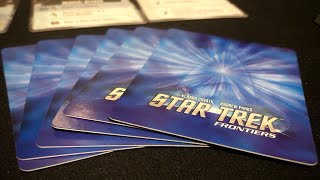
- Engaging combat system with multiple phases.
- Variable difficulty allows for customization.
- Thematic mechanics that fit the Star Trek universe.
- Strategic depth in crew and resource management.
- Combat can be complex and prone to player mistakes (as noted by the host).
- Certain mechanics, like Shields against disruptors, can be inefficient.
- Reputation loss is a consequence of certain failures.
- Exploring the galaxy and confronting threats
- Star Trek universe
Mechanics (from transcript analysis)
- Away Missions — Describes sending teams to planets or enemy surfaces to engage in diplomacy or combat, with specific rules about captain and crew participation.
- Card Play — Players use cards from their hand to perform actions, generate attack values, or use special abilities.
- Combat — Details the process of engaging in space battles and ground assaults against enemies, including specific attack and defense values, and special abilities like biogenic weapons.
- Dice Rolling — Implied through mechanics like generating crystals or determining outcomes for certain actions.
- diplomacy — A mechanic used to overcome certain planetary enemies before engaging in combat, requiring a specific amount of diplomacy points.
- Leveling up — Characters or the ship can gain experience and level up, improving their capabilities.
- Reputation — A track that can be lost due to certain actions or failures, influencing gameplay outcomes.
- Resource Management — Managing resources like diplomacy points, crystals, and crew readiness is crucial for success.
Video topics + discussion points
Quotes (from this video)
- We're still playing as Picard on the USS Enterprise D but I've explored the Galaxy in a different way leveled up differently got different cards in my hand since we last played but here we are I'm going to explore with a move to so let's do that.
- The difference here is that I want to show you rather than just completing the mission now ending the scenario we're actually going to continue.
- On the Borg Cube in this little window I've twisted this so it is level five.
- So when you tackle a Borg Cube split your enemies into two sets because you're gonna have to fight them independently.
- Shield six blocks their attack completely. We do receive one damage.
- There are cards that will remove disruptors from enemies but look out for that so I did make a little mistake but I've only picked this up in post edit so um it doesn't matter too much I'm teaching you how to um how to do the Borg Cube rules really but yeah that is a little that is a little mistake.
- The consequence of this is apart from you know ending the turn having to wait another turn is we lose two reputation.
- So here we are we've got two enemies we've got to face in the diplomacy phase first we can use 10 diplomacy to get rid of this enemy, eight diplomacy to get rid of this enemy, if we don't then we have to fight them and suffer damage.
- All right, so we've soaked up the three, no more damage to take. We stand a chance now of trying to defeat this thing. If we don't defeat it, we'd just beam back up to our ship, the way mission is a failure, no reputation loss.
- The important point is really that we've destroyed the Borg Cube.
- So that's it, that's the effects of Borg cubes, that's how Borg Cube battles happen.
References (from this video)

- strong solo modes
- thematic space exploration
- aesthetics like movie art not to the speaker's taste
- exploration and mission-based adventures
- Star Trek universe; space exploration
Mechanics (from transcript analysis)
- card-driven / hand management — card-based missions with exploration elements
- Hand Management — card-based missions with exploration elements
- solo modes — supports solo gameplay
Video topics + discussion points
Quotes (from this video)
- since ever since i started it is to approach this as a business
- i want this to go somewhere good to grow the solo board gaming hobby
- the board game nexus is in its baby phase
- i want this to be a place where you learn about games
- you all seem to stick around which i greatly appreciate
- it's promotional it's fun that's the whole point is to have fun
References (from this video)
- recognizable IP and space theme
- card-driven action system
- modular board and ship combat feel
- art and components can feel cluttered
- setup and organization can be tedious
- space exploration with sci‑fi factions and combat
- space, Star Trek universe
- Mage Knight
- Gloomhaven
Mechanics (from transcript analysis)
- Card-driven actions — turns and actions are resolved through cards
- damage tracking via dials — physical dials to show damage and status
- Modular Board — a buildable space map with ships moving around
- modular board / tile-based map — a buildable space map with ships moving around
Video topics + discussion points
Quotes (from this video)
- I'm super excited about this.
- This is all guesswork here.
- This is a dungeon crawler — space crawler.
References (from this video)

- More streamlined movement
- Armor and damage mechanics feel better implemented
- Better onboarding and pacing for solo play
- Not personally aligned with the speaker's fantasy preference
- Some players may still prefer Mage Knight's original feel
- Sci-fi exploration, tactical combat, and modular scenario progression
- Star Trek universe with frontier exploration and mission-centric play.
- Sci-fi adventure with episodic missions
- Mage Knight
Mechanics (from transcript analysis)
- Action resolution and combat — Combat and actions resolved via cards and game-specific systems.
- Advancement and balance — Adjustments aim to reduce armor-only outcomes and improve movement pacing.
- Deck Building — Similar core deck-building concepts to Mage Knight but with its own streamlined approach.
- Deck-building (comparison) — Similar core deck-building concepts to Mage Knight but with its own streamlined approach.
Video topics + discussion points
Quotes (from this video)
- No matter how hard I tried, I couldn't get into Mage Knight.
- This game just isn't for you. Sell it on and play something else or knock it down and get good scrub.
- House rules really fixed Mage Knight for me.
- Yes, I needed help, but those house rules really fixed Mage Knight for me.
- I want to spend a Saturday or Sunday afternoon playing the hell out of this one.
- I finally want to experience this game to the full playing every scenario.
References (from this video)

- Rich tactical decision space between diplomacy, long-range combat, and away missions
- Dynamic encounters with distressed planets and Bard Cubes
- Crew progression through training and recruitment adds depth
- Tension from wounded captain and potential casualties
- Clear separation between ship actions and away missions
- Steep learning curve and rule complexity
- Captain injury can significantly hamper away missions and skills
- Pacing can slow due to tracking resources and multiple phases
- Shields limitations on planet encounters increase risk and randomness
- Exploration, diplomacy, and tactical combat with crew and captain management
- Star Trek universe, exploration of Class M and Class K planets via starship away missions
- Scenario-driven, with variable planet encounters and escalating threats
- Mage Knight
Mechanics (from transcript analysis)
- Away mission crew management — Selecting captain and crew for away missions unlocks skills but risks casualties and wounds.
- Combat resolution and long-range attacks — Defend with ship or crew; long-range attacks if not on the ship; wounds assign and potential for significant losses.
- Combat: Damage Based — Defend with ship or crew; long-range attacks if not on the ship; wounds assign and potential for significant losses.
- Diplomacy and reputation management — Players accumulate diplomacy points and reputation to resolve encounters and upgrade capabilities.
- Experience, training, and recruitment — Experience gains enable skills and recruit new crew via training cards and diplomacy actions.
- Negotiation — Players accumulate diplomacy points and reputation to resolve encounters and upgrade capabilities.
- Planetary encounters and Bard Cubes — Planet encounters yield Bard Cubes; distressed planets double rewards and increase difficulty.
- Shields and energy constraints — Shields may be unavailable on planets, altering defense calculations; upgrades like pulse torpedo shields affect combat.
- Turn structure and maintenance — Rounds end with dry dock options to repair or remove damage; maintenance affects pacing and future actions.
Video topics + discussion points
Quotes (from this video)
- the importance of taking the captain with you
- we can't use our Shields
- this is not an interaction
- the worst has happened we've wounded both of our crew
- we can't continue into the combat phase
- you can spend a crew member temporarily just for this one combat
- distressed planets double everything up
- Engage from move to explore
- we're seen as aggressors