/pic7720019.jpg)







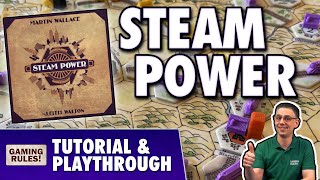

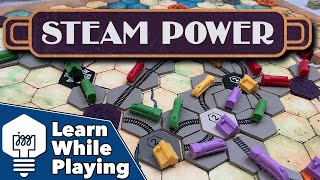







Steam Power Deep Dive
What the Community Thinks About Steam Power
Steam Power has earned quiet but enthusiastic praise from the board gaming community as a fresh take on the train genre. Reviewers have noted how the game strips back unnecessary complexity while preserving meaningful decisions, creating an experience that feels more like Brass than a traditional train game. One reviewer described it as "just taken the majority of complexity in rules teach and added a very simple game, maybe one step up from Ticket to Ride, but it's not taking away any of the complexity of decision and choice and player interaction." The game has attracted attention for delivering a streamlined experience that can be played quickly without sacrificing strategic depth.
Core Mechanics That Define Steam Power
Tile Placement and Network Building
Players construct railroad networks by laying track tiles onto the map, building personalized networks that all players can eventually interact with. Each player controls their own tracks and must expand from their existing network rather than starting fresh each turn. The elegance of this system lies in its flexibility: players can be strategic about where they place their initial network, and blocking or redirecting becomes a natural consequence of shared geography. One reviewer highlighted how the orientation of tiles creates meaningful layout choices, and the inclusion of terrain costs adds another layer of decision-making without overwhelming new players.
Factory Placement and Economic Tension
Building factories at cities creates the economic core of Steam Power. What makes this mechanic especially interesting is that players can place factories anywhere a completed network exists, not just on their own tracks. This creates opportunities for clever play: you might place a factory on a city you do not plan to use, knowing full well that opponents will want to access those resources and must pay you for the privilege. One reviewer observed the game has "a real kind of play there" because resources become scarce as the game progresses. If all white factories get depleted early, any contracts requiring white goods become significantly more expensive to fulfill, forcing players to adapt their strategies mid-game.
The Steam Power Experience
Elegant Simplicity with Hidden Depth
Steam Power excels at presenting a deceptively simple facade that reveals deeper strategy upon closer inspection. Players take only two actions per turn from five options: lay track, build a factory, fulfill a contract, draw contracts, or take money. This straightforward structure makes the game incredibly accessible to newer players while allowing experienced gamers to plan ahead and exploit economic inefficiencies. One reviewer noted the game is "very simple to play, but after you play it a few times, oh okay, there's like a little bit of planning and stuff that I got to do and kind of watch what's going on." The most important insight is recognizing when to pursue bonus actions through completed contracts versus taking straight actions, and managing your money carefully so you can afford transportation costs when contracts demand goods from distant factories.
Quick Play with Real Tension
Games typically finish within an hour, even with experienced players, making Steam Power an ideal choice for gaming nights with limited time. Despite the brisk pace, tension builds naturally as players compete for scarce resources and favorable map positioning. One reviewer highlighted that the game creates interesting dynamics where "it's kind of funny cuz like you'll see a lot of people rush to those, referring to lucrative four-point cities, "but then they all end up splitting the points." This means that even obvious strategic targets become less valuable when multiple players converge on them. The game rewards those who spot undervalued opportunities early while punishing those who follow the herd.
What Makes Steam Power Stand Out
The Brass-Like Economic Interaction
Steam Power borrows the factory-flipping mechanism that made Brass special, but applies it to a lighter, faster game. The ability to place factories that generate points when depleted by opponents' contracts creates a satisfying form of indirect interaction. A reviewer enthusiastically noted "when somebody discovers a new spot and even if you're not there, you can build a factory on top of that city, blocking them out and making them pay you to use the goods." This is not brutal confrontation but rather elegant mutual advantage: opponents benefit from your infrastructure while you benefit from their activity. The best part is that this happens organically without requiring aggressive blocking or cutthroat play.
Flexible Map Design and Variability
The game includes multiple maps with distinct characteristics, from relatively flat plains to hilly terrain that costs money to traverse. Some maps have cities that provide bonus points if left unclaimed during setup, adding variability to which factories become most valuable. One reviewer appreciated how "the different maps are neat" and noted that "some of the extra leftover building city tiles change the point dynamic, which makes it interesting." This built-in variability means each map plays differently, and the random placement of cities on the board ensures no two games follow the same path, even on the same map.
Potential Drawbacks
Limited Depth at Two Players
While Steam Power scales across player counts, it shines brightest with three or more players. One reviewer stated "my favorite would be the three or the four" and noted that two-player games feel more like a "tug-of-war back and forth" compared to the richer interaction of multiplayer games. The issue is that with fewer players, there are fewer opportunities for clever factory placement and cross-table economic maneuvering. The game does include solo modes, including an automa system, but even that does not quite capture the same dynamics as human opponents making unexpected plays.
Heavy Reliance on Contract Luck
Success in Steam Power depends significantly on the contracts you draw. A poor initial hand can set you back early, requiring catch-up through expensive contract draws or difficult transportation costs. One reviewer explained the importance of "don't wait till the very end" to draw more contracts because "you want to earlier rather than later get do that draw contract action." The luck element is mitigated somewhat by the ability to draw additional contracts as a bonus action, but players dealt weak initial contracts face an uphill battle. While this is less punishing than older train games like Age of Steam, it remains noticeable enough that new players may feel the sting of unfortunate draws.
If You Enjoy Steam Power
If Steam Power captured your imagination, several other games offer similar satisfactions. Brass shares the economic tension of placing factories that benefit opponents while building your own network, though it demands significantly more time and carries higher complexity. Steam, the spiritual predecessor to many modern train games, offers deeper economic interaction and network-building challenges for players ready to commit two hours or more. Ticket to Ride provides accessible contract completion and route building but with less interaction and economic depth. Via Nebula blends the factory flipping mechanism with a more compressed experience, though it has drifted out of circulation in recent years.
What Reviewers Are Saying
"This is Martin Wallace's new train game. And what I love about this game is it's just taken the majority of complexity in rules teach and added a very simple game, maybe one step up from Ticket to Ride, but it's not taking away any of the complexity of decision and choice and player interaction."
— Board With Steve
"It's not like the designers made a mistake. They shouldn't have called it steam because they totally should have. It's in the steam ballpark, but I think there's something kind of new and fresh here with that kind of brass feel of it, of like you're completing my factories, you're flipping my buildings like you do in brass and getting those points."
— Drive Thru Games
"The game is very simple to play, but after you play it a few times, oh okay, there's like a little bit of planning and stuff that I got to do and kind of watch what's going on here, and you want to try to I mean, in theory, everything should be contract plus action, which will maybe give you the next thing for the next contract."
— Drive Thru Games