







Stranger Things: Upside Down Deep Dive
What the Community Thinks About Stranger Things: Upside Down
Reviewers approach Stranger Things: Upside Down as a cooperative game first and a licensed property second. Designer Rob Daviau is a name several reviewers mention as a reason to take the game seriously. Dice Tower's Sam Healey placed it ninth on a list of cooperative games for the holidays, calling it a really good game that captures the growing need to untangle a mystery one clue at a time. Dungeon Dive's Daniel compared it to Horrified and judged it a strong Gateway game for newcomers, though not quite matching Horrified's polish in Daniel's view.
Agreement is strongest on theme and presentation. Daniel called the board one of the coolest boards ever seen, and Meeple Mountain's Tyler Williams said the theme is dripping through the game. Opinions split on how much the game asks of its players. Tyler praised the second scenario for its chaotic, whack-a-mole pressure and called it a good fit for cooperative veterans, while Daniel wished the game offered more ways for players to coordinate as a group. Sam Healey also noted that some viewers may find the seasons covered by the game a little dated, while still crediting the design for capturing the theme well.
Core Mechanics That Define Stranger Things: Upside Down
Cooperative Game
Every reviewer frames the game the same way: the players against the system. Sam Healey argued that cooperative games suit mixed groups because there is no competition at the table, and Stranger Things fits that brief. Daniel described it as a prototypical threat management game, with a board full of fires and only a few buckets of water. Each turn, players move, then either take one location action or fight a foe, then refill their hand and resolve scene cards. The scene deck is the game pushing back, and it is where the bad stuff happens. Victory requires clearing all three Rescue Will slots, while the Act track and the fear track set the clocks for losing. Designed by Rob Daviau, the system makes every decision a balance between progress and the trouble that progress invites.
Modular Board
The board does not work like a classic modular board, because the layout is fixed for each season rather than assembled differently every session. The variation comes from which side you choose. Rodney Smith of Watch It Played explained that the board is set up showing the season you want to play, and that the Season 2 side brings a new scene deck, new allies, new actions, and different foes. Daniel praised the Hawkins side with its school, Wheeler house, police station, Main Street, laboratory, and scrap yard, describing the upside down side as ashy, gross, and gooey. Tyler Williams, of Meeple Mountain, found the board's tokens fiddly to keep track of during play, and Isos described the board as a quad-fold layout that opens to reveal each season. Reviewers agree the two-sided design makes each season feel like its own place, so geography becomes part of learning the game.
The Stranger Things: Upside Down Experience
Tense
Reviewers repeatedly describe the game as tense because the resources you spend to solve a problem are the same ones that make the situation worse. Tyler Williams highlighted the conflict between gathering information so your actions are efficient and keeping explanation points under control, since drawing fewer scene cards means running the Act track faster. Daniel described the board as a constant tug of war, where every stack you clear is pushed back by a scene card that adds another threat. Failed actions cost fear equal to the difference between your played value and the revealed tokens, and because the tokens are face down until you commit, a successful rescue never feels guaranteed. Reaching the terrified space ends the game for everyone, which keeps every turn feeling high stakes.
Thematic Immersion
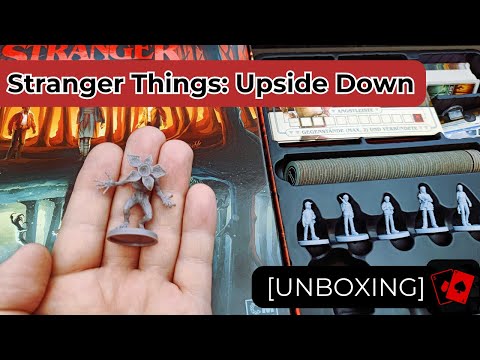
Thematic immersion is the feeling most reviewers mention after the first few minutes of play. Daniel praised the painted art, noting that the characters look like the characters they are supposed to be, and that the game avoids the cheap approach of pasting screenshots from the show onto cards. Isos was enthusiastic about the miniatures and the art style, saying the components feel like the Stranger Things 80s look expected going in. Tyler Williams said the scene cards carry a lot of flavor that comes through in the board state, which makes the game feel like a season of the show unfolding on the table. Daniel also noted that cast members such as Steve Harrington, Max, and Dr. Sam Owens appear as allies in the Season 2 deck, which reinforces the connection to the show.
What Makes Stranger Things: Upside Down Stand Out
A Season-Specific Board With Strong Art
Daniel and Isos both singled out the double-sided board. Daniel called it one of the coolest boards ever seen, praising the idea of putting a different season on each side, with the Hawkins surface and the tunnels below it. Daniel also highlighted the painted illustrations as a clear step above the licensed games that simply shove images from the film into the cards. Isos agreed that the artwork is strong and said the presentation of the components made setup feel organized, with season-specific sorting that helps keep the game tidy.
Tension Built Into the Card Economy
Tyler Williams said that the way the game fights back through its scene deck is what makes it engaging. Every action card with a danger symbol adds scene cards at the end of the turn, so a safe turn and a risky turn are both live options. Tyler described the scene cards as the bad things that move the Demogorgon, add health to its stacks, or send Patrol vans hunting the kids, finding the conflicting goals of rushing the Act track, managing the Demogorgon, and controlling explanation points genuinely engaging. Daniel described the same balance as an ebb and flow that mirrors the rhythm of a well-executed drama series, where a few tense turns are followed by a release.
Potential Drawbacks
Token Bookkeeping Can Be Tedious
Tyler Williams called the tokens the main complaint. Each game begins with many stacks, Demogorgon tokens have to be placed in the right spots, and stacks have to be restored after each failed attempt. Tyler was clear that this is a minor complaint, praising the rest of the setup and teardown as quick and clean. Still, the upkeep can feel fiddly for groups that want to move fast, and it is the kind of friction that becomes more noticeable on repeat plays.
Luck and Cooperation Feel Constrained
Daniel raised two concerns. First, players cannot trade items or allies, so a card that would help one character may sit with another who cannot use it, and Daniel also wished there were a way to move the group together when a big threat appeared. Second, every outcome is resolved from card values, so the total you are trying to beat is partly secret but your own value is always known. Daniel suggested a die or some other chance element to add a bit of press-your-luck tension, along with more items and allies so that each season had more variety.
If You Enjoy Stranger Things: Upside Down
Players who enjoy Stranger Things: Upside Down's cooperative pressure will find a natural companion in Horrified. Daniel placed the two in a similar camp, calling Horrified one of their favorite games and a fantastic Gateway into the hobby while noting that Stranger Things gets pretty close. Players who value the way the game makes the whole table share one clock and one set of threats will find similar satisfaction in Pandemic, the system that Sam Healey pointed to in Lord of the Rings: Fate of the Fellowship. Players who appreciate the Stranger Things scene deck and the way its bad outcomes ramp up over time will also enjoy Cthulhu: Death May Die, which Isos mentioned as a game with a similar component layout and a clear rulebook.
What Reviewers Are Saying
"The art on the board is excellent. I think it does a really good job of depicting Hawkins, depicting the upside down, and then on the reverse side we have Hawkins and then we have the tunnels below Hawkins. So, super cool idea of having a board on each side to represent the different seasons."
— Daniel, The Dungeon Dive
"The difficulty feels palpable when you're trying to manage and guesstimate what's going on with the tokens on the board, and I really enjoyed the conflicting objectives that you have to navigate."
— Tyler Williams, Meeple Mountain
"It is a really good game, and they did do a good job in capturing the theme and the growing necessity of figuring out all of those different things, and they've done so in a very neat way."
— Sam Healey, Dice Tower