/pic1300182.png)















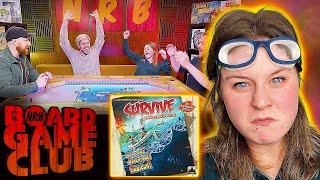






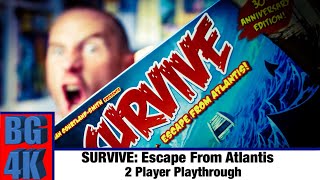
Survive: Escape from Atlantis! Deep Dive
What the Community Thinks About Survive: Escape from Atlantis!
Survive: Escape from Atlantis! stands as a remarkable artifact of board game history. Originally released in 1982 and reprinted in 2011 by Stronghold Games, this game has maintained its appeal across four decades through sheer elegance of design. Reviewers consistently praise its ability to create meaningful interaction and genuine chaos without sacrificing accessibility. The game's longevity speaks to a timeless quality: it creates memorable moments for families and gaming groups alike through straightforward rules that mask surprising strategic depth.
Core Mechanics That Define Survive: Escape from Atlantis!
Tile Destruction and Resource Scarcity
The foundation of Survive rests on environmental collapse. Players collectively remove tiles from the sinking island each turn, reducing available space and forcing strategic relocation. Each tile removal carries consequences: some trigger immediate effects that spawn dangerous creatures, while others simply reduce the playable space. This mechanic creates a countdown timer that affects all players equally, generating tension that builds throughout the game. The removal system also introduces difficult decisions about which areas of the island to sacrifice, as players balance removing tiles that threaten opponents against those that create the most dramatic island shrinkage.
Take-That Interaction Through Sea Creatures
Once meeples enter the water, sea creatures become instruments of chaos. Whales destroy boats indiscriminately, sharks target individual swimmers, and krakens attack both simultaneously. Players control which creatures move and where they strike, creating opportunities for direct player interaction. This mechanic transforms the game from a pure puzzle into a social experience where players actively interfere with each other's survival plans. The creature mechanic requires minimal explanation yet enables sophisticated play, as experienced players learn to position creatures strategically while newer players enjoy simply creating mayhem.
The Survive: Escape from Atlantis! Experience
Family Gaming With Genuine Consequences
The game thrives as a family experience precisely because it generates authentic emotional responses without requiring players to understand complex subsystems. Players invested in their meeples react viscerally when creatures destroy boats or when opponents refuse to share evacuation vessels. The hidden point values on meeple bottoms create genuine surprises at game conclusion, as players discover whether they successfully protected high-value survivors or wasted effort on lower-scoring pieces. This combination of simple rules and meaningful outcomes makes the game accessible to younger players while remaining engaging for experienced gamers.
Memory and Information Management
The rule limiting players to one examination of their meeples' point values at game start creates a unique challenge. Players must track which meeples correspond to which values, but under the pressure of an island actively sinking. This memory element adds a cognitive layer distinct from the tactical gameplay, rewarding players who develop mnemonic strategies while creating comedic moments when players inevitably forget which pieces are valuable. The information asymmetry means players cannot perfectly optimize their evacuation strategy, introducing an element of luck that keeps outcomes uncertain until the final scoring.
What Makes Survive: Escape from Atlantis! Stand Out
Timeless Mechanical Design
Nearly five decades after publication, the game's core mechanics remain mechanically fresh and balanced. The interaction between island destruction, creature movement, and boat transportation creates a system where no single element dominates. The game avoids complicated subsystems or fiddly bookkeeping, instead using straightforward rules that new players grasp in minutes. Despite this simplicity, the game generates complex strategic possibilities around board control, resource allocation, and timing. The design achieved a rarity in board gaming: elegant rules that scale difficulty through player decision-making rather than rulebook complexity.
Accessibility Across Skill Levels
Survive welcomes newcomers through transparent mechanics while rewarding experienced players through subtle positioning and creature management strategy. New players enjoy the straightforward goal of evacuating survivors while veterans develop sophisticated approaches to creature deployment and boat control. The game includes experienced players naturally without requiring hidden rules or handicapping systems. This accessibility across skill levels has enabled the game to remain in print through multiple publishers and iterations, each new printing introducing fresh audiences to its charms.
Potential Drawbacks
High Player Conflict
The game's cutthroat nature creates genuine conflict between players. Experienced players recognize creature placement as the primary lever of control, leading them to attack others' meeples systematically. In some groups, this level of direct competition creates uncomfortable moments, particularly if one player consistently targets another. The game assumes players enjoy competitive tension and vindictive gameplay; groups preferring cooperative or light gameplay may find the experience frustrating rather than fun.
Memory Demands for Point Tracking
The single memory window for meeple values creates an asymmetry that some players find annoying. Players who struggle with spatial memory or who find the tracking exercise tedious may approach the game with frustration rather than engagement. Some groups develop house rules allowing multiple checks to reduce this cognitive load, though this changes the game's balance and intended experience.
If You Enjoy Survive: Escape from Atlantis!
Players drawn to Survive frequently enjoy Downfall of Pompeii, which shares the theme of escaping a catastrophic environment but reverses the tile-removal mechanic into lava placement. Talisman appeals to the same audience through its ruthless player interaction and chaotic gameplay. For those seeking lighter meanness mechanics, Colt Express and Jamaica offer competitive racing experiences with take-that elements. Root attracts players who appreciate asymmetric player powers and direct player conflict, though with significantly greater complexity. For families specifically, accessible yet interactive games like Ticket to Ride and Pandemic provide less cutthroat alternatives with similar accessibility.
What Reviewers Are Saying
"This came out in the early 80s and it is still terrific. I think this game could come out today and it would still be a hit. It's just such a fun game and it's the opposite of root in that it is so little explanation. It's just you're going to flip a tile, you're going to move your people to try and get them to safety, you're going to roll a dice and you're going to attack people with monsters. That's it. I've just explained all of the rules to you, so it's so easy to just get people playing."
— Allies or Enemies
"Survive was one of those family games that we would laugh till we cry because it was so funny. We would get frustrated when opponents would put their people in spots that blocked our survival plans. Grant would figure out a way to capsize his own boat with sea monsters to avoid letting others succeed."
— Our Family Plays Games
"The thing I really enjoyed about it is that sense of destruction, sheer destruction of the playing space. You're removing tiles which is knocking pieces into the sea where the sharks can attack them. This wanton destruction and vindictive gameplay as the board is kind of destroyed throughout the game makes for a really engaging experience."
— Adam in Wales - Board Game Design