/pic5885689.jpg)











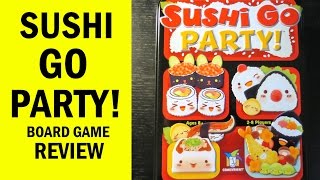





























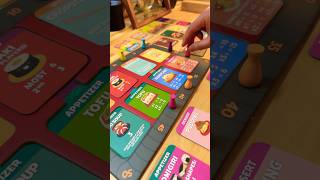











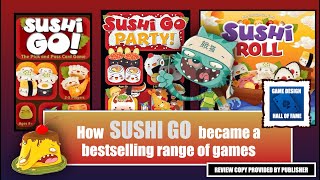
Sushi Go Party! Deep Dive
What the Community Thinks About Sushi Go Party!
Sushi Go Party! has earned consistent praise across the board gaming community as an accessible, engaging entry into the card drafting genre. Reviewers emphasize its versatility, noting that it succeeds equally well with newcomers and experienced players. The expanded version of the original Sushi Go has become a staple recommendation for building collections, particularly for those seeking a game that works reliably across diverse player counts and gaming contexts. The consensus centers on the game's simplicity paired with genuine decision-making, creating an experience that feels light without being trivial.
Core Mechanics That Define Sushi Go Party!
Card Drafting Through Pick-and-Pass
The heart of Sushi Go Party! lies in its streamlined pick-and-pass drafting mechanism. Players select one card from their hand simultaneously, reveal it, and pass the remaining cards to the next player. This cycle repeats until all cards are played, creating three rounds of constant engagement. Reviewers praise how the game distills drafting to its essence without unnecessary complexity. Each decision carries weight—choosing between playing it safe or gambling on future card availability creates tension in every turn. The mechanism ensures no downtime since all players act simultaneously, keeping the table energized throughout the 20-30 minute experience.
Set Collection with Varied Scoring
Where Sushi Go Party! distinguishes itself is in the breadth of set collection systems. Over twenty different card types offer distinct scoring conditions: nigiri provide straightforward points, maki rolls reward majorities, tempura require pairs for five-point payoffs, and specials like miso soup introduce conditional mechanics that demand tactical awareness. The dessert cards persist across all three rounds, adding a forward-planning layer unique to this edition. This variety ensures that no two games feel identical, with each menu selection presenting fresh strategic challenges.
The Sushi Go Party! Experience
Breezy and Quick-Playing
Sushi Go Party! exemplifies the breezy aesthetic. Games complete in under thirty minutes, often landing in the twenty-minute sweet spot. The pace never stumbles because simultaneous selection eliminates the turn-by-turn waiting that plagues other games. Reviewers note the experience feels effortless, with decisions happening rapidly once players grasp the simple rule set. The menu-based variability prevents the game from feeling repetitive even after many plays, as each selection of appetizers, specials, and desserts creates a distinct experience. Players often want to shuffle up and play immediately again.
Gateway Appeal with Genuine Engagement
The game welcomes newcomers through its charming artwork and forgiving rules, yet it never condescends to experienced players. The cute personified sushi illustrations lower the barrier to entry—people who might not identify as gamers find themselves drawn to the table. Simultaneously, the game provides enough decision tree complexity that even players with dozens of plays discover new strategies. Reviewers highlight how Sushi Go Party! works across the full spectrum of player counts from two to eight, making it exceptionally valuable in collections where space is precious and games must earn their shelf space through versatility.
What Makes Sushi Go Party! Stand Out
Customizable Menu System
The party edition introduced modularity through its menu system, offering players the choice of which card sets to include each game. Rather than expansions, Gameright packed everything into a single box—over twenty unique scoring systems designed to teach the breadth of set collection mechanics. This approach means a player can craft experiences for absolute beginners (simpler menus) or advanced players seeking punishing combos. The ability to recreate the original Sushi Go from within the Party! box preserves backward compatibility while offering substantially more longevity through menu variety.
Superior Design Execution
Reviewers consistently praise Gamewright's execution of the design. The publisher identified a market gap—players wanted the excitement of Seven Wonders' pick-and-pass drafting without the onboarding complexity. Sushi Go Party! delivers that vision while going further, creating what one designer called "an outstanding idea masterfully executed." The visual design reinforces the theme perfectly; unlike Seven Wonders, where buildings rotate inexplicably, the sushi conveyor belt concept makes intuitive sense. The production quality, from the tin packaging to the adorable card illustrations, elevates a simple mechanic into a memorable experience.
Potential Drawbacks
Setup Overhead and Shuffling
The expansion into twenty-plus card varieties comes with practical costs. Menu selection and deck assembly add pre-game setup time compared to the original. After each round, all non-dessert cards require reshuffling—a small friction point that accumulates across three rounds. For players prioritizing maximum portability and minimal preparation, the original Sushi Go's compact tin remains superior. Some reviewers note that after many plays with identical menus, decisions can feel slightly samey, though the menu variation addresses this concern for most players.
Minimal Depth for Competitive Play
Sushi Go Party! remains fundamentally a luck-informed tactical game rather than a strategy game. While skilled players can improve their odds through card observation and probability assessment, luck in card distribution frequently determines winners. Players seeking games where superior play consistently translates to superior results may find the experience underwhelming across repeated plays with the same opponent. The game occupies the "safe" zone where almost no decision will cause someone to dislike it, but neither does it provide the depth some hobbyists crave.
If You Enjoy Sushi Go Party!
Players drawn to Sushi Go Party! often gravitate toward its spiritual cousins. Seven Wonders offers more complex drafting with civilization-building depth. Sushi Go, the original, provides the same core experience in a more portable package if the menu system feels unnecessary. Wingspan appeals to those who value beautiful production and accessible engine-building. Calico and other tile-drafting games share the satisfying loop of selection and placement. The Sushi Go family itself expands with Sushi Roll, a dice-based reimagining, for those seeking mechanical variety on familiar ground.
What Reviewers Are Saying
"Sushi go is an adorable and really easy to learn and teach drafting game, so I really like this one because kids are attracted to the art and the mechanics of the game are simple enough that you can get anybody to try it once and then usually they want to try it again."
— Beyond Solitaire
"It's one of those games you can sit down with three people and have a great time playing it and you can sit down with eight people and still have a really good time, so that makes it a very versatile game in a collection and one that is very easy to get to the table."
— Rolls in the Family
"Sushi go party is the same game dialed up to 11, and just changing up the menu between each game makes each play of the game feel a little different and presents new challenges for the players."
— 3 Minute Board Games