/pic1900075.jpg)
/pic4574571.jpg)
/pic1900075.jpg)

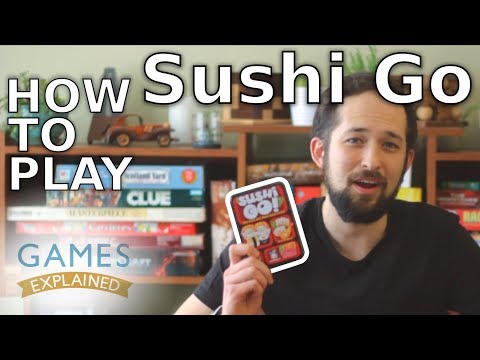







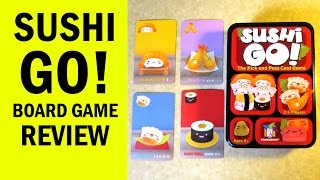


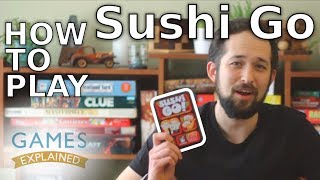




































Sushi Go! Deep Dive
What the Community Thinks About Sushi Go!
Few games earn the label "modern classic" after barely a decade in print, but Sushi Go! has accumulated that reputation through genuine merit. Adam Porter of Adam in Wales placed it at number 52 on his all-time top 100 list and later inducted it into his personal Game Design Hall of Fame alongside Everdell and Viticulture, calling it "a proven seller, a massive hit, and a great game to boot" and "a modern classic." He first encountered it as a self-published card game from the then-unknown Phil Walker-Harding in 2013 and has followed the franchise through every iteration since. 3 Minute Board Games, reviewing the original, reached for a single word: "delightful." The artwork is adorable, it comes in a tin, and the rules are clear enough to read directly off each card.
What reviewers emphasize across multiple sessions and contexts is that Sushi Go! sits in an extremely rare position: it is genuinely easy enough for children and non-gamers, yet offers real tactical tension that keeps experienced players engaged. Adam Porter, speaking from his wedding planning, described it as "always popular, always goes down well," noting it works equally well for children and "adults who don't play many games because it's simple enough to learn the rules but it feels like it's got some nice little strategic or tactical choices going on." He also mentioned bringing it to a friend's stag party, where a table of non-gamers played it all evening and then all wanted to buy their own copy. 3 Minute Board Games echoes this range, noting it "can play as simply as a game of Snap if you've got little ones, or it can become a really cutthroat exercise" in which blocking opponents becomes more important than building your own set.
Core Mechanics That Define Sushi Go!
Pick-and-Pass Card Drafting
The central mechanism is card drafting in its most distilled form. Every player holds a hand of cards, selects one to keep face-down, and simultaneously passes the rest to their neighbor. Once all players reveal their chosen cards, the process repeats with the new hand received. This continues until all cards have been drafted, then scoring happens. As 3 Minute Board Games explains it, the core loop is: "everyone starts with the same number of cards, picks one to keep, and passes the remaining cards to their left." Adam Porter traces this mechanism directly to Seven Wonders, which had popularized pick-and-pass drafting after its 2011 release, but credits Walker-Harding with identifying that players wanted all the excitement of Seven Wonders "without that hefty onboarding process." In his design analysis, Porter argues that Walker-Harding "smoothed off all the rough edges so that anybody could be up and running with the game in no time," calling Sushi Go! "still the most accessible game in its class." The conveyor-belt theme reinforces the mechanism intuitively: dishes revolving around the table is something players grasp immediately without needing to construct a mental model from abstract rules.
Set Collection and Scoring Variety
The cards players collect score in several different ways, and managing that variety is where the tactical decisions live. As Adam Porter describes: nigiri score one, two, or three points, but that value triples if played on top of a wasabi. A single tempura scores nothing, but a pair scores five. One or two sashimi are worthless; three together are worth a substantial ten points. Dumplings score more the more you collect, with the payoff scaling steeply toward larger sets. Maki rolls and puddings introduce a competitive dimension, rewarding the player who collected the most and penalizing the player who collected the fewest. 3 Minute Board Games describes dumplings as "scored in a triangular number sequence" and highlights that this unforgiving structure, where incomplete sets score zero, is "what makes it really satisfying." The chopsticks card adds a timing element, allowing a player to take two cards in a single turn by calling out "Sushi Go!" when they have one already in play, which 3 Minute Board Games describes as producing real moments of strategic tension. The 3 Minute Board Games Party review notes that Sushi Go Party, the expanded edition, contains 22 different card varieties with unique scoring modes, calling it a "textbook" of set collection design variety.
The Sushi Go! Experience
Fast, Portable, and Social
The game is packaged in a small tin that fits in a pocket or a bag, and this physical scale is central to how it actually gets played. Adam Porter specifically chose it as one of his wedding table games for this reason, noting it is "very very small" and can sit in the middle of a decorated table without dominating the space. He described it as ideal for the gap between ceremony and meal when guests have nothing to do, and as a game that those friends who "would feel more comfortable sitting down and playing a board game than dancing" could pick up without instruction. His stag-night anecdote is the clearest illustration: a group of non-gamers in a pub, playing all evening, everyone wanting a copy by the end. 3 Minute Board Games calls the overall experience "delightful" and frames it as something you can play three rounds of and put away, satisfied. The "Ruining Game Night" episode from Adam in Wales listed Sushi Go! as a first-instinct recommendation for office lunch hours, where time is limited and the group may have mixed experience levels.
The Right Amount of Think
One of the interesting tensions reviewers work through is how much actual strategy is present. Adam Porter's formal analysis on his engagement ladder gave Sushi Go! a score of nine out of ten, noting it "scores well" on theme, interaction, tension, and feedback, but "really falls down on meaningful decisions." He is direct about this: "sushi go isn't a game that you play strategically, it's tactical choices all the way and luck will frequently dictate the winner of the game." Yet this is not framed as a dealbreaker. For the audiences the game targets, this balance is a feature. Players who want to think deeply about their hand have genuine decisions, particularly around when to start a sashimi set, when to abandon an incomplete pair of tempura, and whether to take a card to deny an opponent or to build their own position. 3 Minute Board Games describes how "keeping track of what cards are where around the table can be a significant strategic challenge," and notes that the memory element of tracking the passing hands rewards players who engage with it. The game invites as much or as little depth as its audience brings.
What Makes Sushi Go! Stand Out
Theme and Mechanism Are One
A recurring point in Adam Porter's deep analysis is that Sushi Go! solved a problem Seven Wonders had not: the theme makes immediate sense. Seven Wonders asks players to conceptually justify why ancient wonders are rotating between civilizations. Sushi Go! puts dishes on a conveyor belt and has diners pick what they want. As Porter puts it, "sushi go on the other hand with its revolving dumplings, maki and tempura just makes sense." This thematic clarity means new players are not working against a conceptual mismatch while also learning a new mechanism. The cards also communicate their own scoring directly through their illustration, which 3 Minute Board Games highlights as making the game genuinely self-teaching: "each card clearly illustrates its points values and how they're scored." This is not a common achievement in the hobby, and it directly enables the game to be placed in front of non-gamers without a rules explanation.
A Franchise Built on a Solid Foundation
Porter's Hall of Fame reasoning for Sushi Go! rests partly on its commercial longevity and franchise success: it has been in continuous print since 2013, spawned Sushi Go Party and Sushi Roll as standalone sequels, and shows no sign of fading. The 3 Minute Board Games Party review captures what makes that expansion wise: Sushi Go Party "is the same game dialed up to 11," simply adding more card varieties to a drafting and set collection core that already worked. Porter describes how Game Right packaged the original into "an attractive little tin at a very affordable price" as a key commercial decision, noting that the price-to-experience ratio is part of why the game reached the audience it did. That original tin has become something of a hallmark: Adam Porter owns three different editions, including the original self-published version from Walker-Harding and the German Zok Verlag edition with its distinctively different art style, describing the German version with affectionate irreverence as having "the melting face of the pudding" and "the terrified expression on the maki roll."
Potential Drawbacks
Luck Can Decide the Outcome
Adam Porter is candid that "luck will frequently dictate the winner of the game." When a player is building a sashimi set and needs a third card to score ten points, whether that card appears in a passing hand is not entirely within their control. The chopsticks mechanism creates some agency here, letting a player grab two cards when the right combination arrives, but the drafting pool is random and the game is short enough that unlucky card distribution can override good decision-making. 3 Minute Board Games describes the initial choice of which card to keep as "quite risky" because incomplete sets score zero, meaning one missed card can erase an entire round's investment. For players who want their decisions to reliably determine outcomes, this variance may frustrate. Porter notes this specifically as the dimension where Sushi Go! falls short of reaching the highest tier on his engagement ladder analysis.
Limited Depth for Regular Players
Sushi Go! is a gateway game and plays like one. The drafting decisions are real but not complex, the scoring variety is meaningful but not deep, and the game ends in about fifteen minutes. For regular players at a dedicated game night, the experience plateaus quickly. Adam Porter describes preferring the original Sushi Go! to Sushi Go Party partly because he values the familiarity and portability of the smaller game, but also acknowledges this means the experience is slightly rather than rich. The same quality that makes Sushi Go! exceptional at a wedding table or an office lunch, its lightness, means it does not sustain the interest of players who want something to chew on session after session. Porter himself suggests dedicated game-night players who already own Sushi Go! consider whether Sushi Go Party's expanded card variety offers enough new decision space to justify the larger box. Both reviewers note the game as a filler or introduction rather than a centerpiece.
If You Enjoy Sushi Go!
Players who love Sushi Go! for its quick drafting loop and clever scoring variety have several natural next steps. Seven Wonders is the direct ancestor, offering the same simultaneous pick-and-pass drafting across a longer game with considerably more strategic depth; it rewards players ready to engage with iconography and longer planning horizons. Sushi Go Party! is the obvious first expansion of the franchise, adding 22 card types with unique scoring modes to create a game with more variety and a larger player count, while preserving the tin and the accessible core. For those drawn to the competitive set collection structure, Lost Cities delivers a tense two-player card game where building scoring sets against an opponent in a small-footprint package captures a similar feel with a different mechanism. Forbidden Island comes from the same publisher, Gamewright, and shares the commitment to accessible design and compact packaging, this time as a cooperative game for players who want to bring the same group together around a shared goal rather than competing at the conveyor belt.
What Reviewers Are Saying
"Sushi go is a card game classic. It's a staple. There'll be lots of people who will have already played it, who will know how to play it. It's always popular, always goes down well. I find it's a really good game for children but it's also a really good game for adults who don't play many games, because it's simple enough to learn the rules but it feels like it's got some nice little strategic or tactical choices going on."
— Adam in Wales - Board Game Design
"My one word to describe Sushi Go! is 'delightful'. The artwork is adorable, it comes in a tin, and you get to yell the word 'pudding' a lot. The rules are really easy to pick up, and each card clearly illustrates its points values and how they're scored. What makes it really satisfying, though, is how unforgiving it is. If you don't get the full pair or set of most cards, you get nothing for them, making the initial choice of card quite risky."
— 3 Minute Board Games
"Sushi go is so intuitive and easy, portable, it just feels right for that style of game. I remember taking it off to a friend who was getting married and sitting in the pub the night before with all my other friends and we just played sushi go all evening while having a drink and it was really really fun. These weren't gamers. It's such a casual game and then all of them wanted to go out and buy their own copy of sushi go."
— Adam in Wales - Board Game Design