/pic1912529.jpg)

































Takenoko Deep Dive
What the Community Thinks About Takenoko
Takenoko has earned a cherished place in many board gamers' collections, praised for its beautiful presentation and engaging tile placement mechanics. The game combines accessible gameplay with satisfying strategic depth, making it a favorite across casual and dedicated gaming groups. Community reviews consistently highlight its charming theme, strong visual presence, and the delightful tension between growing bamboo and feeding the panda.
Core Mechanics That Define Takenoko
Tile Placement
At the heart of Takenoko lies tile placement, as players gradually construct a shared garden board by drawing land tiles and positioning them strategically. Each tile must either connect to the central pond or touch at least two existing plots. The expanding garden creates an evolving landscape that shifts with every placement decision, forcing players to adapt their objectives and irrigation strategies as new opportunities emerge.
Contracts , Hidden Objective Cards
Players pursue three types of objective cards: plot arrangements that reward specific irrigated tile configurations, gardener objectives based on bamboo heights and colors, and panda objectives earned by feeding the adorable creature specific bamboo combinations. This variety ensures that every player charts their own path to victory, balancing between defensive play (controlling the board) and opportunistic scoring (claiming cards as conditions align).
The Takenoko Experience
Whimsical & Serene
The game captures an almost meditative quality as players cultivate their zen garden, creating a calm atmosphere even during competitive moments. The whimsical panda mechanic, charming yet mischievous, adds personality and humor without breaking the serene tone. This balance makes Takenoko equally appealing to families seeking relaxed gaming and adult groups wanting something lighthearted and stress-free.
Satisfying Engine of Growth
Beyond its meditative qualities, Takenoko delivers genuine satisfaction as players watch their gardens evolve. The moment irrigation channels connect to distant plots, or the gardener's movement triggers cascading bamboo growth across the board, provides tangible reward for tactical thinking. This incremental building creates what experienced players recognize as an elegant, satisfying engine that rewards both planning and adaptation.
What Makes Takenoko Stand Out
Lavish Physical Components
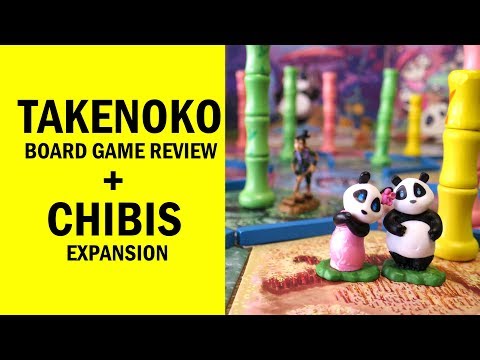
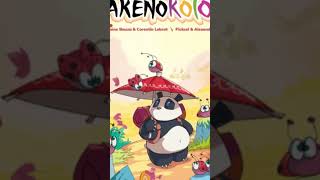
The collector's edition features substantial wooden components that elevate the entire experience. The detailed panda figurine has become iconic in board gaming circles, with its delicate sculpting and personality captured in the smallest details. Irrigation tokens, garden tiles, and bamboo pieces (offered in varying heights to show progression) all combine to create a game that begs to be displayed on the table. The handcrafted feel of these materials transforms abstract actions into tangible, satisfying interactions.
The Panda Mechanic's Elegance
Rather than serving as mere theme decoration, the panda creates genuine strategic tension. When a player activates the panda, it moves in a straight line and devours bamboo, removing resources players have painstakingly grown. This mechanic forces constant decision-making: Do you grow bamboo for points or protect it? Should you feed the panda yourself to claim its objective before opponents do? The panda transforms what could be a pure multiplayer solitaire puzzle into a game where player interaction matters meaningfully.
Potential Drawbacks
Limited Mechanical Depth for Serious Gamers
While elegant, Takenoko lacks the strategic complexity that some experienced gamers seek. The decision space, though genuine, remains relatively constrained by the two-action-per-turn structure and the weather die's randomness. Dedicated strategy enthusiasts may find the game resolves too quickly or offers insufficient player interaction compared to heavier titles. This lightweight nature is intentional but means the game appeals primarily to those seeking relaxation over challenge.
Unbalanced Objective Difficulty
One of the three objective decks (plot objectives) emerges significantly easier to complete than the others, potentially leading to snowballing victories if players focus solely on those cards. This imbalance occasionally frustrates players seeking tighter competition. The base game's optional advanced rule, redrawing objectives that are already complete on the board, partially addresses this, but it remains a design quirk that benefits from house rules or the expansion's additional scoring mechanisms.
If You Enjoy Takenoko
Players drawn to Takenoko's meditative garden-building should explore Tokaido, which shares designer Antoine Bauza's elegant simplicity and serene aesthetic. For those craving a more challenging Japanese-themed experience, Yokohama offers substantially more strategic complexity while maintaining beautiful presentation. Carpe Diem delivers similar tile placement and pattern-building satisfaction with deeper spatial puzzle elements. Between Two Cities captures the collaborative tile-drafting pleasure in a lighter package, while Catan provides familiar resource management with stronger direct interaction, should players want more competitive tension.
What Reviewers Are Saying
"A beautiful and brilliant looking game about the simplest of things, a hungry but shy panda and the poor gardener who has to feed him, and it's all about moving these two pieces around the board in a constant tug of war to grow more bamboo than panda can eat."
— 3 Minute Board Games
"Takenoko really has this sense of nostalgia to it, we got it fairly early when we started playing board games and loved it off at the top. You're building out this garden with bright colorful tiles and also building up these bamboo stocks, and the best part is the panda you're moving and you're chomping away at the bamboo."
— Allies or Enemies
"The gardener is so frazzled, you can feel his pain as the panda continues to gobble up all of his bamboo. It's a great theme, and it's one that just really hasn't left our playing we just keep on playing it."
— Allies or Enemies