
/pic1691099.jpg)
/pic332870.jpg)
/pic1405986.jpg)

/pic8054188.png)


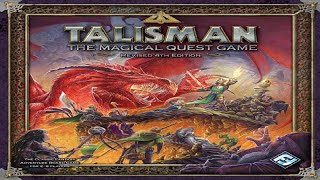
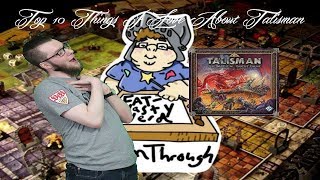











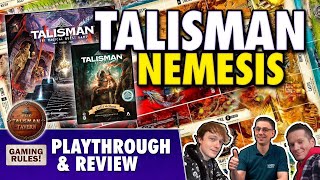



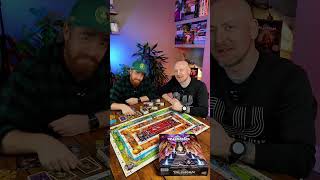


Talisman Deep Dive
What the Community Thinks About Talisman
Talisman occupies a unique place in tabletop gaming history. Since its release by Games Workshop in 1983, it has introduced countless players to fantasy gaming while maintaining a devoted following across five editions. Community reviewers celebrate Talisman as a gateway experience that opened doors to the hobby in ways few games could match. The consensus reflects deep affection paired with clear-eyed recognition of its mechanics. Reviewers consistently emphasize that Talisman rewards a particular mindset: embracing narrative chaos, enjoying the journey as much as competition, and playing primarily for the social stories that emerge during a session.
Core Mechanics That Define Talisman
Rolling the Dice and Choosing Direction
At its heart, Talisman uses roll-and-move mechanics that might seem dated to modern players but which the community recognizes as elegant restraint. Each turn, players roll a die to determine movement distance, then make a single meaningful choice: do they move clockwise or counterclockwise around the board. Designer Robert Harris, inspired by both Monopoly and Dungeons and Dragons, intentionally built this directional choice into Talisman to distinguish it from purely mechanical movement games. This deviation proved crucial. What some tabletop communities view as a relic of older design philosophy, reviewers recognize as an interface for player agency in a game that otherwise embraces randomness. The die roll determines how far you travel, but your decision about direction ensures you remain an active participant rather than a passenger through the encounter deck.
Character Powers and Alignment Consequences
Each character in Talisman arrives with special abilities and alignment designations (good, neutral, or evil) that create meaningful gameplay divergence. Reviewers highlight that these differences matter throughout the journey. Landing on the same space can trigger completely different encounter outcomes depending on whether you play as a noble character or a wicked one. This alignment system opened many players' eyes to what tabletop games could represent. The combination of unique character abilities and alignment-gated consequences meant that two players following identical spatial paths would experience entirely different adventures, all determined before the game began.
The Talisman Experience
A Journey Toward the Crown
The physical structure of Talisman creates ascending rings of the game board, each layer representing deeper progression toward the center where the Crown of Command awaits. Players begin on the outer ring, gathering strength through encounters, equipment, and followers. To advance inward, they must accumulate sufficient power and resources, representing a measured ascent toward the final confrontation. This architecture creates a natural pacing where early game feels like exploration and mid-game feels like acquisition. Reviewers emphasize that the best moments emerge when players stop optimizing for victory and instead invest emotionally in the absurd storylines unfolding at the table. One reviewer described watching themselves as a Minstrel who could charm animals, recruiting an ape companion to adventure with them across the realm. These narratives become the real reward.
Chaotic, Epic Adventures
Talisman embraces chaos in ways many modern games explicitly avoid. Encounter cards introduce wild events, transformations, and consequences that can completely reshape a character's journey. Reviewers consistently describe the game as chaotic and epic rather than strategic or competitive. Once someone finally reaches the Crown of Command and the competition phase begins, the entire table suddenly becomes energized as other players coordinate to stop the leader, chase them, fight them, and steal their equipment. The game transforms from solitary wandering into collective narrative culmination. This chaotic back-and-forth, with its swings of fortune and retribution, creates what reviewers call memorable adventures rather than satisfying strategic victories. The length (which reviewers acknowledge can stretch for hours) becomes irrelevant when the table is invested in the unfolding story.
What Makes Talisman Stand Out
Gateway to Fantasy Gaming
Multiple reviewers identify Talisman as their entry point to understanding what fantasy board games could be. Before Talisman, many players had only experienced mass market games with fixed boards and predetermined outcomes. Talisman demonstrated that board games could feature character progression, alignment mechanics, unique powers, and encounter-driven storytelling. The concept of alignment affecting gameplay outcomes seemed revelatory to newcomers unfamiliar with tabletop RPGs. Reviewers who discovered Talisman in their teens describe it as showing them possibilities they had never imagined existed. The game's longevity across five editions owes much to this introduction-to-the-hobby function, a role it has played for multiple generations of gamers.
Nostalgic Resonance and Social Intimacy
Talisman works best when played with people you genuinely enjoy spending hours with. Reviewers are explicit on this point: Talisman is not a game to play with strangers at game night. It requires patience, a willingness to embrace narrative silliness, and comfort with prolonged social engagement. Many reviewers own multiple editions of Talisman specifically for sentimental reasons. Several describe playing with family members or close friends across decades. The game itself serves as a time capsule of their gaming history. Second edition holds particular value in the community. One reviewer explained they would never consider selling their original copy, even when versions improved mechanically. Talisman represents shared memory and inside jokes between players who have journeyed through its strange, nonsensical worlds together many times.
Potential Drawbacks
Roll and Move Criticized by Modern Standards
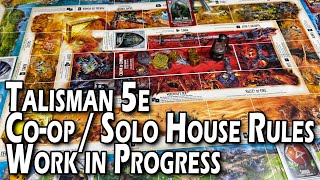
The roll-and-move mechanism, once ubiquitous in tabletop gaming, has fallen from favor in modern design circles where player agency and meaningful decision-making are paramount. For players accustomed to contemporary games, the random movement in Talisman can feel frustrating. If you need to roll a four to reach a destination and keep rolling ones, the experience devolves into luck-based attrition. Some reviewers acknowledge they do not enjoy this mechanic but tolerate it as the price of admission for Talisman's narrative charm. Others have introduced house rules (custom card decks for movement instead of dice rolling, or fate tokens that allow spending currency to reroll) to mitigate luck's impact. The fifth edition received criticism for not adequately addressing this mechanical critique, despite decades of player feedback suggesting alternatives.
Length and Pacing Challenges
Talisman regularly consumes three or more hours per session. Reviewers note this length can test patience, particularly when early-game exploration lacks tension or when mid-game feels like repetitive loops of encounter drawing and movement. The game's pace never accelerates toward resolution the way modern designs engineer play arcs. Instead, Talisman meanders until someone assembles sufficient power to claim the Crown, whereupon the competitive phase finally ignites. Reviewers comfortable with lengthy play sessions view this extended journey as a feature, not a bug. For players seeking decisiveness or narrative closure within ninety minutes, Talisman becomes a slog. The community's embrace of house rules that speed up leveling, add adjacency shortcuts to corner spaces, or introduce fate currency reflects collective acknowledgment that the base rules can outstay their welcome.
If You Enjoy Talisman
Players drawn to Talisman should explore Runebound Second Edition, which shares Talisman's hex-crawl exploration and character progression while introducing modular decks and faster play. Shadows of Brimstone similarly offers dungeon crawling with adventure card draws that shape narrative, though with heavier mechanics. Spirit Island reverses Talisman's framework by having players take asymmetric roles (island spirits rather than adventurers) in a cooperative game featuring hand management and resource scarcity. For those who love Talisman's ridiculous storytelling but prefer modular structure, Robin Hood Adventures and Dead of Winter offer branching narrative paths with crossroads events that trigger story moments players did not anticipate. Folklore: The Affliction provides RPG-in-a-box experiences with optional campaign frameworks. HeroQuest delivers dungeon crawling with house rules potential that allows completely customizing the experience. Carcassonne introduces tile-laying mechanics without abandoning accessibility. Most importantly, players who love Talisman should recognize what drew them to it. If you value theme, narrative emergence, and social engagement above mechanical elegance, dozens of games will satisfy that impulse. If you specifically crave the combination of character uniqueness, journey-focused progression, and managed randomness that Talisman pioneered, the game itself remains unmatched.
What Reviewers Are Saying
"This is a game where you don't have to think. You lay it all out and you just play it and you see what happens. You've got these ridiculous stories going on. I was a minstrel who could charm animals, so I met an ape and instead of having to fight it I could charm the ape and then the ape becomes my follower. It's total nonsense, the whole thing, but I just love the flavor of it all."
— Adam in Wales, Board Game Design
"Talisman was one of those games that did that for us because you are going around this board trying to get to the center and each kind of step in the board is deeper and deeper getting closer to the center. This concept of the fact that you got to choose your characters and these characters are different and they do different things blew my mind. I had never seen that before. It was the coolest thing on the planet."
— Nick, BoardGameGeek (with Mike)
"Talisman is a perennial best-selling board game first released by Games Workshop almost 40 years ago. Designer Robert Harris was attempting to create a Dungeons and Dragons experience in board game form and was heavily inspired by Monopoly and other roll and move games. However, unlike most of those games, Harris had the sense to offer players choices. In Talisman you roll the die and then you choose to move clockwise or counterclockwise around the board."
— Adam Porter, Board Game Design