
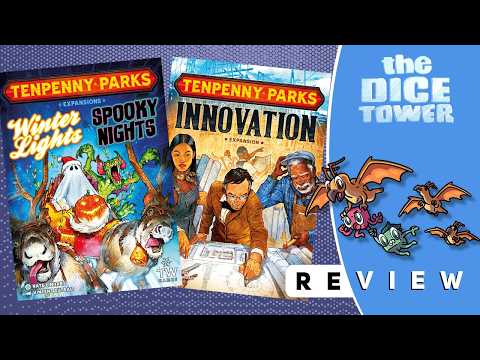
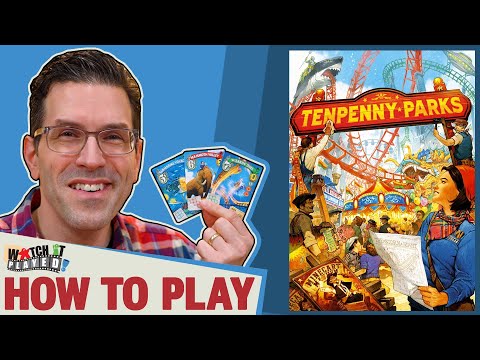

























Tenpenny Parks Deep Dive
What the Community Thinks About Tenpenny Parks
Tenpenny Parks has emerged as a beloved polyomino puzzle game that captivates players with its delightful theme-park construction fantasy. Channels like Meeple University, The Board Game Garden, and Might I Suggest a Game celebrate its accessible design paired with engaging depth, whether reviewers encountered it through a demo table or brought it home. The community appreciates how it delivers a satisfying blend of worker placement, tile puzzle, and a light push-your-luck economy that feels brighter and more thematic than the grim spatial puzzles of comparable titles.
Core Mechanics That Define Tenpenny Parks
Worker Placement on a Rotating Carousel Board
The heart of Tenpenny Parks is its central board featuring a rotating carousel mechanism. Each round, players send workers to attraction spaces on the carousel to purchase rides, with costs shifting based on the carousel's position. Rotating the carousel changes costs for the next player, creating dynamic decision-making around timing: take the expensive ride now at a favorable cost, or wait and hope it rotates into a better position. Published by Thunderworks Games, the design elegantly ties theme to mechanic, since the carousel naturally reflects the rotating nature of a real theme park's attractions.
Polyomino Tile Placement with Spatial Constraints
Unlike traditional polyomino games where pieces nest together to maximize space, Tenpenny Parks inverts the puzzle by requiring attraction tiles to remain separated. Players cannot place tiles orthogonally adjacent to one another, forcing a distinct spatial puzzle that keeps parks visually spread out and thematic. Reviewers describe clearing trees to make room, expanding their park board with purchases, and strategically fitting rides into their grid while respecting the adjacency restriction. The tiles vary in shape and size, creating satisfying placement challenges where a tricky fit always feels rewarding.
The Tenpenny Parks Experience
Building Your Perfect Theme Park Fantasy
Tenpenny Parks excels at delivering the fantasy of building your own amusement park. Purchasing rides like water attractions, roller coasters, and carnivals feels meaningful, and reviewers consistently mention the nostalgia evoked by games like Roller Coaster Tycoon. The pacing allows time to appreciate your growing park, celebrate successful tile placements, and envision the crowds your attractions will draw. Concession stands provide steady income, while attraction cards displayed at game's end show off the rides you built. The theme permeates every action: you are not just moving cubes, you are running a thriving park.
Emotion Tracks and the Push-Your-Luck Economy
Beyond building, Tenpenny Parks introduces emotion tracks (thrill, awe, and joy) that players advance by covering matching icons on their placed tiles. These tracks offer bonuses like extra workers, the first-player token, and money. Balancing whether to push for track bonuses versus saving cash for attractions creates a central tension. Players also sell advertising to convert money into victory points each round, forcing constant calculation of future needs versus immediate conversion. The system creates a light push-your-luck feel: how much will you actually earn this round, and is it better to invest now or bank resources for later?
What Makes Tenpenny Parks Stand Out
Elegant Component Design and Production
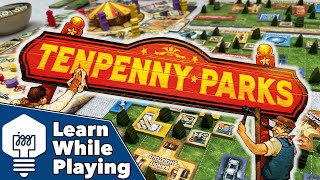
Reviewers repeatedly praise Thunderworks Games' component quality. The carousel rotates smoothly and tactilely, the polyomino tiles are thick and colorful with unique shapes representing specific attractions, and the money tokens are satisfyingly chunky. Goal cards feel thematic, and the concession tiles add another layer of spatial puzzle. One reviewer notes the small tree markers can be hard to see from above, but overall the package feels premium, and the attention to detail transforms what could be an abstract system into a vibrant park that begs to be touched.
Accessibility Paired with Strategic Depth
Tenpenny Parks manages the rare balance of being easy to teach yet meaty in decision-making. Reviewers mention a manageable playtime of roughly 75 minutes and straightforward rules that new players grasp within the first round. Yet the game offers meaningful choices: which attractions to pursue, whether to expand your park early or late, which emotion tracks to prioritize, and how much money to spend on advertising versus saving. Players who return discover new strategies, and the game never feels light in execution even though the ruleset itself is accessible.
Potential Drawbacks
Best at Higher Player Counts
While Tenpenny Parks scales from one to four players, reviewers suggest it shines most with three or four. At two players, the carousel rotations feel less dynamic and the competition for limited options softens. The solo variant exists but requires learning an automated opponent's behavior, which some find less engaging than the multiplayer push-and-pull. First-player advantage can be noticeable early, though passing the first-player token helps mitigate this over the game.
Spatial Puzzle Can Frustrate Newcomers
The placement rule requiring separation between tiles, while elegant, occasionally leaves players with limited options or moments where a desired tile simply cannot legally fit without expanding the board. Reviewers report frustration when a perfect-looking attraction cannot be placed, forcing a strategy change. Players less comfortable with spatial reasoning may find themselves stuck or relying on trial and error. This friction is minor and fades after the first play, and expansion boards offer a costly but valid escape route when space gets tight.
If You Enjoy Tenpenny Parks
If Tenpenny Parks resonates with you, consider related titles that share its sensibilities. Cascadia offers a similar tile-placement puzzle with a nature-building theme and equally satisfying placement, though it strips away the economy and worker placement. Cartographers provides another grid-filling polyomino experience with a lighter, faster footprint, perfect for solo or quick multiplayer. For those craving worker placement and economy, Isle of Cats combines card drafting with polyomino placement in a charming rescue fantasy. And Suburbia delivers tile-driven city building with the same satisfaction of watching a place grow from your decisions.
What Reviewers Are Saying
"Tenpenny Parks is one of my favorite polyomino games of all time."
— Where There's A Wilz, There's a Play
"It brings back so much nostalgia from when I was younger. I used to love to play Roller Coaster Tycoon, and basically in Tenpenny Parks you are building your own amusement park."
— The Board Game Garden
"It's a great polyomino puzzle, but it's really interesting because you're not trying to nest the polyominoes. You're actually trying to keep them from being adjacent to one another, so it's a totally different type of spatial puzzle than a typical polyomino game."
— Might I Suggest a Game